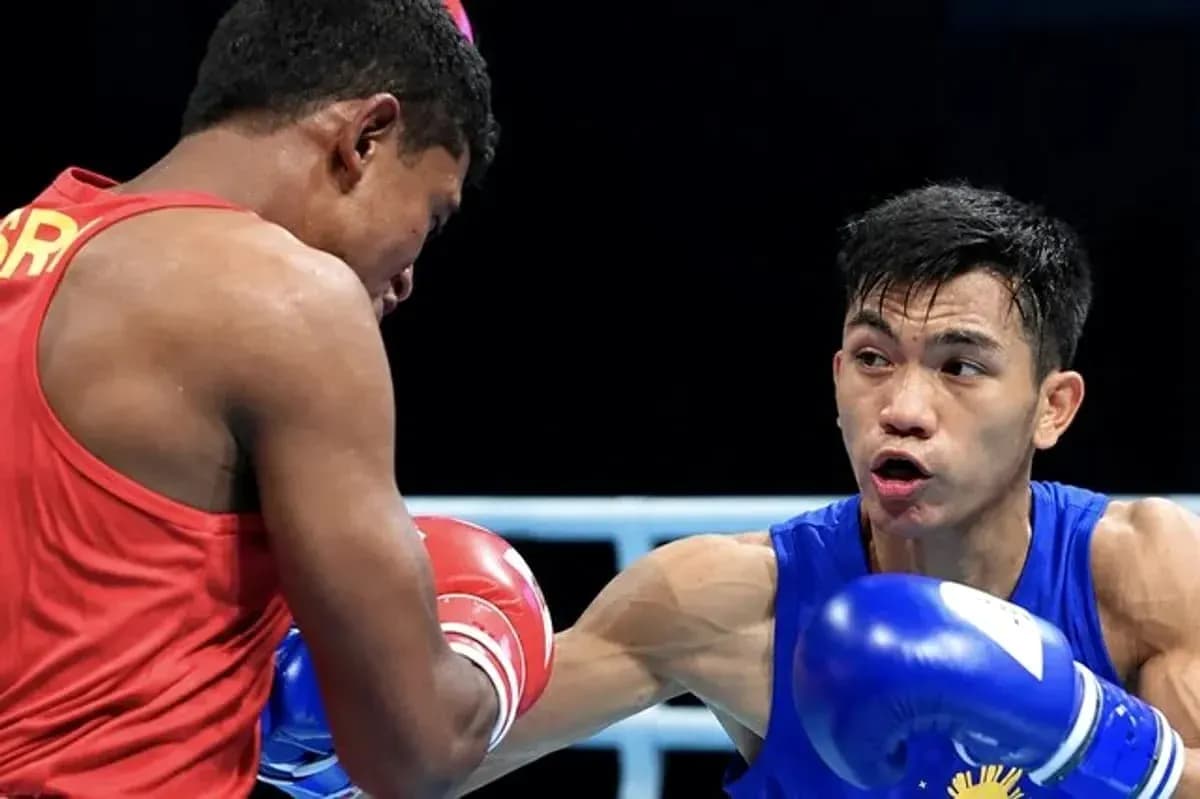
Mary Kom, one of India’s most decorated athletes, is used to walking into arenas and owning the ring. This time, she walked into a television set and found herself in the middle of a very different kind of bout.
The ring was Bigg Boss 20. The punches came from social media.
A single line that lit up the timelines
During a casual conversation on the Salman Khan-hosted reality show, singer Qazi Touqeer began doing what millions of Indians have done for years: naming women athletes who have lifted Indian sport to new heights.
“Hamare yahan sports mein kaun kaun ladki ne kamal kiya hai, Sania Mirza also did great, Sania Nehwal…” he began, listing two of the most recognisable names in Indian tennis and badminton.
Mary Kom didn’t let him finish.
“Lekin mere jaisa koi achieve nahi kiya,” she cut in. “But no one achieved what I did.”
On paper, it was a simple line. In the compressed, hyper-reactive world of reality TV and social media, it landed like a jab to the jaw.
Clipped out of the episode and posted across X and Instagram, the moment quickly went viral. What looked like a champion asserting pride in her own journey was heard by many as something sharper: a dismissal of Sania Mirza, Saina Nehwal and, by extension, other Indian women athletes who have carried their sports on their shoulders.
The debate ignited instantly. Was this the unfiltered confidence of a six-time world champion? Or a rare misstep from an icon who, for many, symbolises the collective fight of Indian women in sport?
A giant’s record, a divided reaction
On the scoreboard of history, Mary Kom’s claim to greatness is undisputed.
She is a six-time world champion. The first Indian woman boxer to win an Olympic medal. The only boxer, male or female, to win six world titles. Her record stands alone, and she knows it.
That knowledge is where some viewers were willing to give her the benefit of the doubt. They heard her line as the raw, unvarnished voice of an athlete who has spent a lifetime battling the odds and believes, with justification, that her story is singular.
But the backlash told a different story. Many fans felt Qazi Touqeer was simply acknowledging India’s most visible women stars, and that Mary Kom’s interruption shifted the mood from celebration to comparison. The tone, they argued, mattered as much as the words.
The clip spread, the comments piled up, and a familiar pattern emerged: one side defending her right to take pride in an extraordinary career, the other accusing her of undercutting the achievements of fellow trailblazers.
Team Mary Kom steps in
As the criticism swelled online, Mary Kom’s camp chose not to let the moment fester.
From her official account came a clarification and an apology, a clear attempt to steady the narrative before it spun further out of control.
“We apologise if Mary’s words were misunderstood. There was never any intention to demean or compare the journey with that of another athlete. Mary has immense respect for every athlete who represents India and gives their heart and soul to the sport,” the statement read.
The message didn’t try to rewrite what had been said on camera. Instead, it leaned on intent, stressing that the line was not meant as a ranking of greatness or a swipe at Sania Mirza, Saina Nehwal, or anyone else.
The team went on to underline a broader principle: “Every journey is unique, every achievement matters, and every medal makes India proud.”
That final line cut to the heart of the storm. The outrage was never about whether Mary Kom is great. It was about whether, in asserting that greatness, she had accidentally stepped on the shoulders of others who climbed alongside her.
A second controversy in a bruising year
For Mary Kom, this is the second time in a matter of months that words, not punches, have put her on the defensive.
In February, she drew heavy criticism over remarks about her divorce from her former husband, including a pointed comment that he had “ek rupiya bhi nahi kamaya”. That line, too, triggered a wave of anger and debate. She responded then with an apology video, insisting her comments were taken out of context and that she had not intended to hurt anyone or make sweeping generalisations.
The pattern is becoming hard to ignore. An athlete known for her ferocity and fearlessness in the ring is discovering how unforgiving the modern public arena can be when every sentence is clipped, replayed, and dissected.
Reality TV, real stakes
Bigg Boss 20 is built for this kind of flashpoint. The show thrives on unscripted exchanges, sharp interjections, and the tension between public personas and private instincts.
This season’s cast reflects that mix: Mary Kom alongside Qazi Touqeer, television actors Mahhi Vij, Kanika Mann and Isha Rikhi, Bhojpuri star Aamrapali Dubey, actor Aasif Khan, singer Rhiti Tiwari, creator Arishfa Khan, gaming figure Tanmay Singh aka Scoutop, actor-model Rohed Khan and others. It is a cocktail designed to produce friction.
For most contestants, a stray remark might mean a few days of trolling and a minor dip in popularity. For an Olympic medallist and national icon, every word carries extra weight.
Mary Kom built her legend by absorbing punishment and responding with power. Now, in the glare of a reality show and the constant hum of social media, the challenge is different: can one of India’s toughest champions navigate a space where the blows are verbal, the replays are endless, and the fight is over perception as much as performance?