Mauricio Pochettino's Journey: From World Cup Pressure to Premier League Aspirations
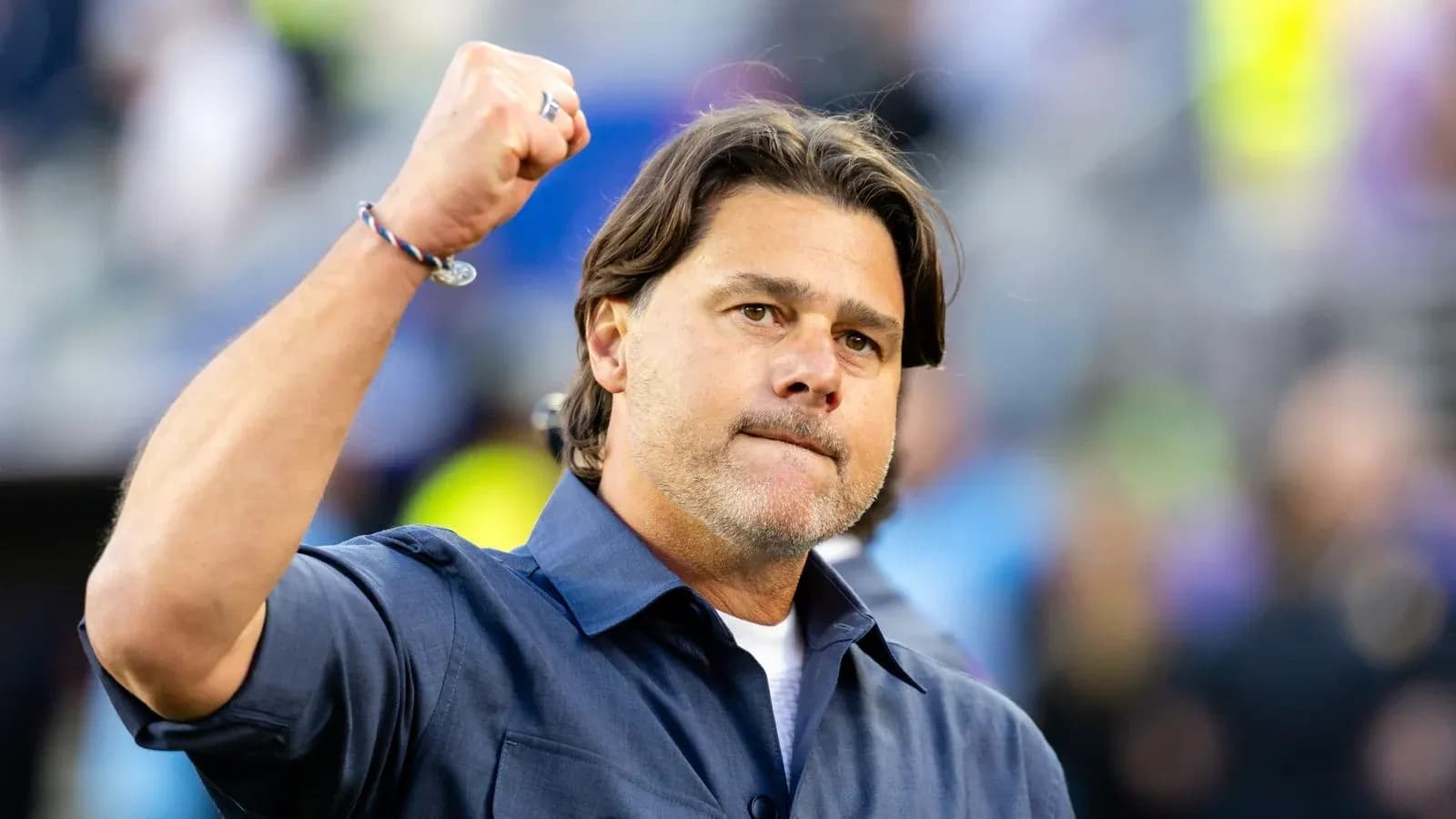
Mauricio Pochettino walks into the room like a man who’s finally had a chance to breathe. The hugs are genuine, the small talk easy, the laugh still that familiar, throaty chuckle. He has been away from the Premier League glare for a while, but he hasn’t been idle. Far from it.
His summer was not our summer. While most of football’s elite drifted between holidays and transfer rumours, Pochettino was living the most intense month of his coaching life: leading the USA at a home World Cup, riding a wave of expectation that crashed into Belgium in the last 16.
That exit line on a results sheet barely scratches the surface.
World Cups are pressure cookers at the best of times. This one came with its own unique twist: the United States as host, a president who relishes the camera, and a coach trying to maintain control while the circus rolled in around him.
“There were times when it was wild,” he admits in his own way, without ever using the word. You can hear it in what he chooses to emphasise instead. Detail. Clarity. Control.
“We are much better coaches now,” he insists, speaking for himself and his long-time assistant Jesus Perez. The tournament, he explains, sharpened his obsession with the smallest margins. How to transmit ideas to a group that barely trains together. How to make every decision count when you have so little time. “Everything needs to be perfect.” The phrase lands like a mantra, not a cliché.
Perfection, of course, is impossible. Especially when politics walks straight through the dressing-room door.
Trump, FIFA and Balogun’s “suspension of the suspension”
The World Cup story around the USA was never going to be just about football. Donald Trump made sure of that.
Pochettino chooses his words carefully when the conversation drifts towards the former president’s presence and influence. He prefers to talk about support, about backing, about the energy around the team. The noise, he suggests, belonged outside.
But it became impossible to ignore when Folarin Balogun’s eligibility saga exploded on the eve of the knockout tie with Belgium. The “suspension of his suspension” turned into a global talking point, dragging FIFA, lawyers and politicians into a decision that should have been simple: can he play, or not?
Pochettino knew exactly what it looked like from the outside. “Politics and manipulation” overshadowed the build-up, he said at the time. The anger, the accusations, the sense that football had been dragged into someone else’s power game.
Inside his camp, he tried to strip it back. “If you pay attention to the noise, you become crazy.” That was his line then, and it hasn’t changed. When FIFA’s letter finally arrived the day before the game confirming Balogun was available, the choice, he says, was “straightforward”. You pick your best players. You play.
The USA went out to Belgium. The story, inevitably, did not stop there.
Balogun’s stalled move and a coach keeping his distance
Balogun’s name has been back on the ticker in recent weeks for different reasons. His proposed Deadline Day move from Monaco to Everton collapsed late, leaving the striker stuck in Ligue 1 when many expected him to land in the Premier League.
Has Pochettino spoken to him? Not yet. Deliberately not.
He knows the emotional wreckage a failed transfer can leave behind and has chosen to give the forward space. He would have liked to see Balogun in England, testing himself in the league Pochettino still calls home in his heart. For now, the hope is simple: that Balogun settles, finds form, and arrives at the next international window in a better place.
The coach, though, has his own future mapped out more clearly than people might think.
Four more years with USA – but the Premier League fire still burns
The surprise headline after the World Cup was not about Trump, or Balogun, or even Belgium. It was about Pochettino himself. He signed on for four more years with the USA, a commitment that, on paper, takes him out of club football until 2030.
Six years away from the weekly grind. Six years away from the Premier League. For many, that sounds like the closing of a chapter.
He rejects that idea instantly.
“I have the ambition,” he says, and the words carry weight. His dream, as he frames it, is clear: four years with the national team, then a return to English football with a project capable of winning. Not just competing. Winning.
“To win the Premier League, to be in the Premier League and to build a project with the possibility of winning.” That is the target he keeps coming back to. “I love the football here… to have the chance again is one of my wishes and I hope that happens.”
He doesn’t talk like a man who has made peace with international football as a final act. He talks like a coach on a long detour, eyes still fixed on a familiar destination.
The Spurs question that never goes away
If there is one club that will always be linked to that destination, it is Tottenham.
Pochettino has never hidden his affection for Spurs or the sense of unfinished business that lingers from his time in north London. Eighteen months ago, he spoke openly about wanting to return one day. Since then, Tottenham have lurched through another cycle of turbulence: Ange Postecoglou gone, Thomas Frank and Igor Tudor arriving and departing as the club flirted dangerously with relegation.
So, did the phone ever ring? Was there a moment when the romantic rescue act nearly happened?
“Always I say, one day, why not?” he replies, almost playfully. This time, though, the answer is firm. There was talk. There were murmurs. “Maybe we receive some approach,” he concedes, but “it never was close.”
The same goes for other jobs that circled during and after the World Cup. AC Milan, at one stage, looked like a plausible landing spot. Pochettino shrugs that off with the ease of a man used to his name appearing in speculation columns.
“We were not open during the World Cup to talk with different clubs that were interested,” he says. Were there clubs interested? “Yes, always.” It sounds matter-of-fact, almost routine. Options are part of the landscape for a coach of his standing.
But he insists he and his staff “never gave the opportunity to be close. We always closed the door before it got close.” His path, for now, runs through the Stars and Stripes.
That does not mean he has stopped watching the clubs he once called home.
Spurs spending big – and a familiar warning
Tottenham, he notes, look very different from the club he left. The strategy has shifted. They are spending heavily, targeting players who already know the Premier League. The logic is obvious after two bruising seasons.
“They are investing like other clubs,” he says, seeing the pattern rather than the headlines. It is hard not to think back to his own years at Spurs, when he took the club to a Champions League final and a title race without the luxury of £300m transfer windows. When asked what he might have done with that kind of money, he offers a mischievous smile and pretends he cannot imagine such a figure.
So will this new approach work? He refuses to play the pundit who deals in certainty.
“You never know,” comes the reply. Decisions in football are gambles, whether made by a coach on a matchday or a board in the market. “We need time to see if that works or not.” It is the only honest answer, and he knows it.
What he does not disguise is his enduring affection. “I always wish the best for Tottenham because it’s in my heart.” The line is simple, but it doesn’t sound rehearsed. It sounds like someone talking about a place he once called home and might, one day, walk back into.
Chelsea’s reset and Alonso’s early test
Across London, Chelsea have embarked on a reset of their own. The role Pochettino held at Stamford Bridge has shifted from “head coach” to “manager”, a subtle but telling change in power and responsibility. The club’s transfer policy has also swung away from long-term “projects” towards players ready to impact the Premier League immediately under Xabi Alonso.
Pochettino treads carefully here. No criticism, no direct comparisons, just observations. He recognises the ambition at Chelsea and sees parallels with Tottenham’s current approach. “Buying players like this you can expect to fight, to be a contender for the Premier League,” he says. The expectation is built into the spending.
Chelsea’s defeat to Arsenal has already delivered a sharp jolt of reality. For some, that’s enough to spark early doubts. Pochettino isn’t interested in joining that chorus.
“Of course they are disappointed after the defeat against Arsenal,” he says, but he stresses the need for patience. Three games into Alonso’s first Premier League season is no time to judge. “We need to give time,” he repeats, extending the same plea to Tottenham’s new era.
He knows better than most how quickly narratives are written in England, and how rarely they reflect the time it takes to build something lasting.
Arsenal, Arteta and the bar to clear
If there is a club setting the pace in Pochettino’s eyes, it is not Spurs or Chelsea. It is Arsenal.
“Mikel [Arteta] is the best coach in the Premier League today,” he says, without hesitation. That is not a throwaway compliment. It is a recognition of a rival he has watched build, adapt and harden a side that now looks built to last.
“Knowing what he needs to do, it’s going to be tough to beat them.” That is the challenge he sees for everyone else – Tottenham, Chelsea, and, if his wish comes true, whatever Premier League club he eventually leads again.
For now, Pochettino’s world is red, white and blue, his focus on shaping a national team to compete on the biggest stage again. But listen closely and you can hear it: the itch for the weekly rhythm, the 38-game grind, the title race fought in cold rain and early kick-offs.
He has four years to refine himself further on the international stage. After that, the question will not be whether he wants the Premier League again.
It will be which club dares to hand him the project he has always believed he could finish.