
Mauricio Pochettino walks away from the USA with a suitcase full of credit and a ticket back to the Premier League pressure cooker. The destination could hardly be bigger: Manchester United.
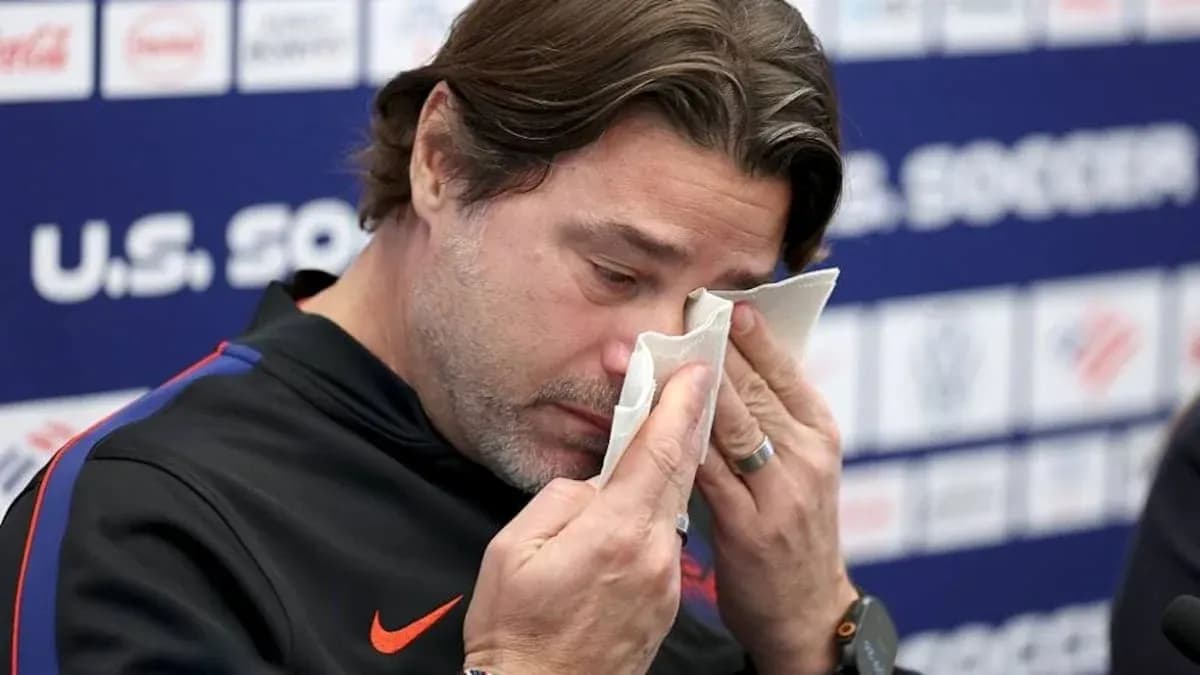
Speaking in Fayetteville, Georgia, before his final games in charge of the US men’s national team, Pochettino cut a reflective figure. This was not a coach sprinting for the exit.
“We learned a lot from you all, from this amazing country,” he said, calling the decision “one of the most difficult” of his career.
He will lead the USA into back-to-back CONCACAF Nations League fixtures against Haiti on Saturday and Tuesday, then fly to England to take on the job that has broken so many reputations.
From America’s touchline to Old Trafford’s storm
Pochettino has just guided the USA to the last 16 at this year’s World Cup, a run that stabilised a program once again trying to define itself on the global stage. US Soccer rewarded him with a contract extension in August. At that point, he insisted, the Premier League was not on his mind.
“I never said I wanted to go back in the Premier League,” he pointed out. Then came the call that changes everything. “Not too many opportunities can happen in your career with a side like Manchester United. That is difficult to turn down when it arrives.”
For US Soccer, there is pain but also a payoff. Chief executive and secretary general JT Batson praised Pochettino’s “leadership, professionalism and commitment to our players and culture”, and the federation is set to receive around US$10 million in compensation, plus additional sums to cover his departing backroom staff.
United, for their part, rolled out the familiar red carpet of a modern superclub unveiling a new hope. In a statement, they hailed Pochettino as “renowned for his high-intensity, attacking style of football, his dedication to building strong, cohesive teams and his outstanding record of developing individual players”. The club stressed that he has “consistently performed at the highest level of football across multiple leagues”.
The words are polished. The reality he walks into is anything but.
A giant in name, a puzzle in practice
Manchester United, 20-time English champions and once the gold standard under Alex Ferguson, have spent the years since his 2013 retirement stumbling through false dawns. Pochettino becomes the eighth permanent manager tasked with restoring a sense of order, identity and fear factor.
His club résumé explains why United kept circling his name over the years.
He arrived in England with Southampton, transforming them into one of the league’s most watchable sides. At Tottenham, he built a team that punched relentlessly above its financial weight. Across five full seasons in north London, Spurs never finished lower than fifth and surged all the way to the 2019 Champions League final, a peak that still defines the modern history of that club.
Silverware finally came at PSG, where he lifted the 2021 French Cup and the 2022 Ligue 1 title, though he did not see out his contract in Paris. The turbulence of that job is well known. Chelsea followed in 2023, another short, bruising spell in a club defined by volatility.
United have chosen a manager who thrives on intensity, connection and clear ideas. They have given him a club that has been anything but clear.
A divided club, a brutal first test
The fixture list offers no soft landing. Pochettino’s first league game in charge will be at Anfield, against Liverpool, on November 22. A baptism of fire at the home of United’s fiercest rivals, in front of a fanbase that has spent the last decade enjoying their neighbours’ chaos.
And chaos is exactly what he must tame.
On the pitch, the dressing room has frayed in public. Club captain Bruno Fernandes was dropped last month after criticising Michael Carrick’s tactics. Lisandro Martinez then aimed a public shot at the hierarchy over what he saw as a lack of investment. These are not whispers from the training ground; they are open challenges to authority.
Off the pitch, the mood is even more toxic. Carrick, a popular figure who won multiple trophies as a United player, was sacked amid rising anger. Supporters vented their fury at the ownership yet again, directing chants and banners at the US-based Glazer family, who have held a majority stake since Malcolm Glazer’s leveraged takeover in 2005. The debt from that deal still hangs over the club and its relationship with its own fans.
The arrival of British billionaire Jim Ratcliffe as a minority owner in 2024 was supposed to hint at a reset, a new era, a different way of running Manchester United. Those hopes have faded quickly under the weight of structural drift and mixed messaging.
Into this maelstrom walks Pochettino, asked to unite a fractured dressing room, re-energise a disillusioned fanbase and outmanoeuvre rivals who have spent a decade perfecting their own models.
Legacy in the USA, expectation in Manchester
Back in the United States, there is an acknowledgement that something meaningful has been built, even if it ends sooner than many expected. Batson’s tribute to Pochettino’s professionalism reflects a federation that believes it has taken a step forward, even as it now faces another search for a head coach on the road to the next World Cup.
Carrick, the man Pochettino replaces, left with his own emotional farewell. In a statement on Friday, he wished United “nothing but success” and insisted his love for the club “never dies”. It was a reminder that, for all the churn in the dugout and the boardroom, the institution still inspires fierce loyalty from those who have worn the shirt.
Pochettino has been linked with this job more times than he would care to count. Now the theory ends and the reality begins. He has the CV, the style, the aura of a builder.
What he doesn’t have is time, patience or a stable backdrop.
At Old Trafford, those are luxuries. At Anfield, on November 22, he will find out exactly how little of them he has.





