
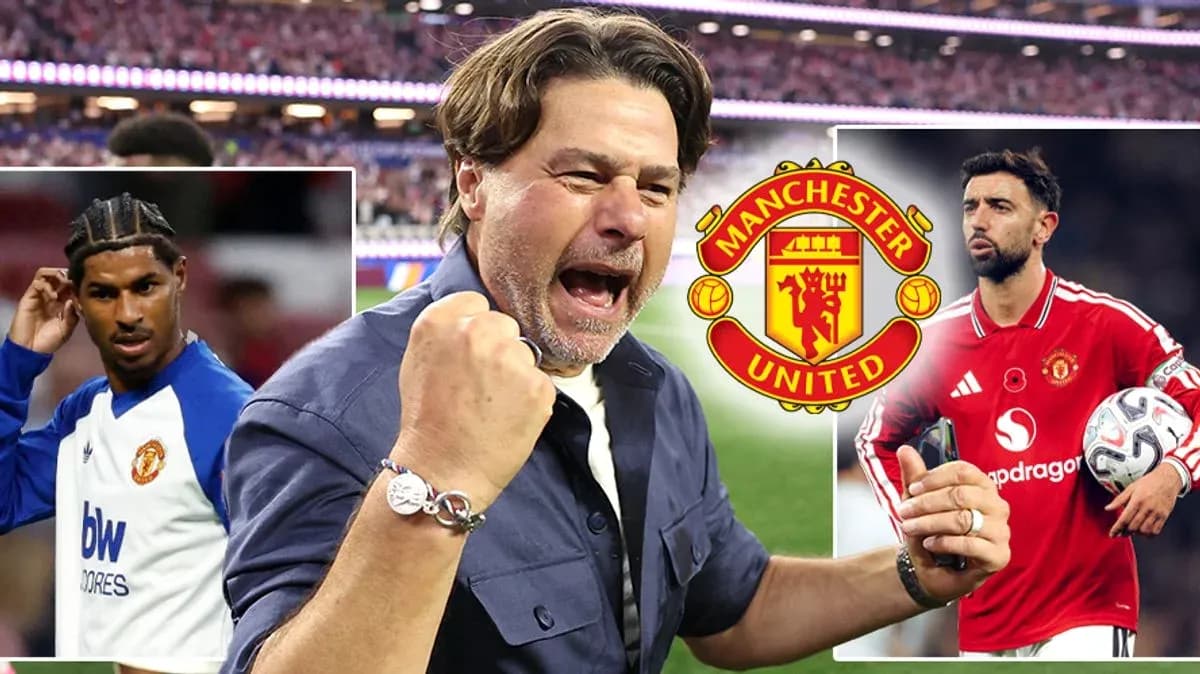
Mauricio Pochettino has finally walked through the door at Old Trafford. Not as the nearly man, not as the one that got away to Jose Mourinho or Erik ten Hag, but as Manchester United’s new manager, the man charged with hauling a giant out of the relegation places and back towards the top of English football.
It has taken years of flirting and false starts to get here. Now there is no hiding place. United have won just one of their first 10 Premier League games and look broken in all the wrong areas. Pochettino inherits a squad short on confidence, short on cohesion, and short on time.
Change will be brutal. It always is when a club of this size sinks this low. Some players will thrive under the Argentine’s demanding, emotional, high-intensity style. Others, and even some powerful figures upstairs, may find his arrival far less comfortable.
Here are the early winners and losers from one of the most consequential appointments in United’s modern history.
Winners
Marcus Rashford
If there is one player who should feel the jolt of electricity from this appointment, it is Marcus Rashford.
His return to Old Trafford under Michael Carrick never truly caught fire. Eight appearances, no goals, and then a hip injury that has parked the 28-year-old on the sidelines again. For a forward who once played like he had a permanent tailwind, the last few months have felt flat and heavy.
Pochettino changes that equation. He has already been tipped as a player the new manager will “love”, and not in a vague, throwaway sense. The Telegraph has outlined how highly Pochettino rates him and how determined he is to wrap an arm around Rashford, to restore the belief and edge that once terrified defenders.
The admiration is not new. During the 2022 World Cup, with no job at Old Trafford on the horizon, Pochettino’s verdict on Rashford was clear and pointed: “I’ve always liked him, I knew of his process because I was in England, but I think he’s a great player. He just needs the confidence and for himself to believe, to put him at the top level. The quality is there for him.”
That is not the language of a coach indifferent to a talent. That is a manager who sees a project, a player he can rebuild and elevate.
Rashford now gets what every struggling star craves: a reset. A coach who specialises in reconnecting players with their best selves. If Pochettino can turn Old Trafford into a pressing, front-foot arena again, Rashford’s pace and directness could suddenly become central, not incidental, to United’s identity.
Few in this squad stand to gain more.
Luke Shaw
Another old relationship is about to be revisited.
Long before he became a lightning rod for criticism at Manchester United, Luke Shaw was the jewel of Southampton’s academy, a fearless, flying full-back under a young Mauricio Pochettino. The Argentine adored him back then. He trusted him, pushed him, and helped launch his career.
More than a decade on, they meet again in very different circumstances. Shaw is now 31, worn down by injuries, and in the final year of his contract. The dynamic, marauding left-back of his youth has been replaced by a more measured defender who has had to learn to manage his body as much as his opponents.
Yet that shared history matters. Pochettino knows Shaw’s character, his strengths, and his limitations better than most. He understands what the defender can and cannot do, and will judge him through that lens, not just through the noise of recent seasons.
Crucially, Shaw will almost certainly get a chance. Under another manager, with his age, fitness record and contract situation, he might have been quietly phased out, a convenient symbol of a new era. Under Pochettino, he at least walks into a dressing room with credit already banked.
It does not guarantee a fairytale revival. But it does give Shaw something he might not have had with a different appointment: a genuine opportunity to prove he can still be part of what comes next.
Losers
Omar Berrada and Jason Wilcox
The first casualties of Pochettino’s arrival may not be wearing boots at all.
Omar Berrada and Jason Wilcox have operated as powerful figures in United’s new structure, tasked with steering the club into a more modern, data-driven era. Yet the decision to turn to Pochettino has exposed the limits of that influence.
Carrick has paid with his job for United’s dismal start, but the spotlight has swung upstairs. Reports suggest the Glazers themselves drove the push for Pochettino, while Wilcox’s preferred candidate was Eddie Howe, the former Newcastle manager. That alone tells a story about where the real power still lies.
The Mail has gone further, claiming Pochettino will “not answer” to Berrada and Wilcox in the same way as Carrick or the previous managers appointed under Ineos. That is a sharp change in tone. It hints at a coach with a more direct line to ownership and a broader remit over football decisions.
So where does that leave them? Marginalised, at least in perception. If Pochettino succeeds, the glory will flow towards the dugout and the boardroom, not necessarily the sporting structure that had championed a different direction. If he fails, the argument for their authority weakens again.
They have not lost their titles. But they have lost some of their aura. For executives who had grown used to shaping the future, Pochettino’s arrival is a reminder that, at Manchester United, the manager still has the power to bend the club around him.
Bruno Fernandes
On paper, Bruno Fernandes should be a Pochettino player.
High energy. Constant movement. Relentless risk-taker. The kind of attacking midfielder you can build a pressing, aggressive side around. Pochettino even tried to sign him for Tottenham before his eventual move to Old Trafford.
Yet the timing of this appointment drops Fernandes into a far more uncertain place.
Talks over a new deal have stalled. His form has dipped from the extraordinary heights of last season to something far more ordinary. The numbers, the influence, the sense that United simply cannot function without him – all of that has dulled.
Suddenly, he does not feel quite so untouchable.
Pochettino could still choose to double down, to make Fernandes the heartbeat of his United, to hand him responsibility and say: this is your team, drag it with me. That option is there, and the Argentine has never been afraid to back a strong dressing-room figure if he believes in the footballer beneath the personality.
But there is another route. Fernandes is 32, edging towards the final stretch of his peak years. Even with his contract situation unresolved, he remains one of the few players in this squad who could command a significant fee. In a team crying out for defensive reinforcements and structural surgery, that matters.
If Pochettino decides the rebuild needs hard choices and fresh profiles, Fernandes becomes more vulnerable than at any point since he arrived. His recent public frustration with United’s tactics did not sit well with Carrick. It would land even worse with a manager who is expected to wield greater authority and who has never shied away from making ruthless calls.
Under Pochettino, nobody is bigger than the project. Not even the captain.
Pochettino walks into Old Trafford with a clear mandate and a fractured club. Some will rise with him. Others will discover that his arrival marks the beginning of the end of their own stories.
The only question now is which version of Manchester United he builds: a revived giant that finally matches his long-held vision, or another cautionary tale in a decade of missteps.





