Max Verstappen doesn’t hand out praise lightly. When he does, the paddock tends to listen.
So when the triple world champion paused to talk about Robert Kubica, it carried weight. Real weight.
“It’s special,” Verstappen said, reflecting on Kubica’s long road back from the rally crash that almost ended his career in 2011. Fourteen years after that horror accident, the Pole stood on the top step at Le Mans in 2025, winning the endurance classic in the #83 AF Corse Ferrari Hypercar alongside Yifei Ye and Phil Hanson.
“Robert was a fantastic driver, and of course he still is. He had an enormous amount of talent,” Verstappen added. “If you ask anyone here in the paddock, or people who used to race against him, I think everyone will say he was destined to achieve much more in Formula 1. Unfortunately, then that accident happened.”
Kubica’s story, once a tale of what might have been, has become one of stubborn refusal to fade away. Le Mans gave him the victory Formula 1 never did, and Verstappen’s admiration underlines how deeply that comeback resonates with the drivers still in the arena.
Norris wrestling a very different McLaren
At McLaren, the conversation is not about comebacks but adaptation.
Lando Norris has made it clear: this year’s car is a different animal.
“I certainly think this year’s car is different to last year by quite a long way, and again, you have to adapt to that,” the defending champion admitted. He knows the McLaren quirks better than anyone, yet even he sounds like a driver having to relearn his craft.
“I don’t know if this car is that different to other cars. I still believe it is, because it has been since I’ve been part of McLaren,” he said. “Everyone who’s driven a McLaren has said how odd and unique a McLaren is to drive, and there’s been a good number of drivers who have said that and tested other cars at the same time.”
That uniqueness cuts both ways. It can unlock pace, or trap it.
“You have to drive it in a very different way,” Norris continued. “There’s a lot of things I’ve had to adapt to at the beginning of the year to understand this year’s car, but I don’t think I have the ability to differentiate if it’s a McLaren thing or so.”
McLaren’s answer arrives in Baku. Their most significant upgrade of the season lands on the streets of Azerbaijan: a new floor, fresh aero parts and, perhaps most intriguingly, the rebirth of the rotating “Macarena” H-Wing.
The car has struggled in fast corners; the new floor is designed to attack that weakness head-on. The H-Wing, which had to be removed in Madrid because it didn’t suit the downforce demands there, returns in revised form. If it works as intended, it could give Norris and his team a sharper, more predictable weapon on a circuit that punishes instability.
Red Bull play the long game with Hadjar
At Red Bull, the story has been about restraint.
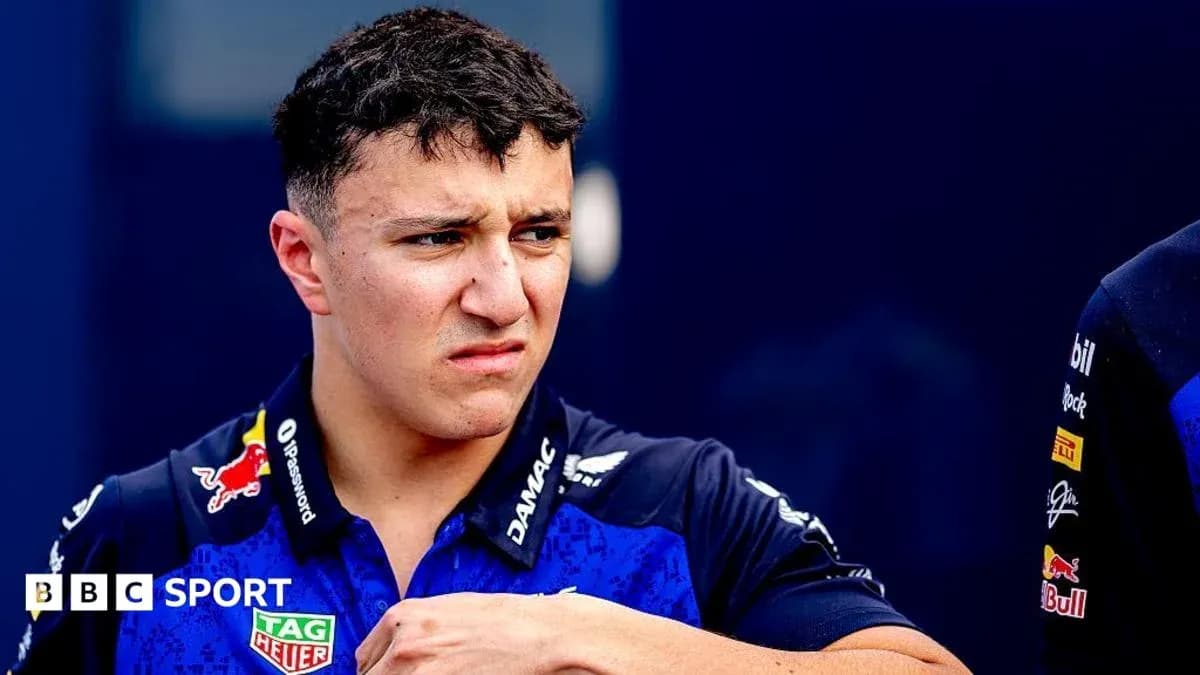
Laurent Mekies has been adamant for weeks: there would be no rushing Isack Hadjar back from his wrist injury. No heroics. No shortcuts.
The lesson is recent and raw. Lance Stroll’s charge to sixth place in Bahrain in 2023, just two weeks after breaking his wrist in pre-season training, came at a heavy cost. He battled chronic pain for months, needed a second corrective surgery and ended up missing a race anyway.
That is exactly what Red Bull wanted to avoid with Hadjar.
The Frenchman’s trajectory is steeply upward. After a strong debut year in Formula 1, he has settled into Red Bull with impressive composure, already scoring a podium and, crucially, becoming the first team-mate in years not to crumble under the pressure of sharing a garage with Verstappen.
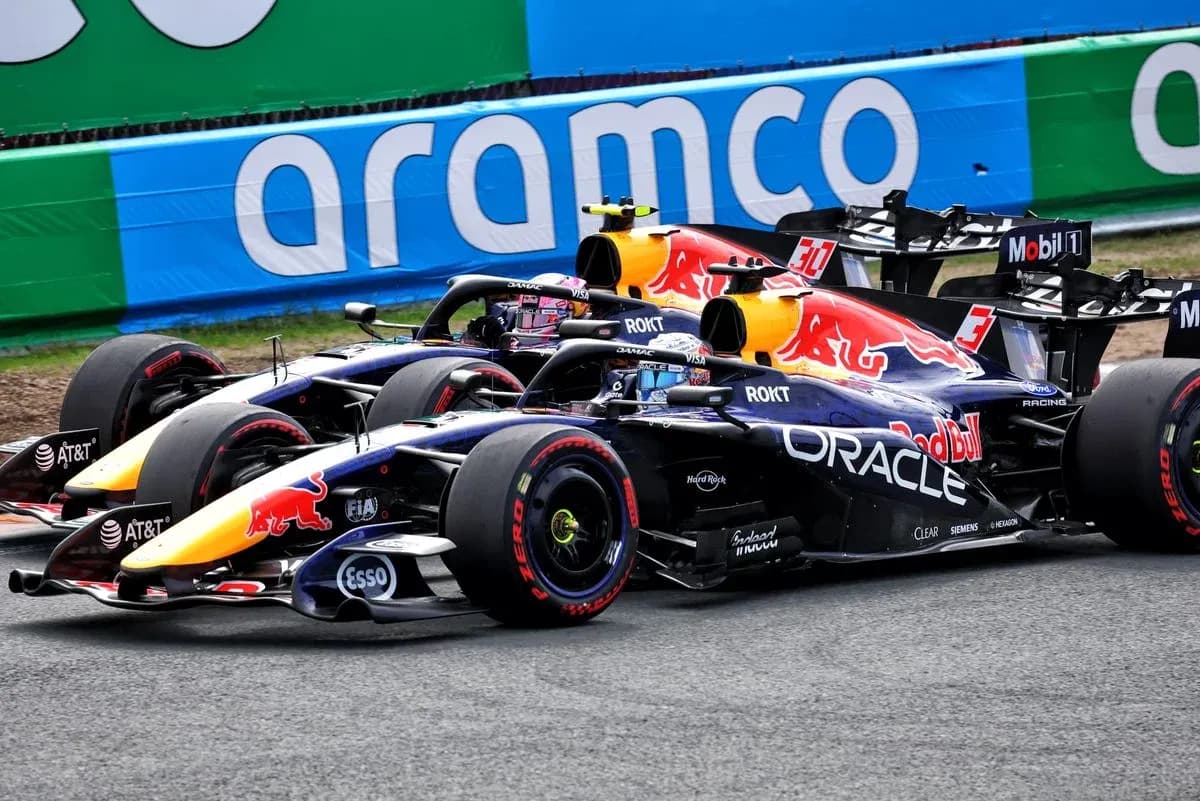
Red Bull’s driver shuffling over the last three race weekends has been awkward for both of their teams, but the pay-off comes now. Hadjar has been cleared to withstand the brutal forces that tear through a driver’s wrists at 200mph, and he returns for the Azerbaijan Grand Prix.
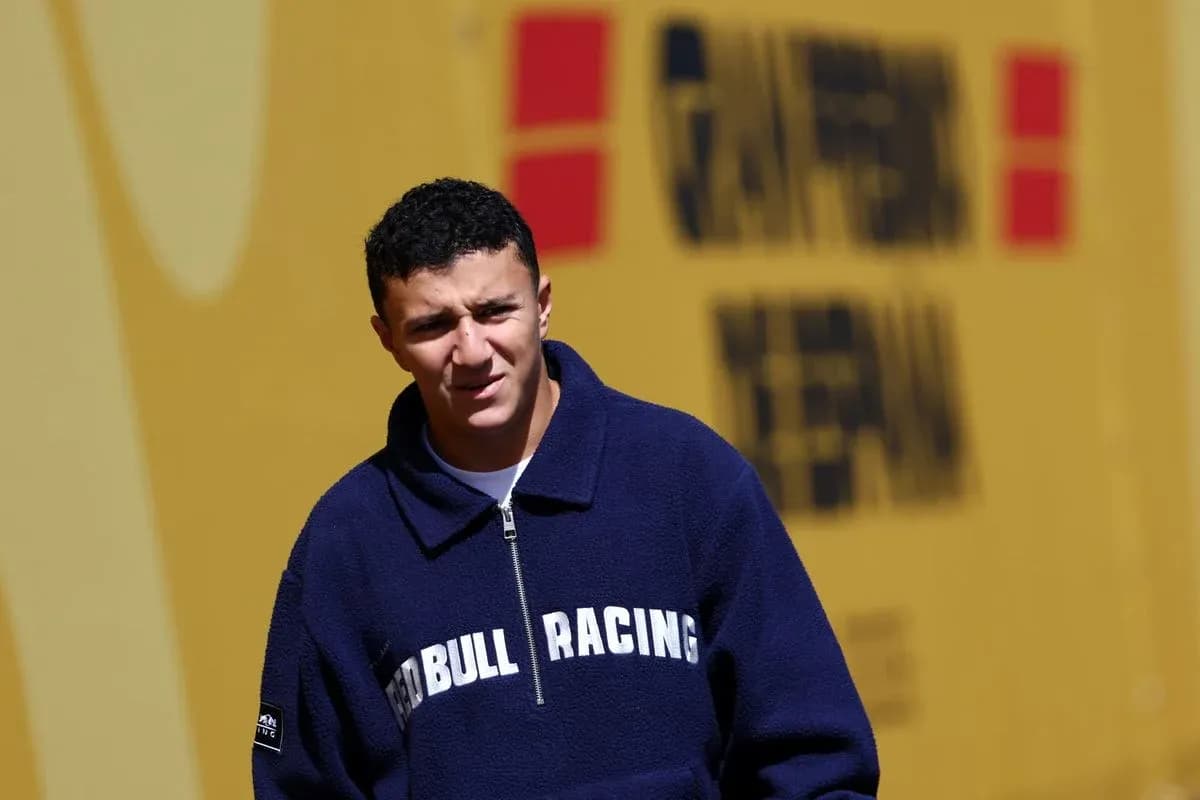
“Oracle Red Bull Racing is delighted to welcome Isack back this weekend,” the team confirmed. “Having made a successful recovery from his wrist injury, Isack will return to action at the Baku City Circuit on Thursday.
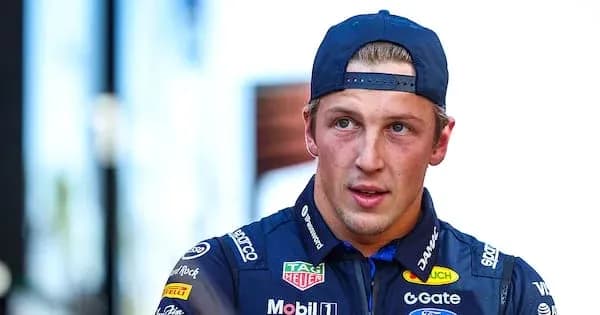
“The team would like to sincerely thank Liam for his professionalism, dedication and hard work over the past three races. Stepping in under challenging circumstances, he delivered some impressive performances and made a valuable contribution to the Team. We wish him all the very best as he returns to Visa Cash App Racing Bulls.”
Both Hadjar and Red Bull stand to gain from the patience they showed. In a sport obsessed with the next session, they played the long game.
Lawson under fire – and defended
Not everyone shares that patience.
Nico Rosberg has never been shy with an opinion, and his latest target is Red Bull’s pool of potential Verstappen team-mates. The 2016 world champion believes the options are falling short of the bar set by the Dutchman and by Sebastian Vettel before him.
“That's certainly a difficult decision. They do need to decide at some point,” Rosberg told Sky F1. “The thing for Red Bull, though, is they're looking for the next Max Verstappen and the next Sebastian Vettel. Everything else is just not good enough.
“At the moment, I'm not sure that Liam Lawson would be considered at that level with what he's been producing so far. With [Arvid] Lindblad and also [Isack] Hadjar, it's still possible in the discussions for them.”
Harsh words, given the circumstances Lawson has faced.
Mekies, for one, was having none of it. The Red Bull team principal moved quickly to defend the Kiwi, who stepped in for Hadjar and delivered sixth place in Spain, plus 14th at Monza.
“I think he's done a very good job,” Mekies said. “I think we all know how difficult it is to jump to a different team, to a different car, and I think that he has done that to the best of what could have been our expectations.
“He has taken some very important points today with the P6. He did the same in Zandvoort and in Monza he would have done something similar without the contact with Nico [Hulkenberg] and the front wing damage.
“So, I think he did a very good job, again very different pictures compared to the first two races of 2025 when he was in the team so we are thankful and happy with that.”
Red Bull’s dilemma is clear: they are not just searching for a solid number two. They are hunting for the next phenomenon. Until that name emerges, every performance from Lawson, Hadjar and Lindblad will be judged against an almost impossible standard.
FIA tears up the stopwatch
While teams juggle line-ups and upgrades, the rulebook is shifting under their feet.
The FIA has confirmed a series of major changes for next year after the latest F1 Commission meeting, and they will reshape how races are run.
The long-standing rule that a Grand Prix must be completed within a maximum two-hour race time inside a three-hour window is being scrapped. That change gives race control more room to manage interruptions without the clock strangling the spectacle.
Race distances are being trimmed as well. The standard 305km length drops to 290km from next season, with Monaco remaining the outlier at 260km. Behind it all sits the previously agreed overhaul of the power unit structure for 2026, a package that had already sparked heavy criticism.
The logic is straightforward: shorter races, more flat-out running. It is understood the tweak will allow drivers to run at full throttle more often per lap, rather than juggling energy deployment and fuel-saving to the same extent.
Gearbox homologation is also being removed. The Sporting Advisory Committee framed that as a move to “preserve supplier development freedom”, opening the door for more innovation – and potentially more divergence – in how teams approach reliability and performance.
The sport heads to Baku with new parts, returning drivers and a rulebook in motion. The question now is simple: who adapts fastest in a championship that refuses to stand still?