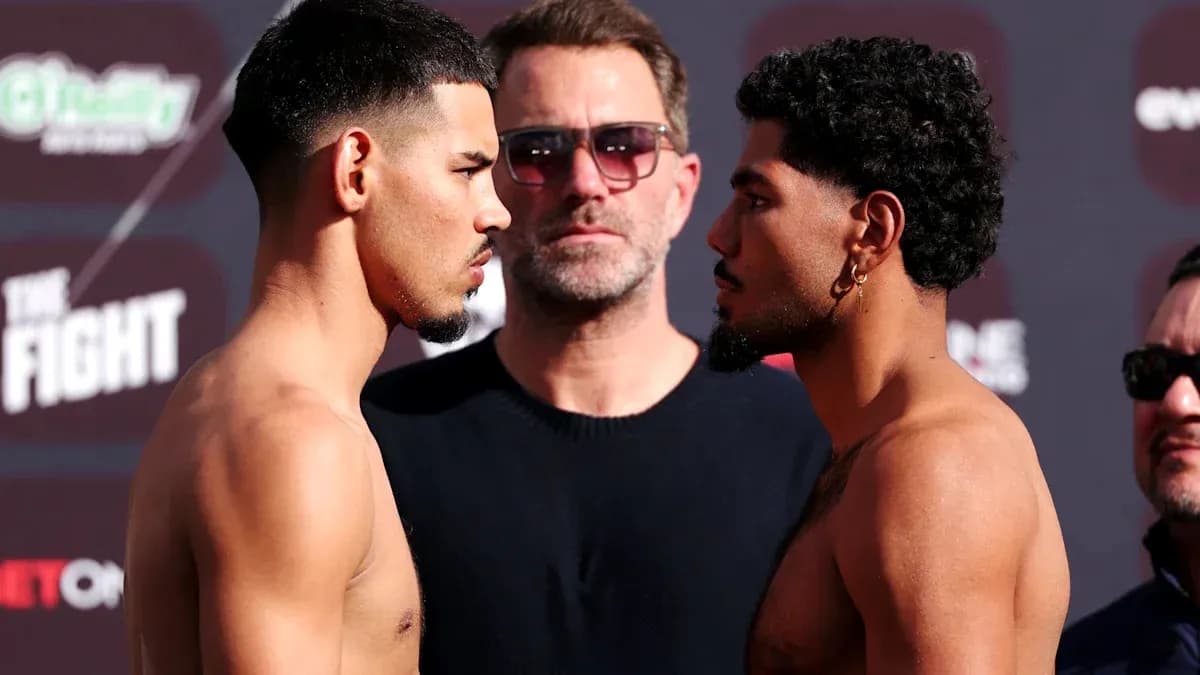
In a city living under the crack of intercepted missiles, Christian Mbilli and Saul “Canelo” Alvarez stepped onto the scales and carried on as if all that mattered was 12 stone.
Both men hit the super-middleweight limit of 12st (76kg) in Riyadh, a routine detail on anything but a routine weekend. Twenty-four hours earlier, Saudi authorities said they had intercepted two ballistic missiles over the capital. Shrapnel fell, a civilian was left with minor injuries, a house and a vehicle were damaged. The show, somehow, has gone on.
Mbilli, 31, arrives as the new man with the old belt. Elevated to WBC super-middleweight champion in January, he now faces the division’s defining figure of the past decade in his first defence. Across from him stands Alvarez, 36, a fighter whose career has spanned eras and weight classes, and who will make his 69th professional appearance on Saturday night.
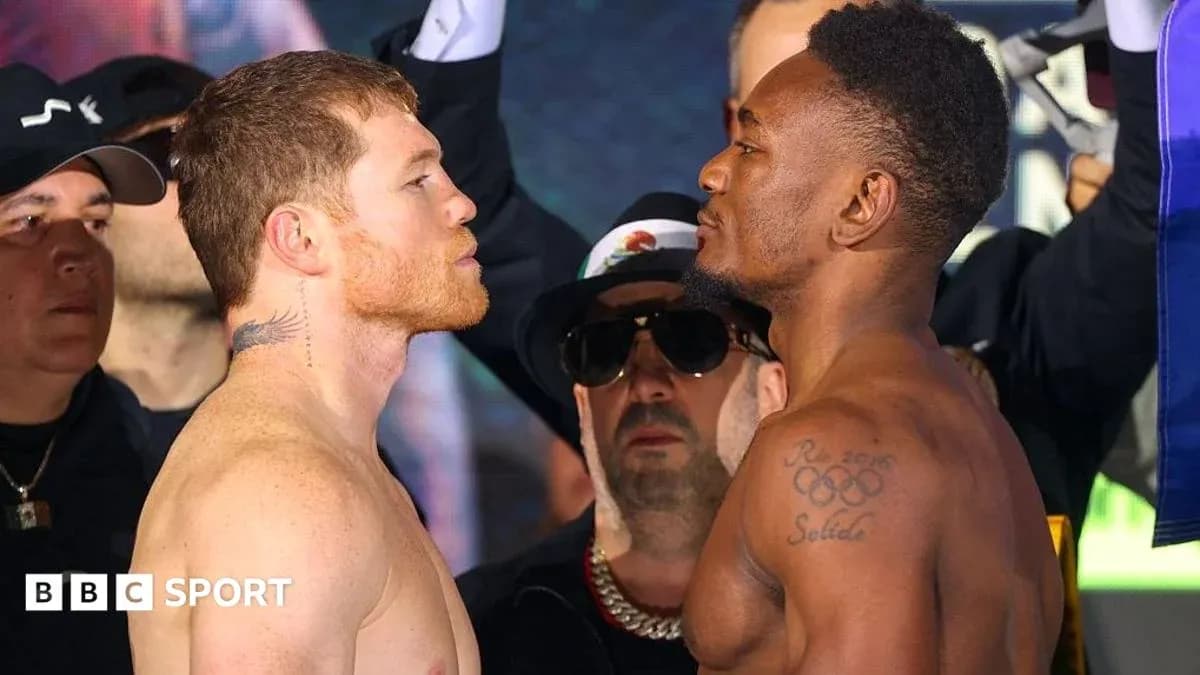
The weigh-in itself was sharp and controlled. No drama on the scales, no late scrambles with towels or saunas. Both fighters made the limit cleanly, then came together for a face-off that carried tension but not chaos. Eyes locked, jaws set, but with a measure of respect between them. They know exactly what the other represents.
For Alvarez, this is about more than another payday in a long, gilded career. He turned professional on 29 October 2005, almost 21 years to the day before this latest walk to the ring. Sixteen years have passed since he first wrapped a world title around his waist. The hunger, he insists, has not dimmed.
“This is very important for me, I've been doing this for 21 years and won my first world title 16 years ago. It's important for me to win a title again,” he said, leaning back on the experience that has defined him. Then came the familiar edge. “My experience is different, he hasn't faced anyone like me and I'll teach him tomorrow.”
That is the promise from the Mexican icon: that ring craft, timing, and the weight of big nights will be enough to blunt Mbilli’s rise. For Mbilli, the task is to prove that youth, momentum and a fresh champion’s ambition can crack one of boxing’s most seasoned champions.
The backdrop could hardly be more volatile. Doubts have swirled in recent weeks about whether the event could safely take place at all, with the conflict between Saudi Arabia and Yemen’s Houthi movement intensifying. The UK’s Foreign, Commonwealth and Development Office currently advises against all but essential travel to the whole of Saudi Arabia, a stark warning that sits uneasily beside the gloss of a world title promotion.
The tension is not theoretical. Earlier in October, a missile strike on Riyadh’s King Khalid International Airport killed 13 people and wounded more than 300. Thursday’s interception over the capital underlined that the threat is ongoing, not historic.
Those realities have seeped into the logistics of fight week. Travel arrangements for fans, media and teams have been complicated by restricted access to the airport. Getting in has become a challenge; getting out may yet be another. Yet in the middle of it all, a ring will be built, lights will blaze, and two men will try to impose their will on each other for the WBC belt.
So Mbilli’s first defence will not just be measured by scorecards and punch stats. It takes place in a city where sirens and missile alerts have joined the usual soundtrack of a major fight week. Alvarez, chasing another title deep into a storied career, walks toward a ring that sits in the shadow of geopolitics as much as ring history.
When the bell goes, it will be 21 years of experience against a champion with everything to prove, in a place where the stakes outside the ropes feel as real as the ones inside them.