Memphis Grizzlies: Surprising Start to the Season
Ten games rarely tell the whole story. They barely scratch the surface for a veteran group, let alone a roster built around one of the youngest cores in the league and stepping into a new era.
But with these Memphis Grizzlies, ten games have been enough to send a clear message: this rebuild is not starting from the basement.
A Shooting Surge That Turns Heads
Over their last ten outings, Memphis has caught fire in a way the franchise has almost never seen.
- 152 made threes.
- 38.6% from beyond the arc.
- 195 made free throws.
- 84.6% at the line.
Teams have put together stretches like that before. Memphis has, too, but only in pieces. The twist here is the combination. The Grizzlies are just the second team in NBA history to hit those shooting thresholds over the same ten-game stretch to start a season.
Right now, they sit second in the league in three-point percentage and first in free-throw percentage. Nobody had that in their preseason notes. Not for this roster. Not this soon.
Regression is coming. Everyone knows it. No team with this little collective experience lives in that shooting stratosphere for 82 games. But the numbers aren’t a fluke of pure luck; they’re a loud hint that this might be the best group of shooters the franchise has ever assembled.
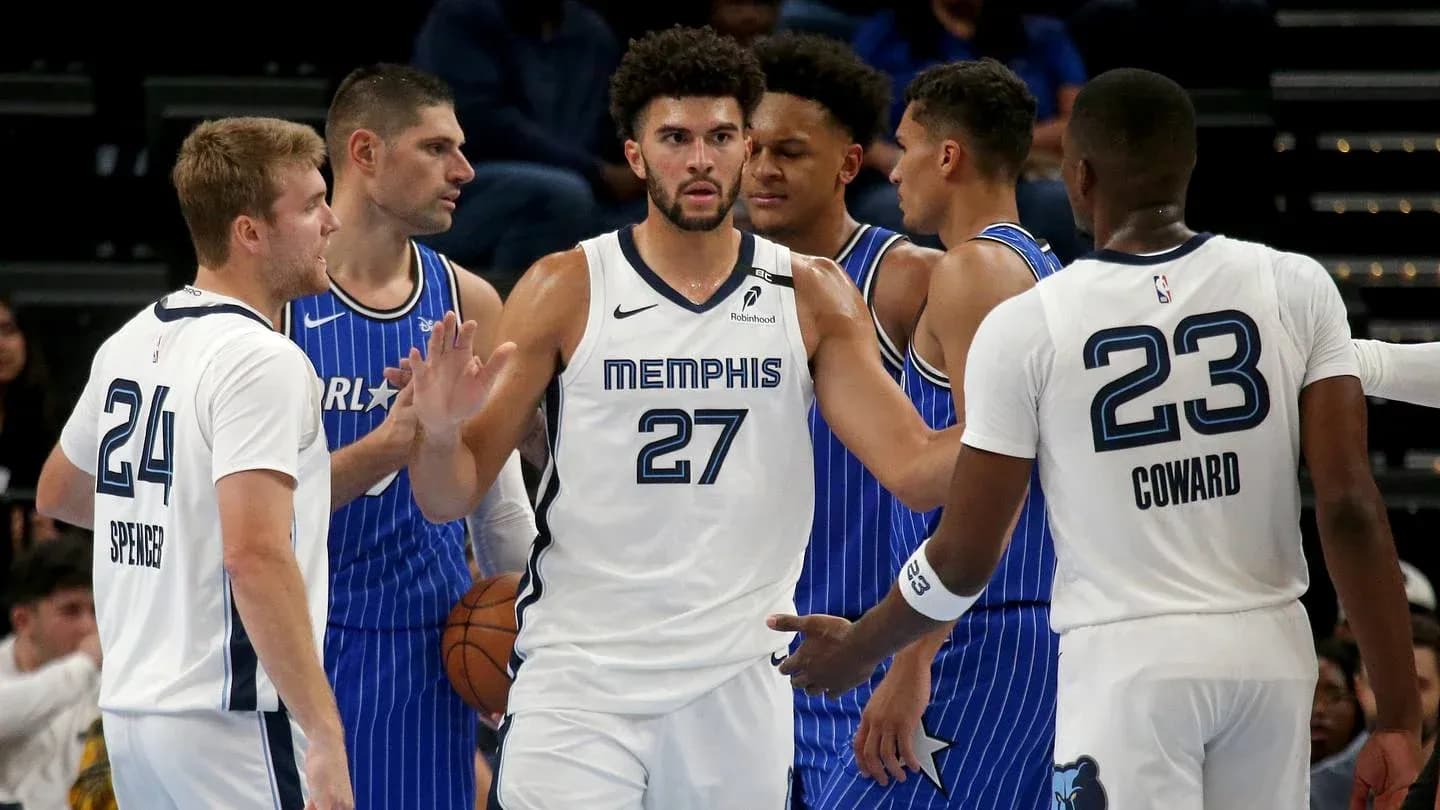
Cam Spencer looks every bit the specialist his reputation promised, a historically accurate marksman who bends defenses just by standing still. Ty Jerome brings those familiar “top of the league” bursts where every jumper feels automatic. Off the bench, Jerami Grant is burying 45% of his threes on nearly four attempts a night, a luxury scorer in a reserve role.
The most important twist, though, comes from the wings who were supposed to be question marks. Jaylen Wells and Ced Coward aren’t just surviving; they’re spacing the floor with reliable, repeatable shooting. That was the dream scenario for this phase of Grizzlies basketball: raise the offensive floor, not just chase hot nights.
The early returns back that up. Memphis sits 6th in true shooting, 10th in offensive rating, and 12th in half-court offense. Those are not the numbers of a plucky, overachieving underdog. Those are the numbers of a team that knows how it wants to score and has the tools to do it.
The percentages will cool. The schedule will sharpen. But if this level of shooting is even partially real, this rebuild starts from a much higher rung than anyone expected.
A Core That Already Fits
The other surprise isn’t on the stat sheet. It’s in how this thing looks.
With so many young players stepping into bigger roles, the expectation was obvious: clunky possessions, shaky spacing, a lot of “figuring it out” on the fly. And yes, the chemistry is still under construction.
Yet the core of Cam Boozer, Zach Edey, Coward, and Wells has clicked faster than anticipated. Their games don’t just coexist; they complement each other.
When that quartet shares the floor, Memphis plays grown-up basketball. They rebound with authority. They execute offensively. They defend as a unit. Add Ty Jerome to the mix, and suddenly the Grizzlies have one of the most productive starting units in the league, not just one of the youngest.
The key is role acceptance without limitation. Each player leans into what he does best, but each has also flashed something extra.
Coward and Wells were supposed to be developmental bets; they’ve turned into dependable shooters. Edey, known for his size and touch, has brought real defensive impact. Boozer, hailed for his talent, is already showing the ability to process the game and run offense with poise.
This is what early-stage rebuilds rarely have: a ten-game stretch that proves, not just suggests, that the group can win NBA games right now. That evidence matters. It fuels belief in the locker room and sets a standard for what “normal” should look like.
The Cracks Beneath the Shine
For all the promise, the flaws are obvious enough that they can’t be ignored.
Memphis sits at 7–3, and that record has been a thrill for a fan base bracing for a long, bumpy year. But as the shooting cools and the opponents get tougher, the weaknesses of a young team will show through.
Turnovers are the clearest problem. The Grizzlies rank 20th or worse in both turnovers committed and turnovers forced. Lose that battle most nights and you give back a big chunk of the edge you’ve earned on the glass. With the decision-making and shooting talent on this roster, that’s a fixable issue—but it has to be addressed.
Then there’s the rim.
Memphis has ridden a wave of three-point success. When those shots fall, the offense hums. Early November already offered a reminder of what happens when variance turns against them.
Right now, the Grizzlies rank 27th in the percentage of their shots taken at the rim and just 19th in finishing those attempts. That’s a dangerous mix. If you’re not getting there often and you’re not finishing well when you do, there’s no safety net when the threes stop dropping.
This roster doesn’t boast elite self-creators. It doesn’t live in transition. That means the half court has to carry the weight. Ball movement can’t just find open threes; it has to generate quality looks at every level of the floor. Paint touches, rim pressure, drive-and-kick sequences—those are the next steps in the evolution.
Expectations, Adjusted
Memphis is almost certainly ahead of schedule. That doesn’t mean it’s wrong to adjust what this season could be.
This group can compete most nights. They’ve already shown it. The shooting is real enough, the core is connected enough, and the competitive edge is sharp enough—especially on a team with multiple players who openly hate losing—to keep them in games they were supposed to lose.
Time will decide how high this version of the Grizzlies can climb. But one thing is already clear: the moment to start expecting sustainable winning in Memphis may be closer than anyone thought when this season tipped off.