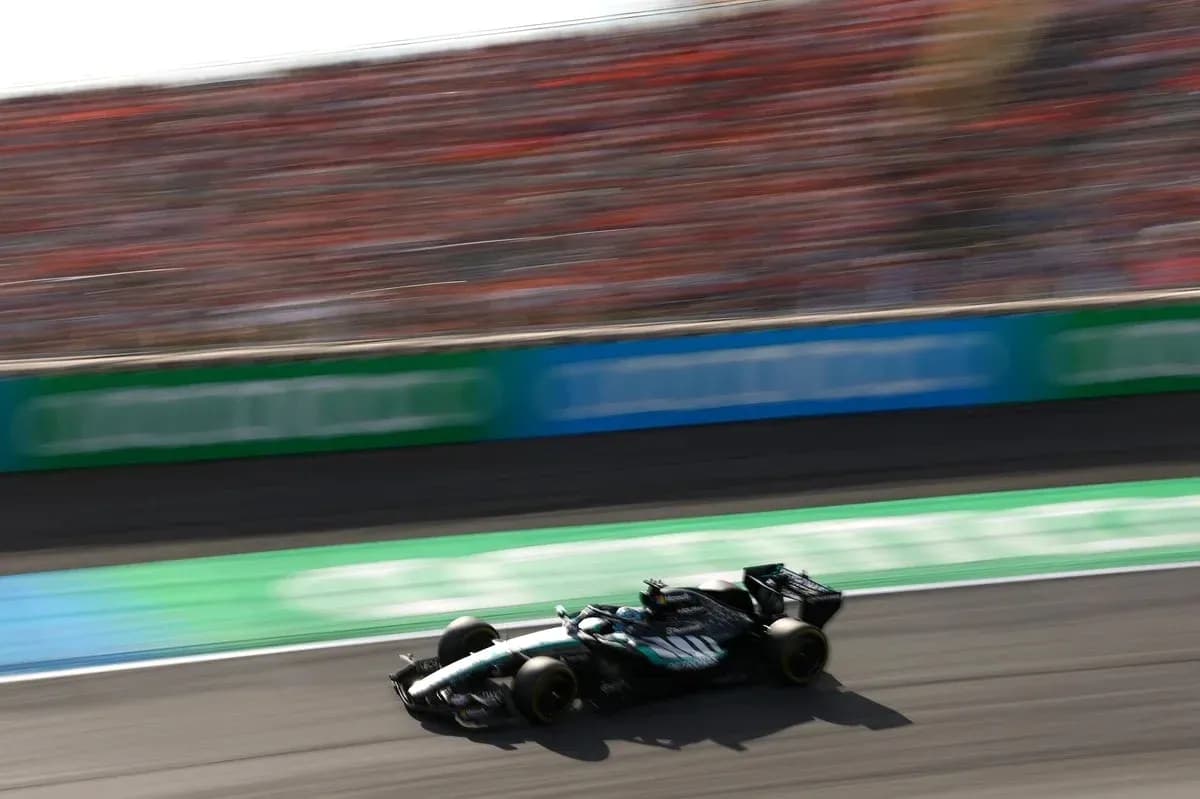
Mercedes left Zandvoort with a big haul of points, a bigger championship lead for Kimi Antonelli – and a headache it can’t yet explain.
The numbers say the weekend was a success: sprint pole, sprint win, a 2-3 in qualifying and the grand prix, and 46 points on the board – the team’s second-best return of the season after China. The stopwatch tells a different story.
From flying on Saturday to “rubbish” on Sunday
George Russell looked untouchable early on. Pole for the sprint, victory in the sprint, and a car that seemed to dance through Zandvoort’s flowing sections. Then Sunday arrived, Lando Norris and McLaren turned up the wick, and Mercedes suddenly found itself staring at a weakness it hadn’t seen all year.
“We've got a few things on the performance side to try and dig into,” trackside engineering director Andrew Shovlin admitted on Mercedes’ Nu Silver Arrows Radio Show. He didn’t sugar-coat it.
There was one section in particular that stung.
“There were a few corners where we were pretty rubbish, like that combination of [Turns] 7, 8, 9,” he said. The high-speed sweepers that should have suited a confident, planted car instead exposed a flaw. The left-hand tyres took a pounding, and Mercedes still doesn’t fully understand why.
The rest of the lap? “All the other corners look solid,” Shovlin noted. But at modern F1 speeds, being “a bit off” in the fastest stuff is all it takes for a rival like Norris to disappear up the road.
Same car, different race
What unsettled Mercedes most was how little they actually changed – and how much the car’s behaviour swung.
“We didn't change the car,” Shovlin said. The team ran through the expected spread of tyre compounds and stint lengths, but there were no radical set-up swings, no aggressive tweaks between sessions, no hidden experiments.
Yet the race unfolded like two different stories on the same pitwall.
Russell’s first stint never really lit up. “A bit lacklustre,” in Shovlin’s words, compared to his later runs. The pace came to him as the race developed, but by then Norris had control at the front.
Antonelli’s afternoon went the other way. His opening stint was strong, good enough to keep his title push moving and ultimately to beat Russell on Sunday. Then the grip ebbed away. Second stint down. Third stint worse. Only late on did some of the performance creep back.
From the garage, nothing obvious explained it. “It wasn't like we were playing around with electronic settings or up and down on flap angles,” Shovlin stressed. Yet inside the cockpit, the car felt completely different from run to run.
Two drivers, two cars – on the same set-up sheet
Usually, by the time the chequered flag falls, the drivers are singing roughly the same tune about the car. Not in Zandvoort.
“Both of them, their perception of the balance… George had a more understeery car, Kimi had a more oversteery car,” Shovlin said. On paper, the set-ups didn’t justify such a split. On track, the difference was obvious.
For engineers, that kind of inconsistency is more unnerving than outright lack of pace. A slow car can be fixed with a clear direction. A car that changes character from stint to stint, corner to corner, driver to driver? That demands days of data trawling and some uncomfortable questions.
Shovlin admitted as much: “We don't yet know quite why we got such a big difference.”
A big score, and bigger questions
Strip away the confusion and the scoreboard still flatters Mercedes. Antonelli’s second place stretched his championship lead to 59 points. The team banked 46 points on a weekend where, by their own admission, they were not at their best.
“So, though, really good to have a strong point-scoring weekend when we weren't at our best in terms of performance,” Shovlin said. From the pitwall, it was frenetic. Strategy calls under pressure, tyre behaviour that didn’t always match the models, a car that kept changing its mood. “It was actually good fun… I think the whole team enjoyed that and rose to the occasion.”
Enjoyable or not, the debrief won’t be gentle. Zandvoort exposed a specific weakness in fast, loaded corners that lean hard on one side of the car – the kind of layout plenty of circuits share. That’s why the word Shovlin kept coming back to was “head-scratching.”
Mercedes left the Dutch dunes with trophies, points, and momentum in the title race. The real test now is whether they can turn a “rubbish” sector and a baffling Sunday into the upgrade that decides the rest of their season.