Messi's Departure: A New Era for Barcelona
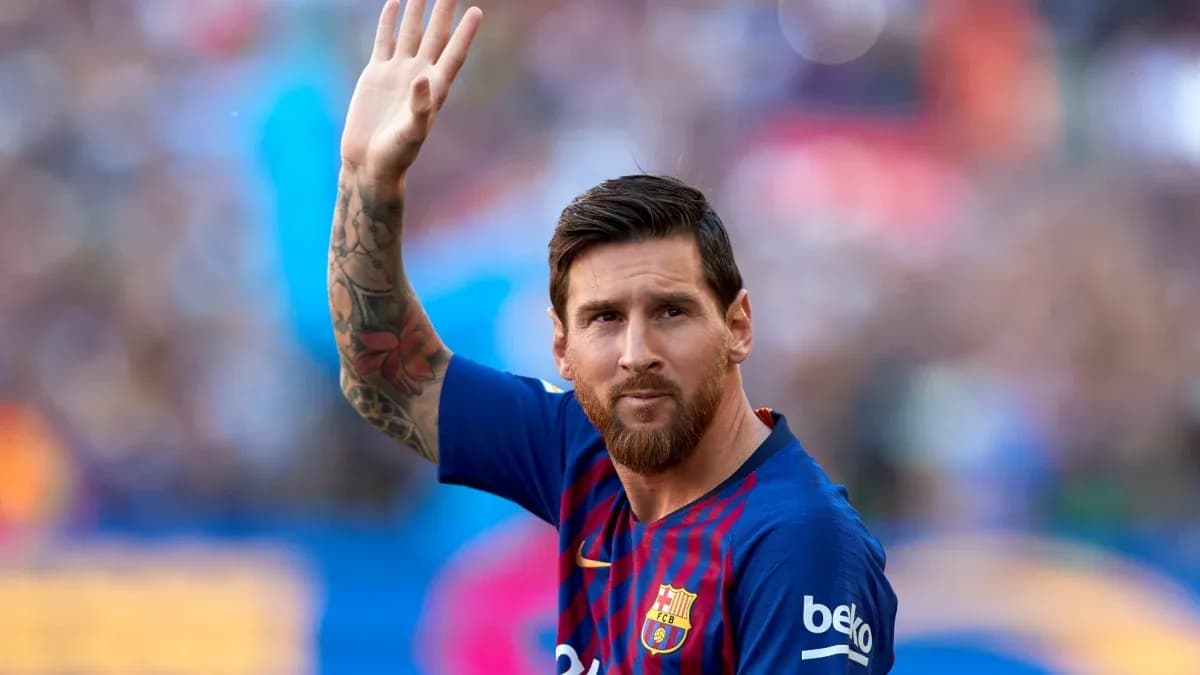
Lionel Messi’s shadow still stretches across the Camp Nou, long after his last touch in a Barcelona shirt. Every defeat, every false dawn, every young talent breaking through is still measured, in some way, against the era of the Argentine genius.
Yet for analyst Pepe Brasín, that is precisely the point: for this new Barça to exist, the old one had to die.
“For this Barça to be born, Messi had to disappear”
Brasín does not touch the sacred status. He reinforces it.
“Barça today is much better than in the late-Messi era. No one in their right mind is going to criticize Messi. Clearly, he is the best player of all time and, obviously, the best player in Barça's history,” he argues.
Then he drives the knife into the idea of eternal dependency.
“But, for this Barça, which is among us right now, to be born, Messi had to disappear.”
It is not an attack on Messi. It is a diagnosis of what happens when one player becomes the centre of gravity of an entire institution. Everything bends towards him: the tactics, the market, the dressing room, the politics, the emotions of the crowd. The team stops being a collective project and becomes a vehicle for a single, incomparable talent.
For Brasín, Barcelona have only truly started to turn the page now that this gravitational pull has gone.
From Camp Nou to Los Angeles
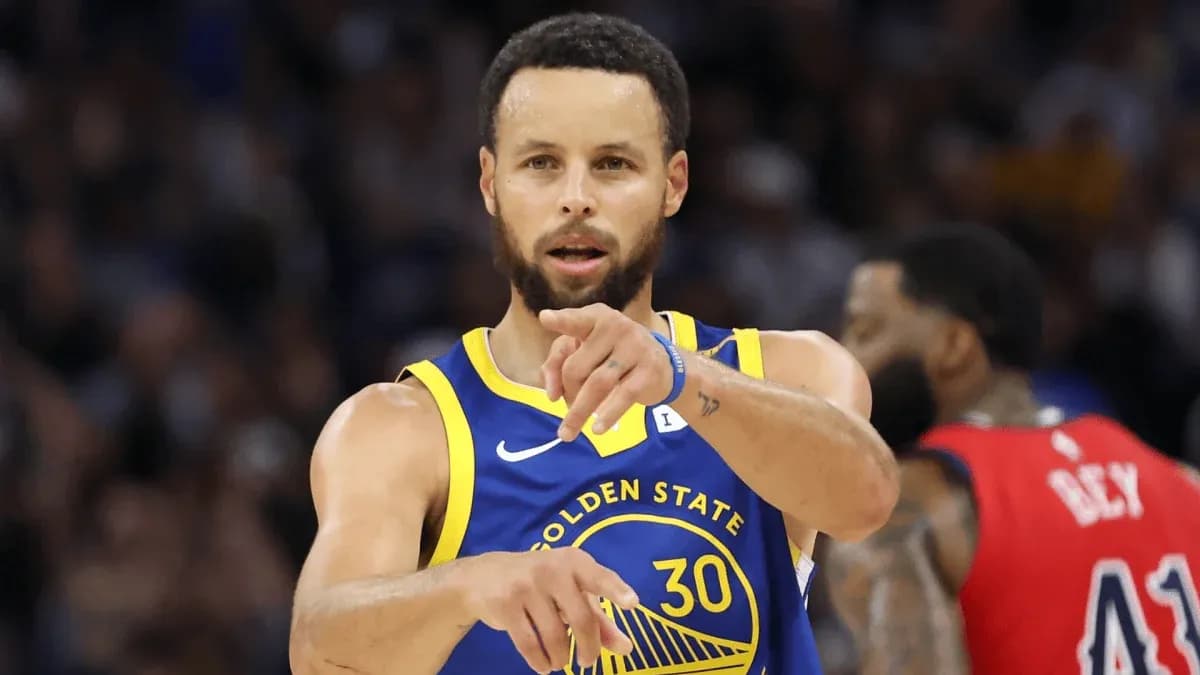
To explain the phenomenon, Brasín crosses the Atlantic and switches sports. The case he leans on: the Los Angeles Lakers, LeBron James, and the emergence of Luka Doncic as the new axis of the franchise.
In his view, LeBron’s presence in Los Angeles became a “distorting factor” in team-building. Not because of poor performance — LeBron remains one of the defining players of his generation — but because of the sheer scale of what he represents.
“LeBron James, like all the giants of sport, has an almost infinite gravitational pull. He is almost a black hole in the middle of a galaxy, making all the other solar systems orbit around him,” Brasín explains.
The metaphor is not just poetic. It is structural.
His influence, Brasín notes, stretches far beyond the court. It runs through the salary cap, the locker room hierarchy, the style of play, the media narrative, even the expectations of the fans. Every decision, big or small, passes through the filter of what it means for LeBron.
That kind of weight wins titles. It also freezes evolution.
When the godfather steps aside
This is where Brasín’s theory sharpens. In his analysis, LeBron’s absence has finally allowed the Lakers to start something different: a project built explicitly around Luka Doncic.
The roster, as he describes it, now bends towards the Slovenian star. The pieces are chosen with his game in mind. The ball, the tempo, the spacing — all tailored to make him the primary reference point.
Doncic is not just the leading scorer or the highlight machine. According to Brasín, he is involved in sporting decisions alongside the coach and the general manager, a role he views as crucial to understanding the franchise’s new direction.
It is a shift from inheriting a legacy to authoring one.
The parallel with Barcelona is clear. Just as Messi’s departure forced the club to stop clinging to the past and start constructing a new identity, LeBron stepping out of the way opens the lane for Doncic to become the centrepiece of a fresh project.
Brasín’s conclusion lands with the weight of a rule, not a hunch:
“Sometimes the great star, the great godfather, needs to disappear in order to keep building the future, to make a better team.”
It is a harsh truth for any club or franchise built on a single, towering figure. But in Barcelona and Los Angeles alike, the question is no longer who they were with their legend.
It is who they dare to become without him.