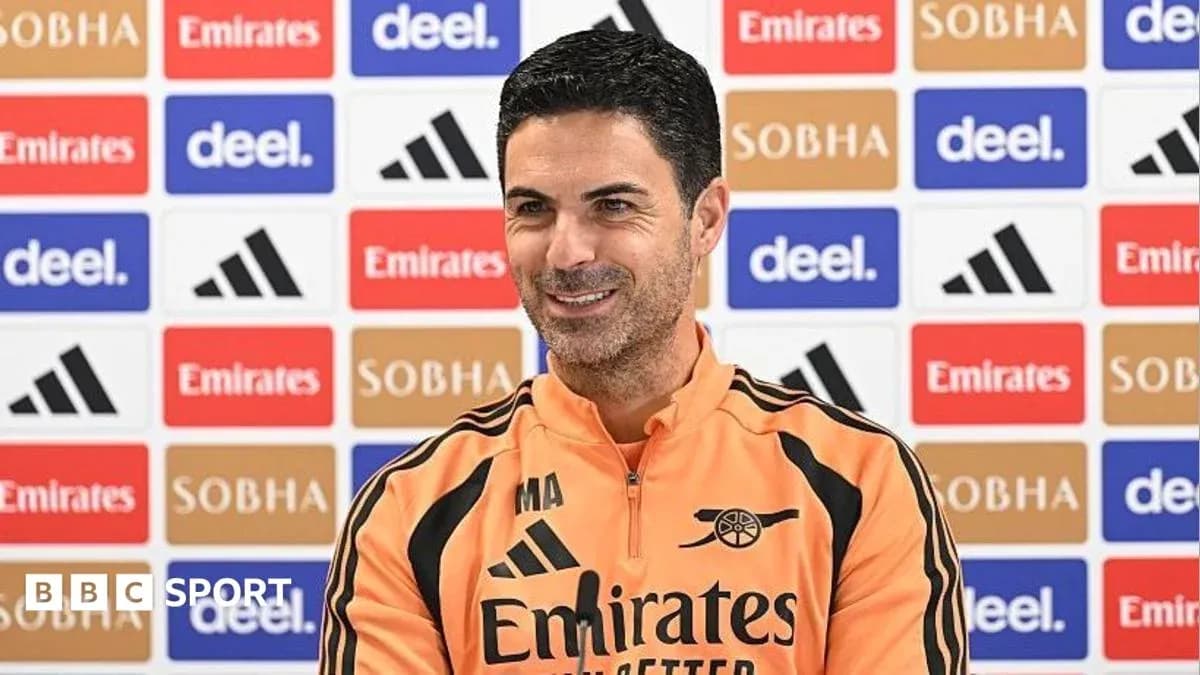
Mikel Arteta turned a Champions League headache into a training-ground exercise – because he had already rehearsed the chaos.
Arsenal’s midweek trip to Italy for their tie against Napoli was thrown off course by air traffic control problems, leaving the Premier League champions stuck and three hours behind schedule. Where most managers would see disruption, Arteta saw a live drill for a plan he has been quietly running for months.
He designed it that way.
“I love those challenges, I try to create them in pre-season,” he said on Friday, ahead of Arsenal’s Premier League visit to Sunderland on Saturday night. For him, a delayed flight in September is just another scenario he has already staged in July.
Training for turbulence
Arteta has made unpredictability part of the job description at Arsenal. Not just on the pitch, but on the way to it.
“So when they happen, we have already experienced them and we are ready,” he explained. That means no fixed comfort zone, no guarantee that the day will run smoothly. He will move kick-off times in training, shift travel schedules, and alter routines just to see how his players cope.
“Get to the stadium very late, change the routine so the players have to do something else,” he said. If the bus is suddenly late or the route to the ground changes, it is rarely an accident. It is a test.
Arteta wants his squad to treat chaos as normal. Flights can be cancelled. Trains can be delayed. Motorways can grind to a halt. His message is blunt: accept it, don’t fear it.
“When it happens, and it can – the flight can be cancelled, or the train is delayed, there is so much traffic, I don't want the players and staff panicking,” he said. The response he demands is simple: adapt.
On that delayed flight to Italy, he looked for opportunity, not excuses. “We have two or three hours on the plane – can we use it? Play together, spend some time together, sleep. But don't complain or use it as an excuse because it's not helpful at all.”
Discomfort by design
The disruption does not stop at travel. Arteta has stretched the idea into almost every corner of match preparation.
He has delayed meals and transport on purpose. He has taken different routes to stadiums. He has even turned up the heat in dressing rooms to make them more uncomfortable. All of it feeds into the same aim: strip away the element of surprise on matchday.
By exposing players to inconvenience before it matters, he wants to reduce the spike of stress when it inevitably arrives under the lights. If they have already felt the irritation of a late coach or a stifling dressing room, the real thing should feel manageable.
This is not a new theme in his management. Arteta has long leaned into symbolism and shock to make his points land.
He once walked into the dressing room carrying a light bulb, asking his players to be energetic and shine. On another occasion, he hired professional pickpockets to attend a team dinner, allowing them to take phones and wallets from players. The stunt turned into a lesson on awareness and concentration: stay alert, or you lose what matters.
In 2023, he introduced a dog named Win to the training ground, using it as a living emblem of togetherness and identity. Win, he said, represented the team as a family, a constant presence in the background of their daily work.
From light bulbs to pickpockets to delayed planes, the methods vary wildly, but the thread is clear. Arteta is trying to hard-wire resilience into a squad that now carries the weight of being champions.
The next test comes at Sunderland on Saturday night, not in a meeting room or on a runway, but under pressure, with points on the line – exactly where all this controlled chaos is supposed to pay off.