On 23 May 2004, somewhere between 1pm and 3pm local time, Monaco briefly stopped being just Formula 1’s most glamorous postcard. It became the scene of a heist story without an ending.
A 1.4 carat diamond, worth around $300,000 at the time and closer to $1m in today’s money for the full set used that weekend, was glued to the nose of a Jaguar. One lap later, it was gone. Not just from the car. From the sport. From the world, as far as anyone can tell.
Two decades on, nobody has proved where it went. But someone, somewhere, knows.
A team in trouble, a movie in town, and a wild idea
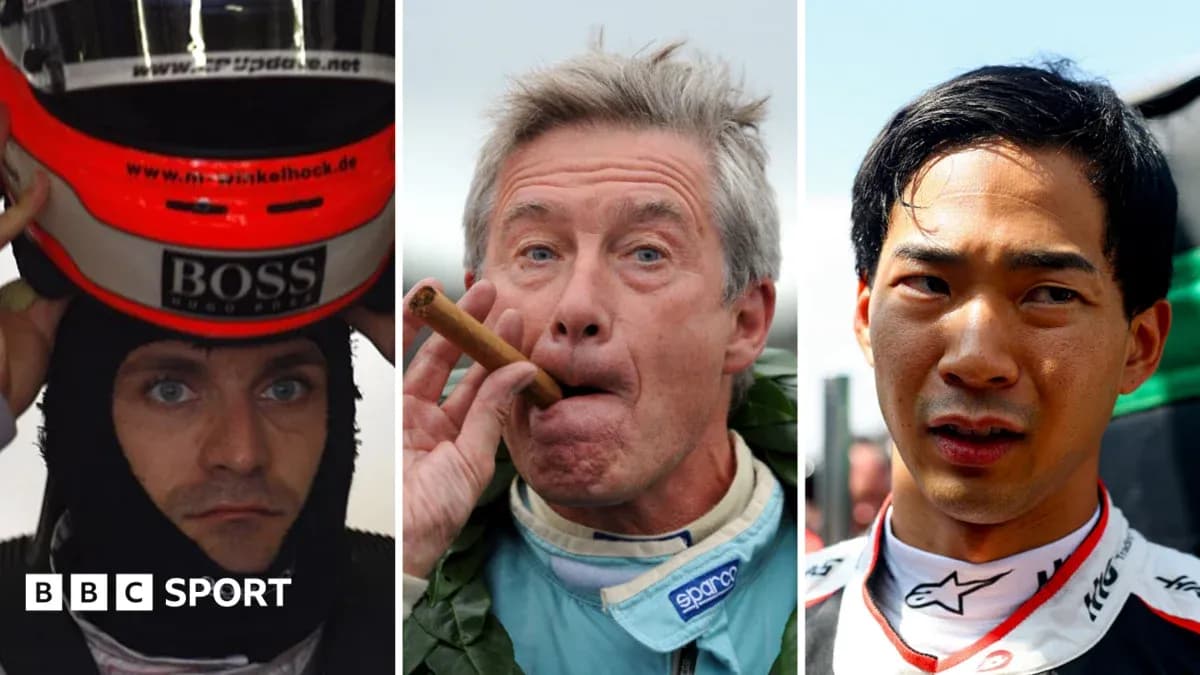
By 2004, Jaguar Racing were running out of road. Results were flat, Ford had decided to pull the plug, and team principal Tony Purnell suddenly found his job description rewritten.
"My job flipped from primarily running the team to primarily selling the team and finding a new owner or they would shut it down," he recalls. "It was probably the worst year of my life. Particularly because for the first few months I was sworn to secrecy."
The team needed attention, and not the kind generated by another anonymous midfield Sunday.
They’d already tasted Hollywood. The previous year, a tie-in with Terminator 3 had turned the British Grand Prix at Silverstone into a slick crossover between the grid and the red carpet. Director of communications Nav Sidhu wanted to bottle that again.
"I'd heard on the grapevine, around about the winter of 2003, that they were making Ocean's Twelve and we discovered that they were shooting some of the scenes in Monte Carlo," Sidhu says.
One call led to another. Soon, Jaguar had an agreement that would have sounded like fantasy in any other paddock motorhome: the Ocean’s Twelve branding and the star power of George Clooney, Brad Pitt and Matt Damon would wrap themselves around Jaguar’s Monaco weekend.
The film’s plot revolved around an audacious theft of a diamond‑encrusted Fabergé egg. Monaco is built on theatre and excess. Sidhu decided to lean right into it.
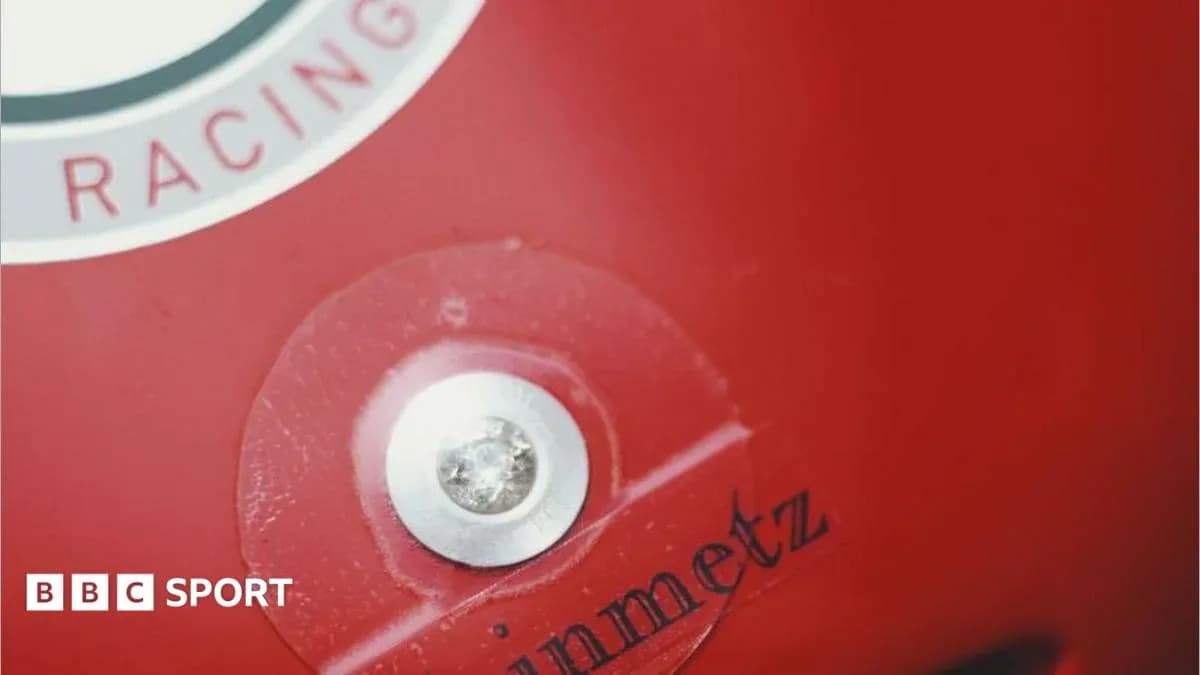
He struck a deal with diamond company Steinmetz. Two Jaguar cars, each carrying a diamond on the nosecone, would shimmer their way around the principality’s streets. PR gold, literally bolted onto carbon fibre.
Then came the race.
One lap, one crash, one missing stone
Monaco is claustrophobic at the best of times. Armco on both sides, a tunnel, blind corners, no margin for error and almost no room to overtake. Crashes are routine. Just not usually this expensive.
On the opening lap, Jaguar rookie Christian Klien tangled with a Jordan as he exited Mirabeau. The contact damaged the front of his car – exactly where the diamond sat – and sent him sliding into the barriers at the Loews hairpin.
It was a slow-speed hit, but the front end crumpled. Klien climbed out unhurt. The car was lifted away by crane and dropped behind the barriers. Somewhere in that chaos, the diamond vanished.
Back in the garage, Sidhu’s phone rang. Steinmetz wanted to know if they’d be getting their diamond back.
"I can't remember what I answered, but it certainly wasn't 'yes'," he says.
He couldn’t even go and look. The race still had 76 laps to run. Until the chequered flag fell and the car came back, the crash site was off limits.
"I was consumed with getting to that spot as quickly as I possibly could," Sidhu says. "That hour and a half waiting for the race to finish felt like a day and a half, every single lap was just like pulling teeth."
When he finally reached the car and the area where it had hit the wall, there was nothing. No glittering stone, no fragments, no clue.
Just a mystery – and a flood of theories.
Was it ever real?
One rumour refused to die: that Jaguar had never risked a genuine diamond in the first place.
Sidhu dismisses that outright.
"I've learned that any diamond company is not going to go out there, particularly in the public domain, and use fake diamonds because clearly there's a high risk of being caught," he says.
"Had we used a fake diamond in that car and what took place took place, then clearly the embarrassment and the disrepute it would bring Jaguar, and Formula 1 for that matter, was too high risk."
The idea that it might have been a prop is part of what’s kept the story alive, he accepts. But inside Jaguar, there was no doubt.
Purnell remembers a very simple, very old‑fashioned test carried out by managing director David Pitchforth.
"David said, 'Tony, it was definitely real because when they came to the office with it, I picked the diamond up, went to the window and scratched the window' because that's how to tell.
"Hearing that from Dave, I'm in no doubt it was the real thing that was put on the car."
Could a mechanic have swapped it for a fake? Purnell doesn’t buy it. The stone that went on the car, he insists, was the one that scratched the office window.
Did someone just slip it into their pocket?
The most obvious explanation is also the most mundane.
"I think somebody probably just picked it up, put it in their pocket and... they're probably smiling and thinking, 'it's in my drawer'," Purnell says.
There’s another possibility he raises: impact. A heavy stone, fired across tarmac and metal at speed, might not survive intact.
"I do think also that a fairly large diamond zooming through at 100 miles an hour probably shattered. Somebody's got a little bit, somebody else has got another [little bit]. Maybe, sadly, just some guy was sweeping up the road or one of those trucks with the brushes and it all went down the sewer."
Purnell even allowed his imagination to wander briefly into full Ocean’s Eleven territory.
"It did occur to me that the ultimate thing would be if Clooney, Pitt and Damon had contrived to steal it because it was so in line with Ocean's Eleven. But that was a fantasy too far."
The more prosaic truth is that there were hundreds, probably thousands, of people in that area within an hour of the race ending. The circuit reverts to public roads astonishingly quickly in Monaco. If the diamond lay there for even a few minutes, it wouldn’t have been alone for long.
Sidhu is convinced of one thing: "Someone's picked it up."
He’s seen what fans do after a race.
"What people tend to do is, believe it or not, pick up bits of tyre rubber, you know, claim that as Michael Schumacher's front tyre rubber or whatever they can find."
"Somebody may have picked it up not having any idea it came off a car."
And this is Monaco. Diamonds don’t exactly stand out.
"There's a lot of diamonds in Monte Carlo. There's a lot of people walking around Monte Carlo with a lot of jewellery and a lot of stones.
"Somebody dropped a diamond in Monte Carlo. Well, they're not going to miss that, are they? Probably not."
The conspiracy Klien never bought into
Another theory grew in the slipstream: that Klien had crashed on purpose, a scripted smash for maximum publicity.
On every level that mattered to Jaguar, that idea collapses.
Sidhu points out that the damage to the car cost more than the diamond itself, which was reported at the time to be uninsured. On top of that, the team were fighting for points, prize money and credibility. Throwing a car into the wall at Monaco for a stunt would have been commercial madness.
"For us, bringing two cars home, ideally in the points, had far bigger commercial benefits to us in terms of constructors' points, broadcast money, and more importantly, trying to retain our sponsors and trying to protect the integrity of the team," he explains.
Klien hit the barriers directly in front of the marshals. There was no chance to clamber around looking for a stone, even if he’d wanted to. And he never tried to dress it up as anything other than what it was.
"Christian didn't try and say all the brakes failed or anything like that, he's just said 'I made a rookie mistake'," Purnell says.
"He was a young guy, first time, made a mistake, it happens. Doesn't usually happen with a $300,000 diamond flying into the crowd or wherever it went, but I'm sure Christian wasn't really aware of the diamond.
No amount of money would have got Christian to do that [crash on purpose]. He wanted to make a success of what he was doing."
A PR disaster that turned into a gift
While the world fixated on the missing stone, Purnell’s mind was elsewhere that afternoon.
His rookie had crashed. His other driver, Mark Webber, also failed to finish. With Ford looking to sell and major sponsors in town, it was another grim day on the timing screens.
"When Christian went into the wall and then later Mark retired, my entire thinking was 'Oh God. What am I going to say?'" Purnell remembers.
"The chairman of HSBC [Jaguar's then sponsors] was there, Sir John Bond. Jackie [Stewart] was there.
"It was all about 'how am I going to explain another bad performance? How am I going to say 'just stick with the plan? We know what we're doing, it will take time' because sponsors don't have time. They want success."
The diamond changed everything.
"No-one mentioned Jarno Trulli winning the Grand Prix, no-one asked how the Jaguars did. No-one was interested that Mark Webber's car broke as well. It was, 'where's the diamond?'" says Purnell.
Back in Detroit, the reaction stunned him.
"I remember talking to somebody in Detroit saying, 'fantastic publicity over here, you know we never hear anything about Formula 1 but it's on the newscasts, it's in the papers - fantastic'.
Did that strange weekend help Jaguar find a buyer? Purnell believes it did.
Asked if the mystery had any impact on the eventual sale of the team to Red Bull six months later, he replies: "I think that helped quite a lot because it buzzed the Jaguar team and showed that huge publicity was possible even if you weren't doing so well."
Red Bull would turn that platform into a dynasty: eight drivers’ titles, six constructors’ championships, and an era‑defining presence at the front of the grid.
"You couldn't design a better PR weekend," Purnell says.
Somewhere, perhaps in a drawer in a Monaco apartment or at the bottom of a storm drain, sits the diamond that helped launch it.