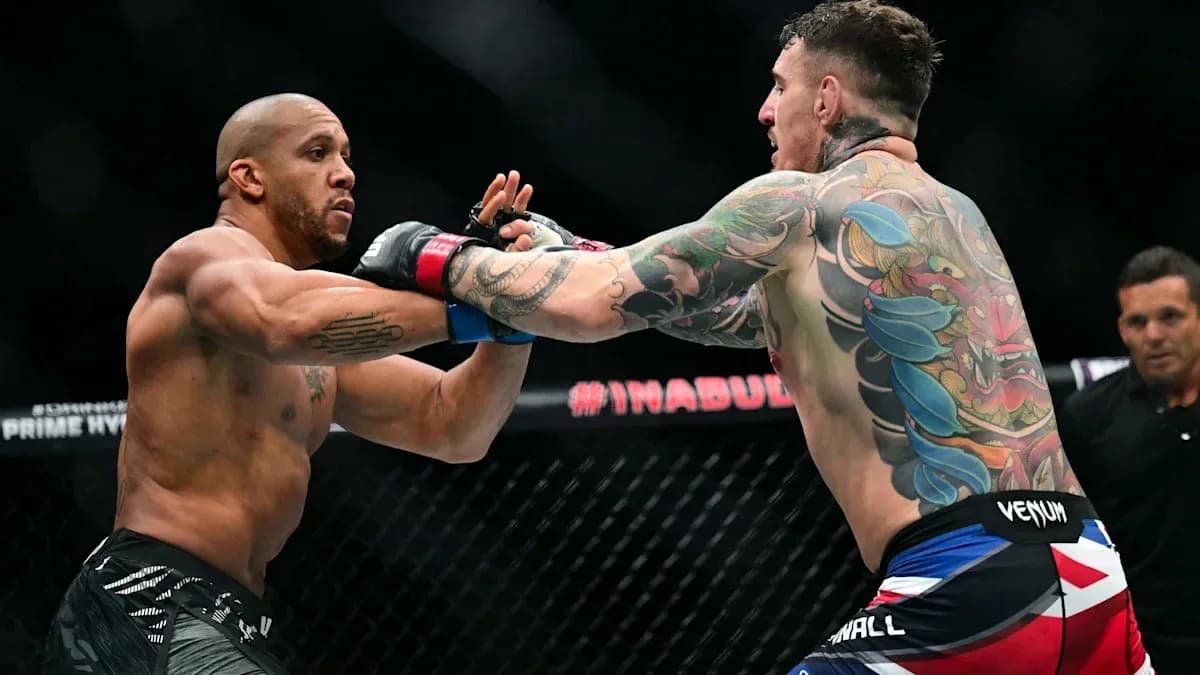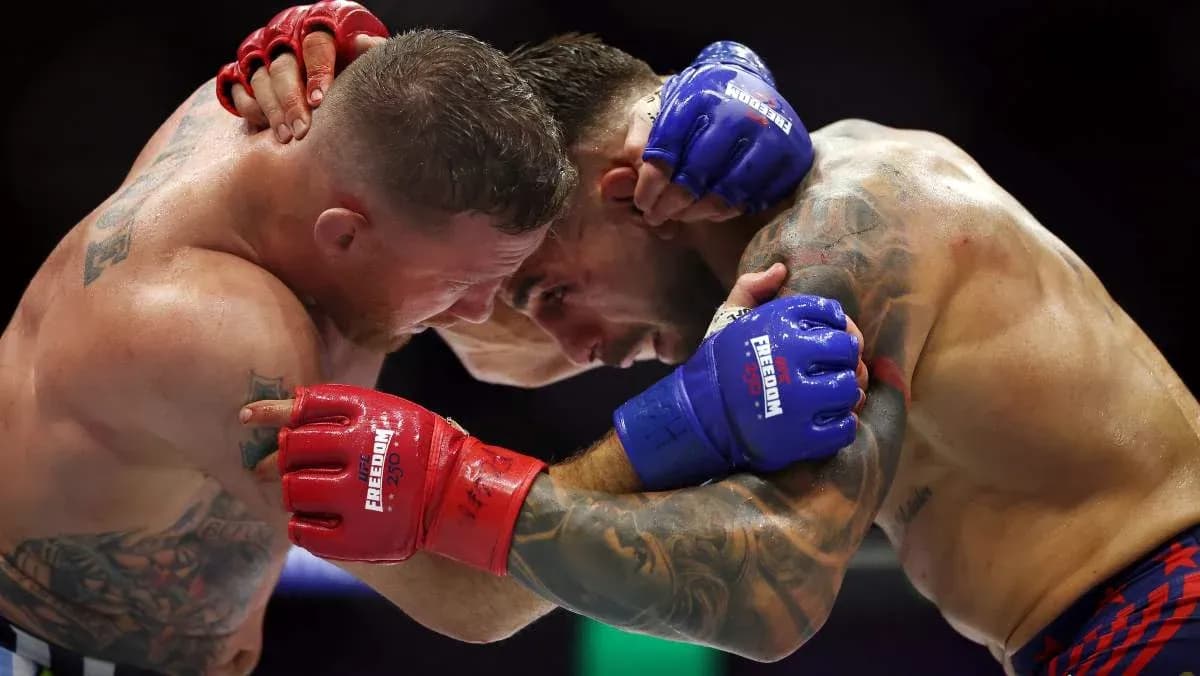
NAGOYA — Once denounced in the United States as “human cockfighting” and chased out of mainstream sport, Mixed Martial Arts is now edging towards the Olympic rings.
This week in Japan, MMA steps onto a new stage: its Asian Games debut. It is not the Olympics, not yet, but for those driving the sport’s global rise, this feels like the first real audition.
“Inclusion in the continental games is critical,” said Galastein Tan, director general of the Federation of International Mixed Martial Arts, speaking in Nagoya. For him, simply being on this programme is proof of maturity — governance in place, a broad membership, codified rules, trained officials. In other words: a sport that can no longer be dismissed as a fringe spectacle.
From cages to mats
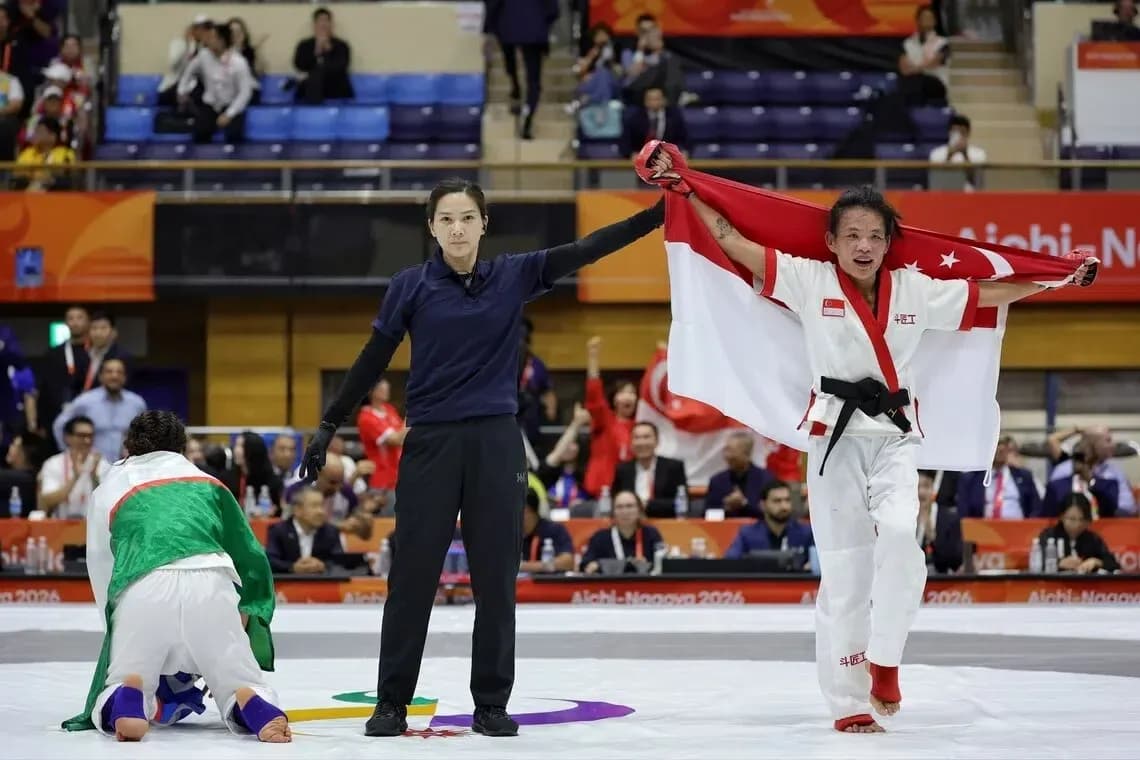
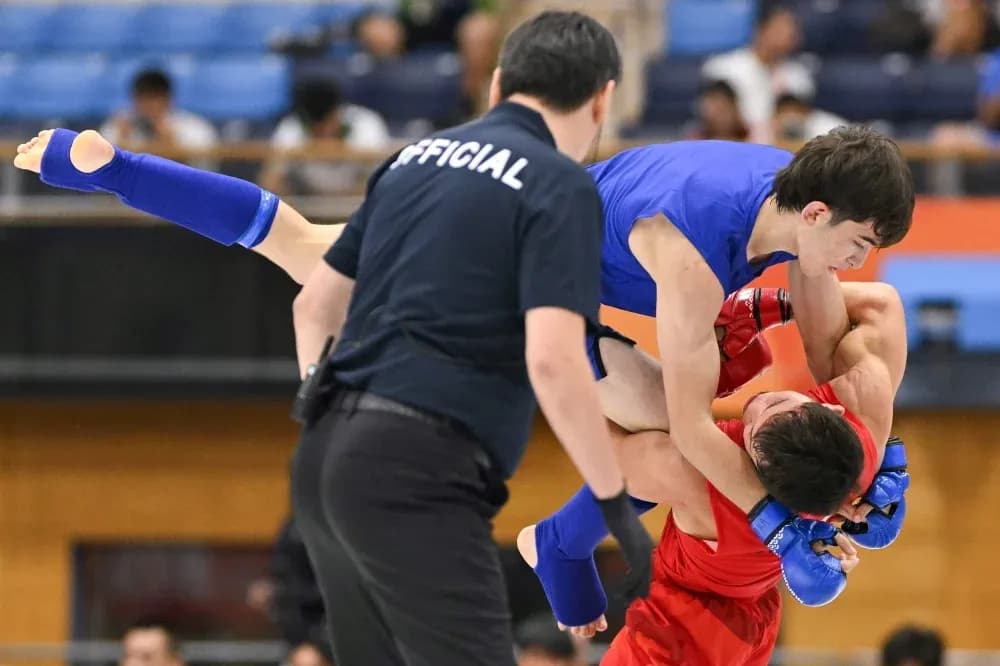
There is nothing glitzy about the venue. A compact gym, more school hall than super arena, hosts the bouts. Men and women compete in separate divisions. The crowd is modest, but loud, leaning into every exchange, every scramble, every clean strike that lands.
The flags tell another story. Thailand. Kazakhstan. The Philippines. Japan. Nations that have poured champions into boxing, wrestling, judo, taekwondo and Muay Thai now sending athletes into MMA, the most modern of combat codes.
Fans of the Ultimate Fighting Championship would recognise the intensity, but not the setting. No walkouts into a roaring arena. No cage. No famous octagon.
At the Asian Games, fighters trade blows and takedowns on a white and grey mat, with no fence to cut off escape routes or pin an opponent. For athletes raised in the cage culture of the UFC, it demands a tactical reset.
A fence, Tan notes, “does not really align with Olympic values”. The mat, open and unforgiving, is a deliberate nod towards the aesthetics and traditions of Olympic combat sports.
One sport, one rulebook?
If MMA is to make the leap from Asian Games curiosity to Olympic medal event, the rules may prove as big a battleground as the fights themselves.
What strikes are legal? What submissions? How is safety enforced and judged? Getting a notoriously fragmented sport — with rival promotions, rival federations and rival philosophies — to agree on a unified competition format is no small task.
It is also non-negotiable. The International Olympic Committee wants clarity and a single governing voice. MMA, at present, offers many.
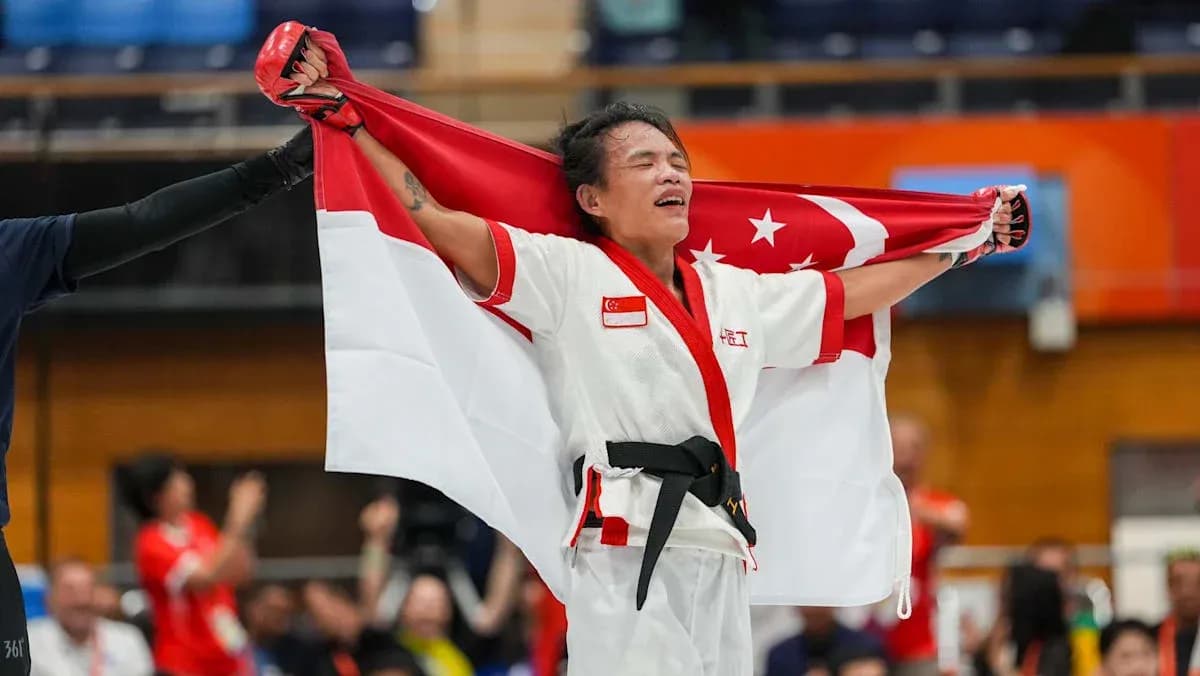
On the mat, though, the politics fade. For Singapore’s Teo Hui Hoon, already assured at least a silver medal, the significance lies in what this platform might unlock back home.
“I think it will grow the talent pool a lot,” she said. Asian Games status, and the possibility of Olympic recognition, changes how parents, schools and young athletes view the sport. “It will encourage more children and teenagers to take up the sport and take it seriously. Because now there’s a clear pathway, right? You can join a national team, the next step you can go to the Olympics.”
That word — pathway — is the quiet revolution. MMA has long been a road to a professional contract, a belt, a bonus. Now, it dangles something different: national colours, multi-sport games, an anthem on a podium.
A crowded race to the rings
MMA is not alone in chasing that dream in Nagoya. Teqball, the eye-catching hybrid of football and table tennis, also makes its Asian Games bow. Padel, the fast-rising racquet sport, continues its own sprint towards Olympic relevance.
The race is congested. The IOC’s door opens rarely and only for sports that can prove not just popularity, but structure, safety, youth appeal and global reach. MMA can tick some of those boxes with ease. Others will take time and persuasion.
“We have been in talks with the IOC and other relevant stakeholders that have influence or decision on the recognition,” Tan said, upbeat about the dialogue but realistic about the road ahead.
The sport does not lack powerful advocates. UFC president Dana White has been openly vocal in backing Olympic inclusion, and the promotion’s relentless expansion has dragged MMA from the margins into the mainstream. What was once a blood-soaked curiosity in the 1990s — when US senator John McCain condemned it as “human cockfighting” — now fills arenas and dominates broadcast schedules.
Yet the old perception lingers. For some, MMA remains too violent, too raw, too close to its no-holds-barred roots to sit comfortably alongside gymnastics and swimming on the world’s biggest sporting stage.
The counterargument is written in the numbers: regulated events worldwide, unified rules in most major promotions, medical protocols, weight checks, suspensions for knockouts. MMA’s backers insist it is no more dangerous than boxing or other combat sports already on the Olympic programme.
Time, politics and a waiting game
Beyond image, the structural challenge looms largest. To be truly Olympic-ready, MMA must present one face, one federation, one set of rules. At present, it is still stitching itself together.
Los Angeles 2028 is almost certainly out of reach. The programme for those Games is already heavily contested, and new sports must clear a high bar. Brisbane 2032 sits a little further on the horizon, a more realistic target but still no guarantee.
“Nothing is impossible,” Tan said. The phrase hangs somewhere between ambition and defiance.
He believes MMA can offer the IOC what it increasingly craves: a sport that connects with both adults and the youth, that commands global attention and can slide into a packed Games schedule without tearing it apart. A sport, as he puts it, “ready and capable of fitting into a major Games schedule”.
The message to Olympic organisers is blunt. If the IOC, or the LA28 organisers, come calling and ask MMA to join as a medal event or even as a demonstration sport, Tan insists: “We are ready.”
From a cramped gym in Nagoya to the glare of the Olympic cauldron is a long journey. But for a sport once banned, mocked and pushed underground, simply standing in the Asian Games spotlight feels like the start of a fight it now believes it can win.