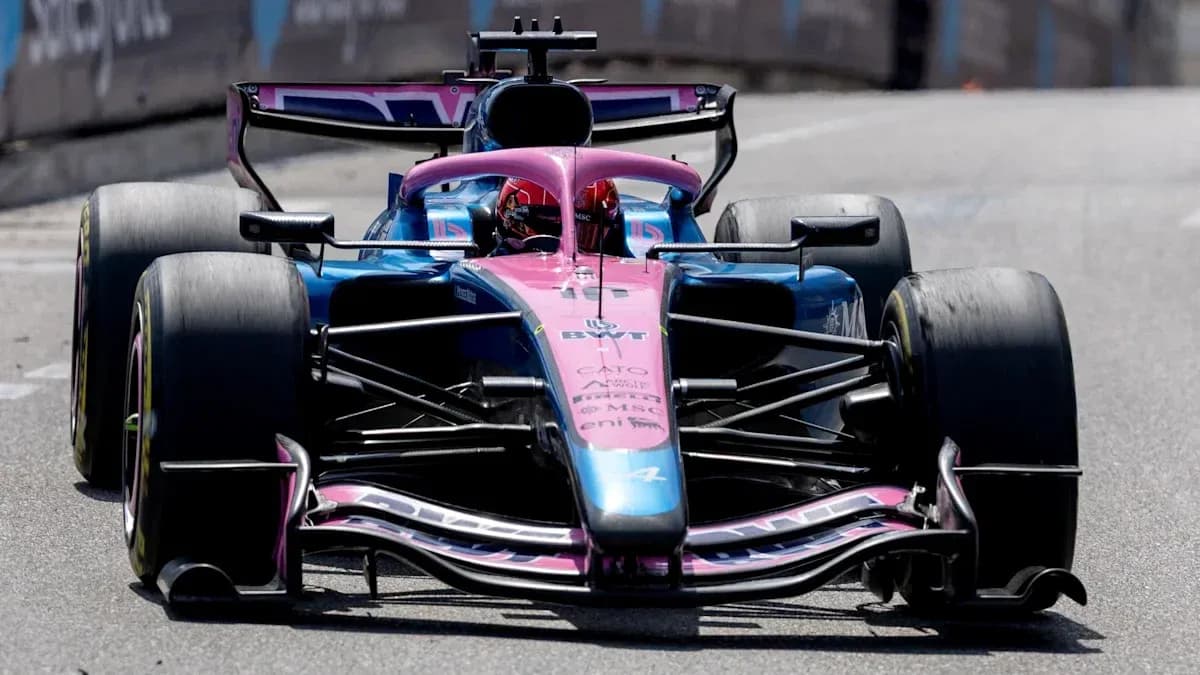
McLaren and Red Bull have won their fight over the controversial Monaco Grand Prix pit-lane penalties, with the FIA’s international court of appeal stripping Alpine’s Pierre Gasly of a podium that had already been awarded once on appeal.
Gasly, who crossed the line third in Monte Carlo and was later promoted back to the rostrum when Alpine overturned two five-second penalties, is now pushed down to seventh – the position he held in the original official classification. Red Bull’s Isack Hadjar is reinstated to third, McLaren’s Oscar Piastri moves back up to fourth, and Racing Bulls pair Liam Lawson and Arvid Lindblad climb to fifth and sixth.
A podium ceremony, a legal battle, and now a reversal of the reversal. Monaco’s result has been rewritten again.
A pit lane, 77 centimetres and a storm
At the heart of the case sits a strip of tarmac measured to the centimetre. Or not quite.
The controversy erupted when it emerged there was a 77cm discrepancy between the officially measured length of the Monaco pit lane and the shortest possible line a driver could take through it. The pit-lane speed limit is policed not by instantaneous peaks but by average speed over a defined sector. That average depends on one thing: the distance used in the calculation.
During Alpine’s successful appeal in June, it was established that, using this newly identified shorter route, Gasly had not actually exceeded the 60km/h limit. On that basis, his two five-second penalties were thrown out and his podium restored.
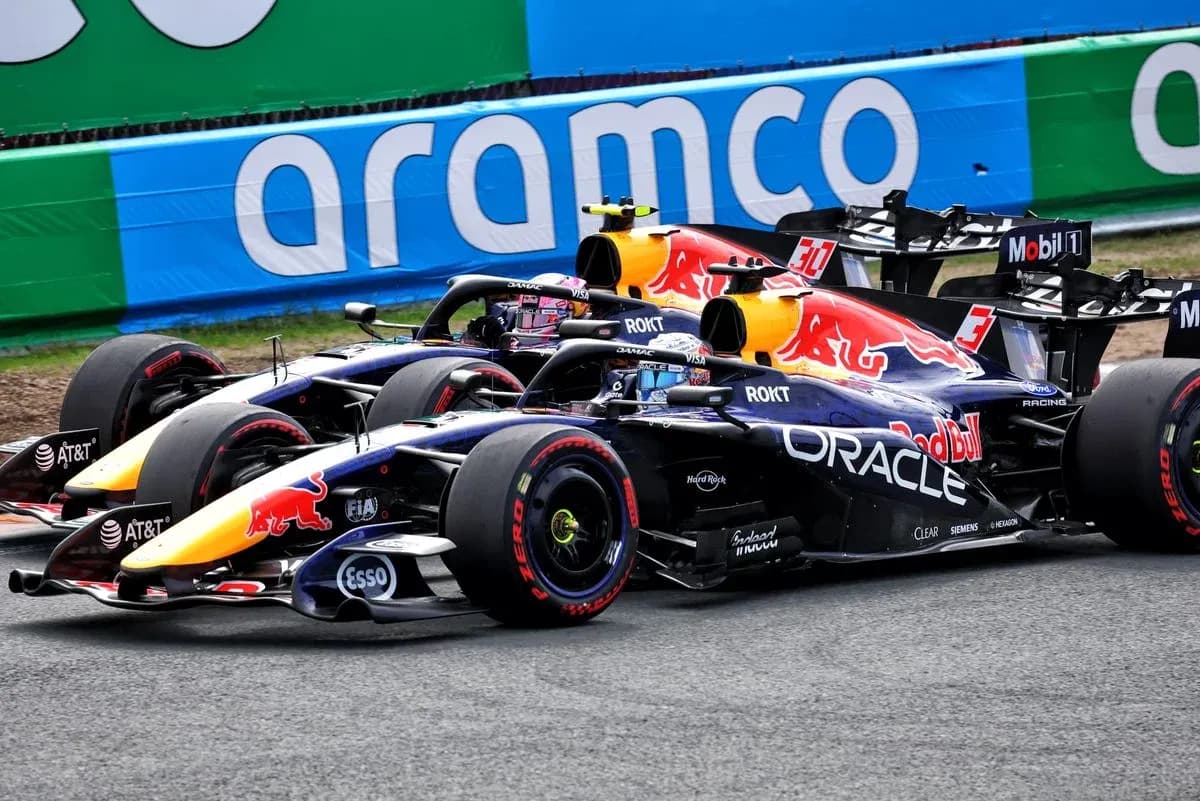
McLaren and Red Bull refused to leave it there. McLaren argued on “sporting fairness” and competitive grounds, pointing out that Piastri had served a five-second pit-lane speeding penalty and lost two points as a result, while Alpine had chosen not to serve Gasly’s penalties in-race because they believed they were invalid.
Several others did serve similar penalties. Piastri was not alone.
The appeal court sided with McLaren and Red Bull. Its central finding: once the official timekeeper has set the distance parameter for the pit lane and informed the competitors, that benchmark cannot be altered mid-weekend or retroactively for a single car after the race.
The pit-lane length, the court noted, had been physically tape-measured, checked, entered into the system, and used throughout practice and the race. It was re-examined when concerns were raised before lights out and reconfirmed during the grand prix when the stewards sought reassurance. At no point did F1’s timing operation advise race control, the stewards or the teams that a different distance should apply.
A shorter line might have been possible, and F1 later accepted that, had it used a different geometric approach, it would have chosen another reference. That did not make the original measurement “incorrect” in the eyes of the judges. Crucially, it made it untouchable after the fact.
“Sporting fairness absolutely precludes the retrospective replacement” of that calibration parameter, the court ruled, stressing that the enforcement regime is only workable if the benchmark is “common, stable and applied equally throughout the competition”.
Once the weekend began under one measurement, everyone had to live – and race – with it.
Winners, losers and unanswered questions
The ruling reshapes the Monaco points table but leaves several awkward questions hanging in the air.
Gasly loses his podium and drops to seventh. Hadjar, who had been shuffled down by the earlier Alpine win, is restored to third. Piastri regains ground in fourth after serving a penalty that, under the new Alpine logic, might have been contestable. Lawson and Lindblad are the quiet beneficiaries, each stepping up a place.
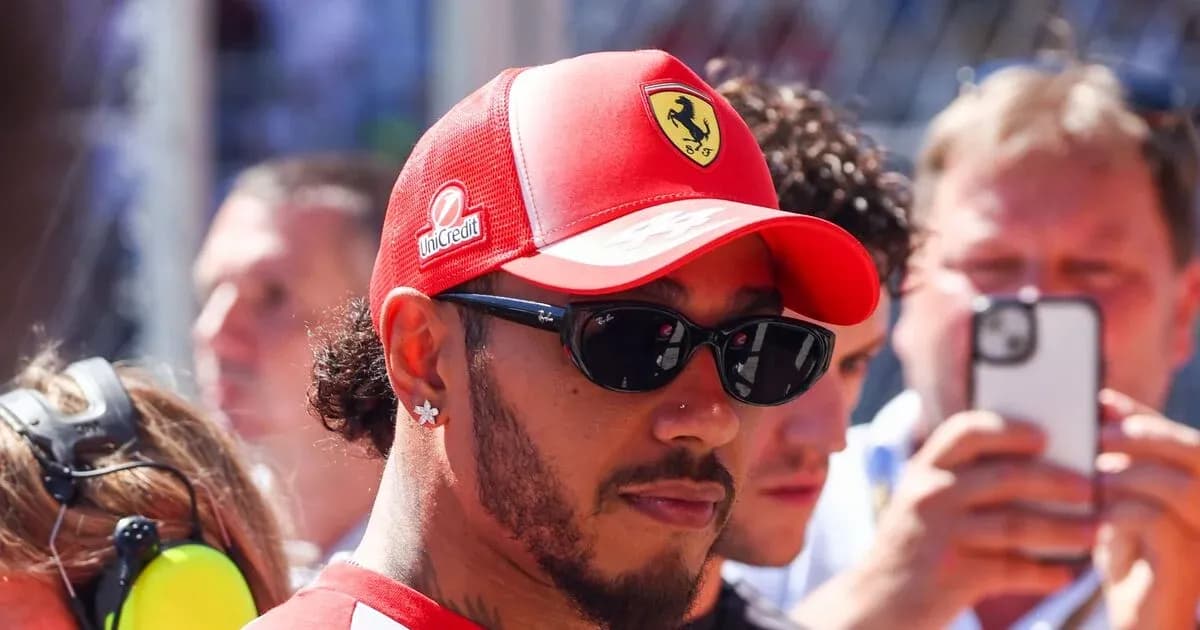
The ripples extend further. A raft of drivers, including Mercedes’ George Russell and Ferrari’s Lewis Hamilton, were hit by pit-lane speeding penalties in Monaco. Russell’s case proved particularly costly. Running ahead of Hadjar and Gasly before his first sanction, he tumbled out of the points not just for the original offence but because Mercedes failed to correctly serve that penalty at a later stop. The mistake triggered a drive-through that dropped him to 12th.
Mercedes maintain Russell never exceeded 60km/h in the pit lane. The court, though, did not go near that question. Nor did it examine whether the penalties for Hamilton or Piastri were correct under the established measurement, or whether their cars physically breached the limit.
Those issues sat outside the narrow scope of the hearing, which focused solely on McLaren’s and Red Bull’s protest against the rescinding of Gasly’s penalty.
Alpine anger, McLaren clarity
The verdict leaves Alpine bruised and openly frustrated.
The team insists Gasly never sped in the pit lane “at any point during the race” using the shorter, more accurate distance. They argue they have been “unjustly punished” by a process that acknowledges a more precise measurement yet refuses to apply it.
Still, Alpine say they accept the decision of the judging panel in Paris. The team has already sent the third-place trophy to Red Bull’s Milton Keynes base and is now weighing its next move. The most obvious remaining avenue, should it wish to pursue the matter, lies outside the FIA’s own structures: the Court of Arbitration for Sport.
McLaren, by contrast, hailed the outcome. For them, this was about more than a couple of points for Piastri. The team welcomed a decision they believe “provides important clarity” for all competitors and “helps protect the integrity of the sport and trust in its regulatory framework”. They stressed their appeal targeted neither a rival nor the FIA itself, but the consistency of how rules are applied.
Behind the legal language sits a simple message: teams need to know the yardstick will not move after the chequered flag.
A line in the sand – or a new fault line?
The court’s conclusions read like a line in the sand for how F1 handles its own errors. Even when a more accurate method emerges, the original benchmark stands if it was properly established, communicated and used consistently throughout the event.
Fairness, in this interpretation, is not about absolute technical precision. It is about every car being judged against the same, stable reference – even if that reference later proves imperfect.
That stance restores Monaco’s pit-lane penalties to their original footing and reorders the podium once more. It also leaves Alpine with a bitter aftertaste and Mercedes with lingering doubts over Russell’s costly sanction.
The trophy has already changed hands. The question now is whether the argument has really gone away, or whether 77 centimetres of pit lane will keep echoing through this championship.