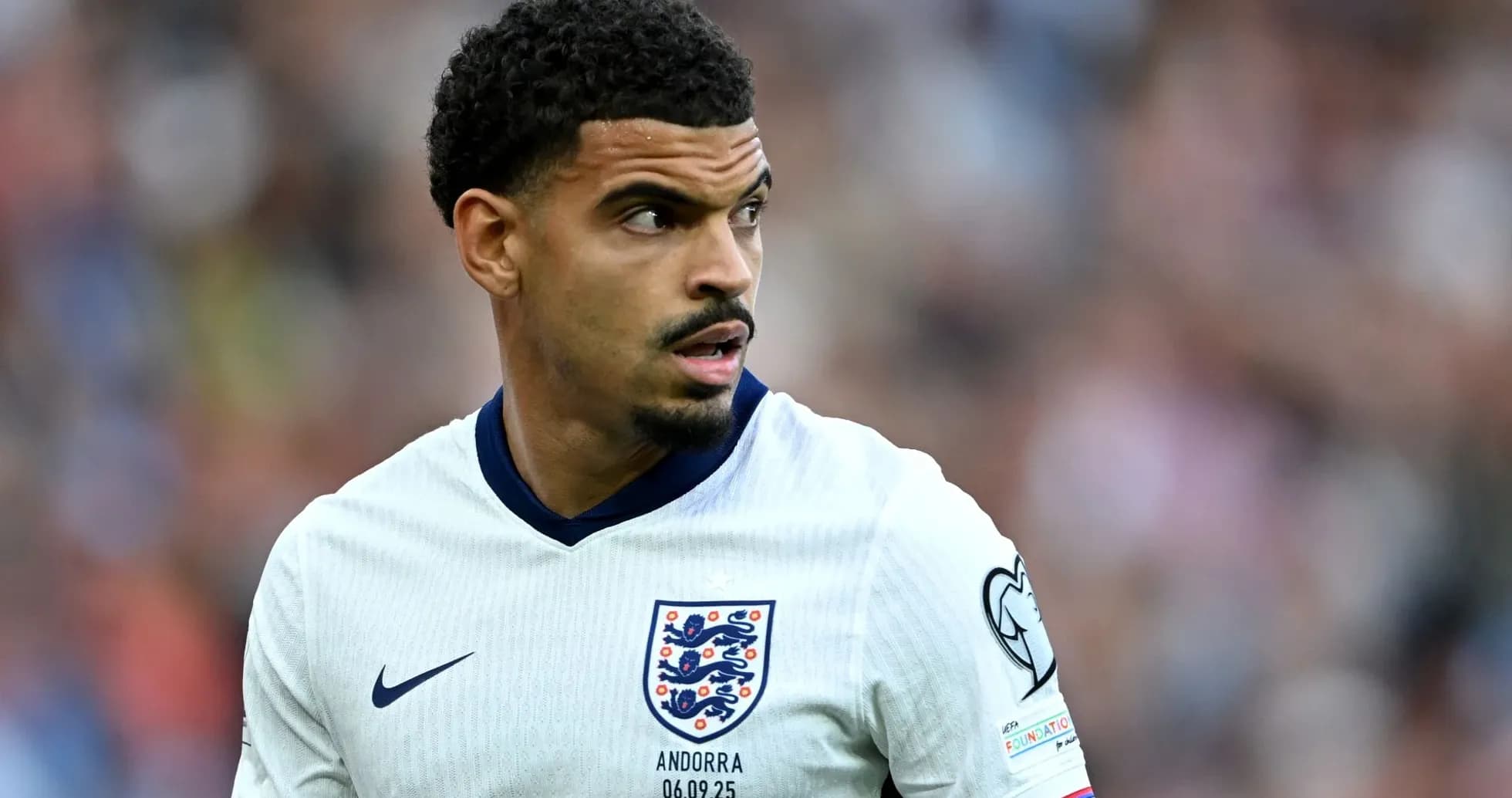
Morgan Gibbs-White lives in the most crowded part of English football’s map. The No.10 territory. The land of touch, vision and swagger, where one wrong turn can see you disappear behind a queue of prodigies.
At the front of that line stands Jude Bellingham, the Real Madrid ‘Galactico’ who has turned the role into his own private stage. Behind him, the traffic is heavy: Cole Palmer, Phil Foden, Eberechi Eze, Morgan Rogers, and Fulham’s fast-rising 19-year-old Josh King. All jostling for the same patch of grass. All convinced it should be theirs.
In that chaos, Gibbs-White quietly put together a run that should have been impossible to ignore.
A purple patch that changed Forest’s season
From the start of 2026 to the end of last season, the Nottingham Forest playmaker caught fire. Twelve goals across all competitions. Not as decoration, but as lifelines. He dragged Forest away from relegation danger and helped haul them into the Europa League semi-finals, turning tight games with the kind of incision England managers claim to crave.
It looked like the sort of form that books you a summer flight. It didn’t.
Thomas Tuchel still left him at home when England headed to North America for the World Cup, preferring other options in that crowded creative band. When the next UEFA Nations League squad came around, Gibbs-White’s name stayed on the outside again.
Only when Palmer, Chelsea’s talisman, suffered misfortune did the door finally swing open. Gibbs-White, 26 now and too experienced to be called a prospect, got the nod. On merit, yes, but also through a twist of fate. The question follows him into this camp: is he always going to be “next in line”?
Club badge vs. pecking order
The obvious argument circles around his club. Does playing for Forest cap his ceiling? Would a move to a Champions League regular change the conversation?
Des Walker doesn’t buy it.
The Forest legend, speaking to GOAL in association with Power Up Gaming, pointed to precedent at the City Ground. “[Elliot] Anderson became an England regular while he was a Forest player, so I don’t think the club you play for is necessarily the issue. With the current England manager, I don’t think he’s too bothered about which club you represent. If he likes you and thinks you’re a good player, he’ll pick you.”
Walker then cut straight to the real problem: the depth chart.
“The difficulty for Gibbs-White is that there are some very good players in his position. He’s come into the squad because Cole Palmer dropped out, so that puts him behind Palmer. Then you’ve got Foden and Morgan Rogers making their cases for that position too. There’s a lot of competition, but that’s how it should be when you play for England.”
Gibbs-White has felt that squeeze before. He has flirted with the squad, without ever quite grabbing a permanent seat. Walker’s verdict on last season explained why.
“I thought Gibbs-White finished last season fantastically, although over the whole season he perhaps wasn’t as consistent as some of the others. That’s what he has to address this season – consistency.”
One game to change everything
The beauty – and cruelty – of international football is how quickly reputations can flip. You can be a fringe name on Tuesday and a starter-in-waiting by Sunday.
“But now he’s got his chance,” Walker said. “You only need one game where you get on that pitch and boss it, and suddenly you’re right in the fold. Cole Palmer dropping out has given him that little bit of luck, so he has to take advantage of it.”
This is the knife-edge Gibbs-White now walks. He is not the poster boy. He is not the guaranteed starter. He is the player who must turn limited minutes into a statement.
And the club question? Walker dismissed the idea that a transfer is a shortcut to the national team.
“I don’t think playing for Forest hinders him. Look at James Maddison going from Leicester to Tottenham – that move didn’t keep him in the England team. It isn’t necessarily a move that gets you into the England squad. It’s playing well. That’s what Gibbs-White has to focus on. And if he plays well, that’s probably when the move comes anyway.”
Play well first. Move later, if it comes at all. The order matters.
Wearing the armband, chasing the shirt
Back at Forest, his influence keeps growing. Oliver Glasner, now in charge on Trentside, has wasted little time in making Gibbs-White central to his plans. The captain’s armband keeps finding its way onto that enigmatic No.10’s arm.
He has already opened his account for 2026-27, tucking away a penalty in a 2-2 draw at Liverpool – a moment that underlined both his nerve and his importance. When Forest need a voice, he is usually the one shouting. When they need a spark, he is usually the one demanding the ball.
What you always get with him is commitment. He runs, presses, chases lost causes, refuses to coast. That part of the audition is already ticked.
Now comes the stretch that may define his England role. Six senior caps so far, a modest tally for a player of his talent, and a crucial fortnight ahead as the Three Lions face Spain, Czechia and Croatia.
The stage is set. The competition is fierce. The window might be brief.
Does Morgan Gibbs-White turn this chance into a permanent place, or does he stay trapped in that brutal bracket – talented, trusted, but always just one name behind the headline acts?