The battle to stage the 2030 World Cup final has burst out of boardrooms and into the heart of Moroccan politics.
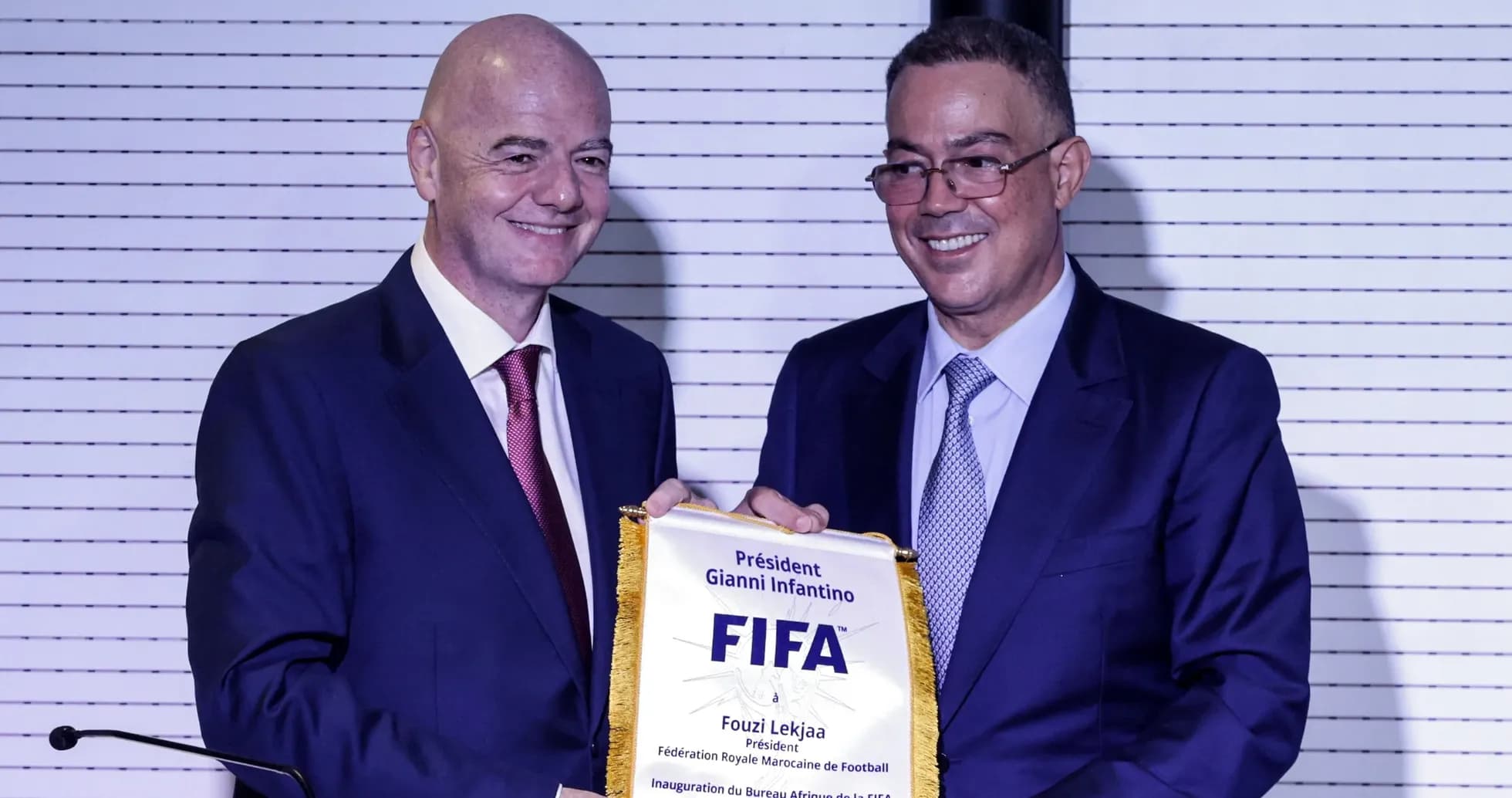
Prime Minister Aziz Akhannouch has publicly rebuked Fouzi Lekjaa, the powerful president of the Royal Moroccan Football Federation (RMFF), warning him to stop making bold promises about Casablanca hosting the showpiece match before anything has been agreed with Spain, Portugal – or FIFA.
The message was blunt, and it was delivered in front of a crowd.
“Do not offer to host the big final game in Morocco while we still have not discussed the matter with our allies, Spain and Portugal,” Akhannouch told Lekjaa at a political rally, urging “respect” for the country’s partners and accusing him of using “electoral promises” on an issue of huge diplomatic weight. “Deciding where the final will be held is a major issue.”
Lekjaa had told a political party gathering that Morocco’s planned new stadium in Casablanca would have the “honour” of staging the 2030 final. Those words detonated the current row.
For now, FIFA has stayed above the fray, repeating only that “a decision will be made in due course” on the final venue. But the stakes are clear. The centenary World Cup will be shared by Morocco, Spain and Portugal, with symbolic opening games in South America, and nobody wants an internal tug-of-war to overshadow the project.
Casablanca vs Madrid: Two Visions of the Final
Morocco is pushing hard. The country is building a vast 115,000-seat stadium, designed to become the largest football-specific venue on the planet. The project is as much a statement of intent as a piece of infrastructure: Africa wants the final back on its soil for the first time since Johannesburg in 2010.
Across the Mediterranean, Spain is just as determined.
Rafael Louzan, president of the Spanish football federation (RFEF), has been unapologetically bullish about his country’s case. Speaking to Cadena SER radio, he argued that Spain is the “natural” home for the final, pointing to the reigning world champions’ status and the country’s record of staging major events.
“Even though no decision has been taken, I believe Spain is the place because it cannot be any other way,” Louzan said. “I believe Spain’s organisational capacity for major events is beyond question and that is why reality dictates that the grand final cannot and must not be held anywhere other than in Spain.”
Spain’s hand looks strong. The men’s national team has just beaten Argentina to claim a second World Cup title, reinforcing the image of a football superpower in full stride. The Santiago Bernabeu has been transformed into a futuristic arena in the heart of Madrid, while work continues on the expanded Spotify Camp Nou in Barcelona. Between those two giants alone, Spain can offer ready-made, elite stages.
Morocco’s answer is scale and symbolism. A 115,000-seat cathedral of football in Casablanca would dwarf even Europe’s most storied grounds and offer FIFA a historic moment: a centenary final on African soil, framed by a country that has invested heavily in football as a pillar of its international identity.
Politics, Promises and a Delicate Alliance
That ambition, though, now collides with political reality.
Akhannouch’s intervention lays bare the sensitivity of the three-way partnership. Publicly staking a claim to the final, before any joint agreement with Spain and Portugal, risks unsettling the alliance that helped secure the hosting rights in the first place.
The Prime Minister’s warning to Lekjaa was not just about protocol. It was about keeping the World Cup bid aligned with foreign policy, not domestic campaigning. His accusation that Lekjaa was using the final as an “electoral” promise underlines how the World Cup has become a powerful tool in Morocco’s internal political theatre.
Spain, for its part, will see no reason to soften its stance. With world champions’ bragging rights, established infrastructure and a long track record of hosting major events, the RFEF believes it holds the more convincing hand at the negotiating table.
Morocco counters with vision, growth and the promise of a record-breaking stadium. Spain leans on pedigree, capacity and the allure of a Bernabeu or Camp Nou final. Portugal, a full partner in the project, watches the tug-of-war while also expecting its own slice of the spotlight.
FIFA, as ever, will take its time. The 2026 World Cup final venue was not confirmed until early 2024, when New Jersey finally got the nod. A similar slow burn is likely here.
By stepping in now, Morocco’s government has made one thing clear: the race to host the 2030 final will not be decided by off-the-cuff speeches or domestic political rallies. It will be settled in quiet negotiations, hard lobbying and cold calculation.
And when the decision finally lands, it will say as much about football’s shifting power map as it does about where the last whistle of 2030 is blown.