Moses Itauma walked to the ring with the slow, measured stride of a man who believed history was about to bend in his direction. Twenty-one years old, serenaded by a crowd already singing his name, he looked like the future of the heavyweight division.
By the end of the night, he was on a stretcher, his dream shattered and the IBF world title strapped instead around the waist of a bloodied, unyielding Filip Hrgovic – Croatia’s first world heavyweight champion.
This was not a simple upset. It was a brutal, spiralling reversal.
A prodigy takes control
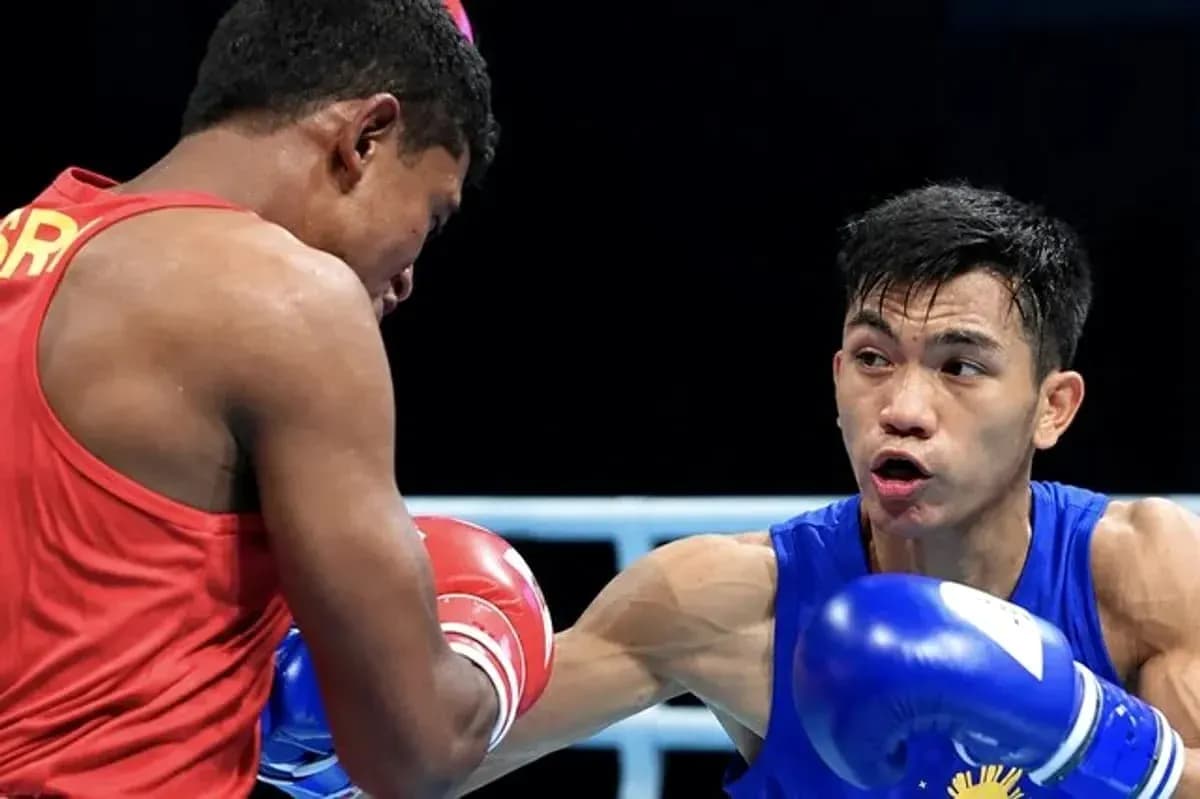
From the opening bell, Itauma fought like a man in a hurry to justify the hype. Southpaw, sharp, and utterly sure of himself, he landed the first meaningful shot – a sweeping right hand that announced his intent. He moved with menace, clipping Hrgovic with quick, cuffing blows, then driving him back with a jolting right cross that visibly shook the older man.
The second round underlined the gulf in speed and timing. Itauma missed with a wild, scything left, but when Hrgovic stepped in, he walked straight into a short, savage right hook. The Croat crashed to the canvas, rising at eight, his legs betraying the damage. Itauma pounced again late in the round with another blistering combination, the kind that makes a young fighter look untouchable.
Hrgovic, though, refused the role of victim. A sharp left from Itauma snapped his head back at the start of the third, sweat spraying under the lights, yet the Croat stayed upright and stubborn. Itauma dug cruelly to the body, sinking a shot into the gut that would have folded lesser men. Hrgovic’s supporters at ringside, sensing their man needed something more than durability, roared him forward as he finally found some success of his own. His ambition, clearly, had not dimmed.
Cracks in the prodigy’s armour
The early rounds belonged to Itauma, but the cost of his pace began to show. By the fifth, the young Briton started to grimace between exchanges. He still produced moments of brilliance – a beautiful short left that slid through Hrgovic’s guard, an uppercut at the bell that snapped the Croat’s head back on the thick column of his neck – yet the signs were there. He breathed heavily, at one point using a glove to shove his black gumshield back into place. For the first time, his previously impassive face betrayed strain.
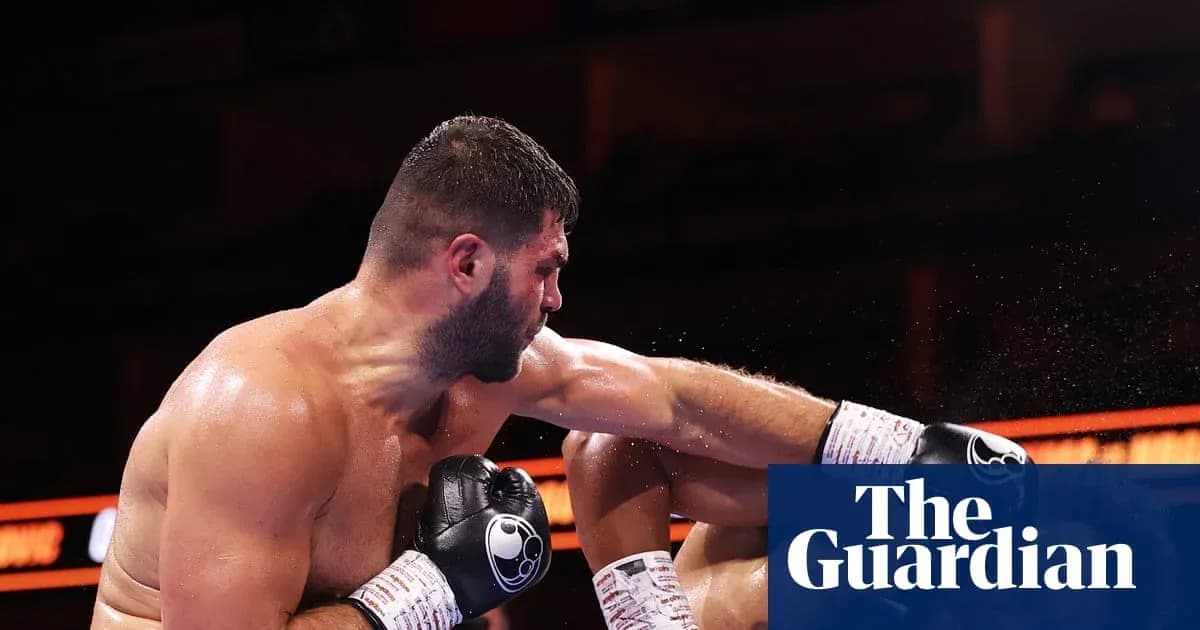
Across the ring, Hrgovic wore his own damage. A cut above his right eye began to leak a thin line of blood. He took “one meaty blow after another,” but he kept coming. Just before one of the bells, he landed heavy shots of his own. Itauma absorbed them and fired back, the fight suddenly catching fire, the atmosphere thick with the sense that this was no longer a showcase but a test of who could endure more.
Itauma had never been beyond six rounds. The seventh dragged him into unknown territory. Still, he boxed with authority, forcing Hrgovic onto the back foot again and stitching together deft combinations that spoke of natural talent and refined schooling.
Yet the clock, and the weight of the occasion, began to lean against him.
The tide turns
The eighth round changed everything.
Hrgovic continued to eat punches, his chin and resolve as solid as his reputation suggested. Itauma, by contrast, looked desperately weary. His feet slowed. His shoulders sagged between attacks. Each exchange now drained him. Hrgovic, almost unbelievably, found another gear.
The pressure finally told.
Where Itauma’s work had been sharp and surgical early on, it now came in laboured bursts. Hrgovic sensed it. He marched forward with granite determination, his punches heavier, his presence more suffocating. The younger man, who had dazzled with his speed and angles, allowed himself to be dragged into a slugfest instead of boxing safely with a lead in the bank.
Inexperience met a veteran’s will, and it broke.
By the ninth, the storm crashed down on Itauma. Hrgovic, driven by a reservoir of stamina and self-belief, opened up with renewed conviction. Itauma sagged back against the ropes, his body listing, his responses fading. The referee moved in as the Croat unloaded. At almost the same moment, Ben Davison, Itauma’s trainer, hurled the white towel over the ropes, a surrender born not of cowardice but of necessity.
The stoppage spared Itauma a concussive knockout. It did nothing to soften the blow of what had just slipped from his grasp.
A champion forged in defiance
The aftermath brought a shocking, almost surreal image: the 21-year-old prodigy, who had come so close to becoming the second-youngest world heavyweight champion in history, leaving the ring on a stretcher, apparently with a knee injury. The real damage, though, had been inflicted by Hrgovic’s refusal to yield.
For Croatia, a nation without a deep boxing heritage, Hrgovic’s win carved out a new line in the sport’s history. He became the country’s first world heavyweight champion, a milestone forged not through dominance but through endurance and faith.
“I was losing every round. I was outboxed,” Hrgovic said afterwards, insisting the energy that flooded him in the ninth round came from his faith: “It was not me tonight. It was Jesus Christ in me. Holy Spirit. Father, Son and the Holy Spirit. It was not me… I don’t know from where I got energy in that ninth round. And it was really not my strength. It was the Holy Spirit.”
He then turned his attention to the beaten man who had almost taken everything from him.
“He’s an amazing fighter,” Hrgovic said of Itauma. “I want to thank him for accepting this fight, to give me a chance to become a new superstar in the heavyweight division. I’m the present and he’s definitely the future.”
A harsh lesson in a hard division
All week, Hrgovic had probed at Itauma’s psyche, suggesting that becoming world heavyweight champion so young would be “bad for his soul.” Itauma, wary of fame and suspicious of its trappings, had engaged with those doubts. It was as if, deep down, he himself wondered whether this opportunity had arrived too soon.
On fight night, those questions were answered in the harshest possible way. The bout underlined a brutal truth about heavyweight boxing: raw talent, speed, and dazzling combinations can carry a young fighter only so far when a seasoned, world-class opponent refuses to surrender and possesses the engine to keep walking forward.
Itauma’s skills are not in doubt. His ceiling remains high. At 21, he has time to rebuild, to learn from the moment he allowed a winnable fight to turn into a brawl he didn’t need. But the IBF belt now belongs to a 34-year-old who weathered the storm, trusted his stamina, and imposed his will when it mattered most.
In the weeks and months ahead, it will be Filip Hrgovic who celebrates as world champion, the man who dragged himself off the canvas and into history, while Moses Itauma is left to confront a new and uncomfortable reality: in the unforgiving world of heavyweight boxing, brilliance alone is never enough.