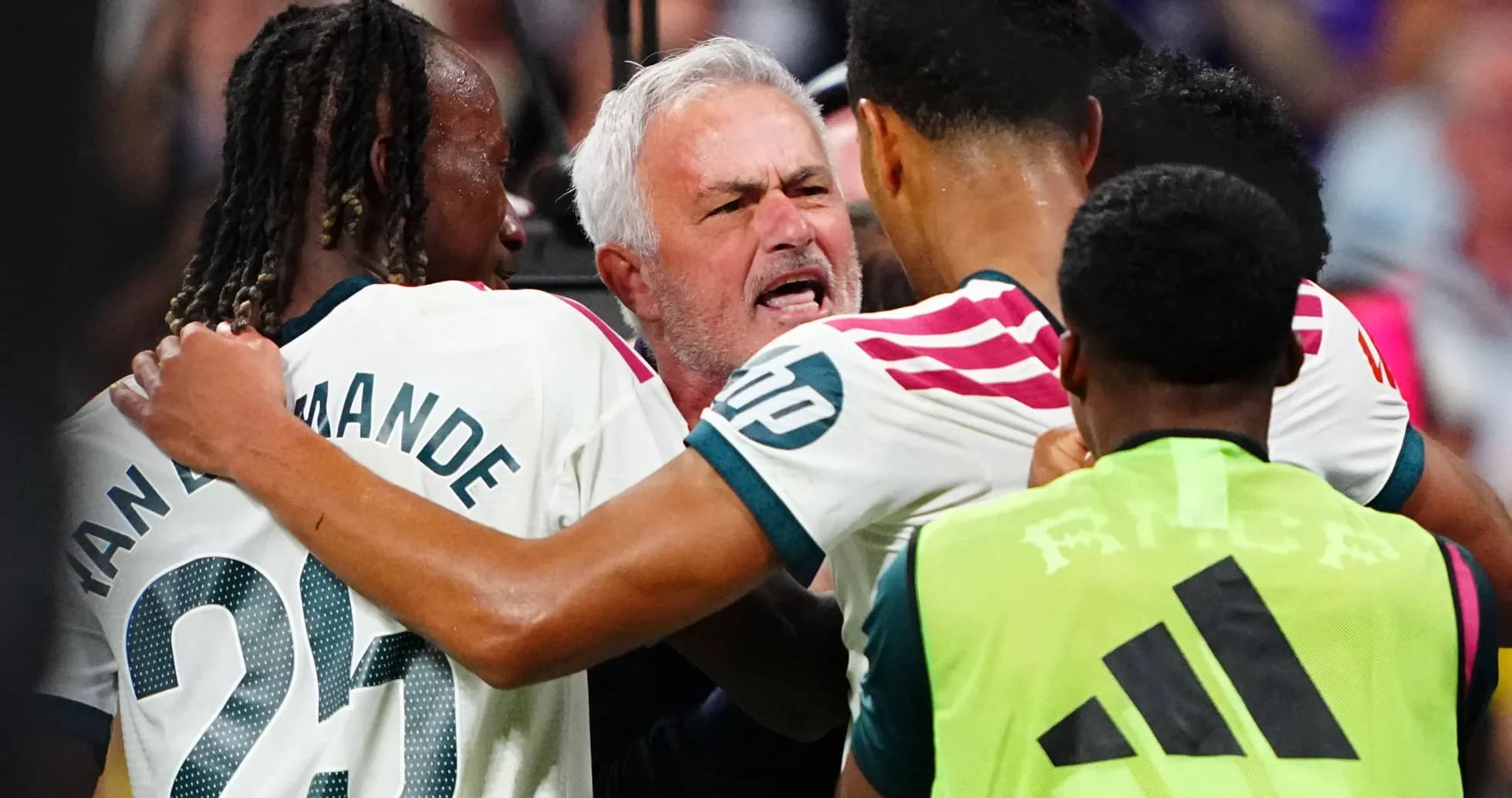
Jose Mourinho has never been one to indulge reputations, and he isn’t about to start now with Vinicius Jr.
In the middle of a congested autumn schedule, the Real Madrid coach laid out his thinking with trademark clarity: the badge comes first, the name on the back of the shirt comes second. Every time.
Rotation with an edge
Madrid’s 3-2 win over AEK Athens in the Champions League gave Mourinho another data point in a demanding run of fixtures. Vinicius started that night in Greece, while Arda Guler — who has been carrying some issues — was handed a breather.
For Mourinho, that was no accident and no favour. It was management.
"The match against AEK was for Vini Jr., to give some rest to a player like Guler, who had some issues," he explained, framing the decision not as a concession to a star, but as part of a broader plan to keep the squad alive on multiple fronts.
He knows the calendar will not relent. Madrid are fighting on every stage, and the coach is already thinking several games ahead, even as he demands his players focus only on the next 90 minutes.
"When we return to normal with Vini Jr. being available, I’ll manage it. I want the team to think game by game, but as a coach, I have to think about the next matches and the sequence of games we have."
That is the tension he lives in: short-term performance against long-term survival.
Team above everything
If there was any doubt about where Mourinho stands on hierarchy, he crushed it.
"For me, the most important thing is the team. Never by my own will would I harm the team to benefit a player," he said, the line delivered less as a slogan and more as a warning.
"When deciding who plays, the team is above the individual."
The message is unmistakable. Vinicius may be a reference point in attack, a player capable of deciding knockout ties — as Mourinho himself knows all too well — but he will be treated like everyone else when it comes to selection. No automatic guarantees. No sentimental calls.
Demanding more from Vinicius, but backing him fully
That doesn’t mean the Portuguese coach has lost faith in his Brazilian forward. Quite the opposite. His expectations are high precisely because he has seen the highest level.
"A bad player will always be bad no matter how much you try to improve them. A good one has their bad moments but leaves the door open to return to their normal state," Mourinho said, drawing a clear line between temporary dips and permanent limits.
He used Vinicius’ display in Athens as an example of the scrutiny that comes with elite status.
"The game that Vini Jr. played in Athens—if it wasn’t Vini Jr. but a regular player—we’d all say he had a good game. Not incredible because his team didn’t play incredibly. We always expect the Vini Jr. who eliminated me from the Champions League, and that version exists, which we all expect."
That is the standard. Not just a “good” performance, but the ruthless, decisive Vinicius who once knocked a Mourinho side out of Europe. Anything less feels underwhelming, even if, on paper, the numbers look respectable.
What may matter most now is the environment around him.
"Something important is the friendship of his teammates, without exception," Mourinho added, hinting at a dressing room that remains firmly behind the Brazilian as he chases his sharpest form.
Valencia away: no room for sentiment
Next comes Valencia at Mestalla, a fixture that rarely allows for half-measures. It is hostile, loud, and often chaotic. Exactly the sort of stage where a player like Vinicius can either ignite or get swallowed by the noise.
Mourinho’s stance leaves no doubt: Real Madrid will travel with their full attacking arsenal ready, but nobody is bigger than the collective plan. Vinicius will have his chances, carefully managed, fiercely judged.
The team, though, will always be the starting point.