NBA 2026-27 Fantasy Insights: Unsettled Rotations to Watch
The NBA just redrew its own map. Giannis Antetokounmpo in Miami. LeBron James in Philadelphia. LaMelo Ball in Minnesota.
Amid all that noise, five teams head into 2026-27 with rotations that are anything but settled. For coaches, it’s a puzzle. For fantasy managers in High Score formats, it’s a hunting ground.
Milwaukee Bucks: A New Backcourt Running the Show
Milwaukee didn’t just turn the page. It tore the book up.
Trading Antetokounmpo to the Heat reset the franchise and dropped a wave of fresh talent into the backcourt. Tyler Herro arrives as the obvious offensive engine, the one player on this roster you can bank on leading the team in usage and starting at shooting guard. The ball will find him. Often.
Next to him, Ryan Rollins looks poised to grab the starting point guard job and run with it. His breakout last season wasn’t a fluke: 17.3 points, 4.6 rebounds, 5.6 assists, 1.5 steals and 2.5 threes per game. At 24, he fits perfectly into the Bucks’ new timeline and gives them a creator who already knows how to put up numbers.
Behind that duo, the depth chart turns into a battleground.
Kevin Porter Jr. brings a 24.3% usage rate and the kind of shot creation that can hijack a game. He’s volatile, but that volatility is gold in a High Score format that only cares about your best night. A random 30-point eruption can swing a week.
Then comes Brayden Burries, the No. 10 pick, a guard Milwaukee clearly views as a future cornerstone. That kind of investment usually comes with patience and minutes, even when the mistakes pile up. Kasparas Jakučionis, a first-rounder a year ago and part of the Heat haul, adds yet another layer of upside.
On a rebuilding roster, opportunity usually flows to the rookie with the long runway. Burries is that play if you’re grabbing one backup late. Porter, though, is the ceiling swing—the kind of scorer who might disappear for three games and then win you the fourth by himself.
In Milwaukee, the hierarchy at the top looks clear. The chaos lives underneath, and that’s where fantasy value tends to leak out.
Boston Celtics: Two Big Men, One Job to Own the Paint
Boston spent last season reshaping its identity while Jayson Tatum worked back from a torn Achilles. Center wasn’t the headline, but Neemias Queta quietly turned it into his stage, grabbing the job and holding it with solid, no-frills production.
The deadline move for Nikola Vučević never quite clicked. Now he’s gone, and Boston has turned to a different kind of anchor.
Mitchell Robinson arrives from New York with a reputation already carved in stone: elite rebounder, violent rim protector, and a player who looks his best when his minutes are managed. The Knicks found the sweet spot by keeping him under 20 minutes per game the past two seasons, preserving his explosiveness and keeping his body intact.
Boston could mirror that plan, maybe even use him as a high-impact reserve. But even if he settles closer to 25 minutes a night, that’s more than enough. A typical Robinson line—14 rebounds and three blocks—translates to 23 High Score fantasy points before you even count a single basket. That’s a cheat code in short bursts.
Queta doesn’t vanish in this setup. He’s shown he can handle starting duties, and Boston can ride the hot hand or lean into matchups. In a ten-man fantasy roster, you can live comfortably with one of them as your main center and cycle the other through a Utility slot when the schedule or opponent screams “big night.”
Boston’s center spot isn’t a problem to solve. It’s a luxury of two very different big men who both carry fantasy juice.
Charlotte Hornets: A Crowded Center Room After a Bold Reset
Charlotte surprised the league last season, fighting their way into the Play-In on the backs of LaMelo Ball, Brandon Miller and Kon Knueppel. Then the front office ripped up the script.
Ball to Minnesota. Miles Bridges to Phoenix. This isn’t tinkering. It’s reconstruction.
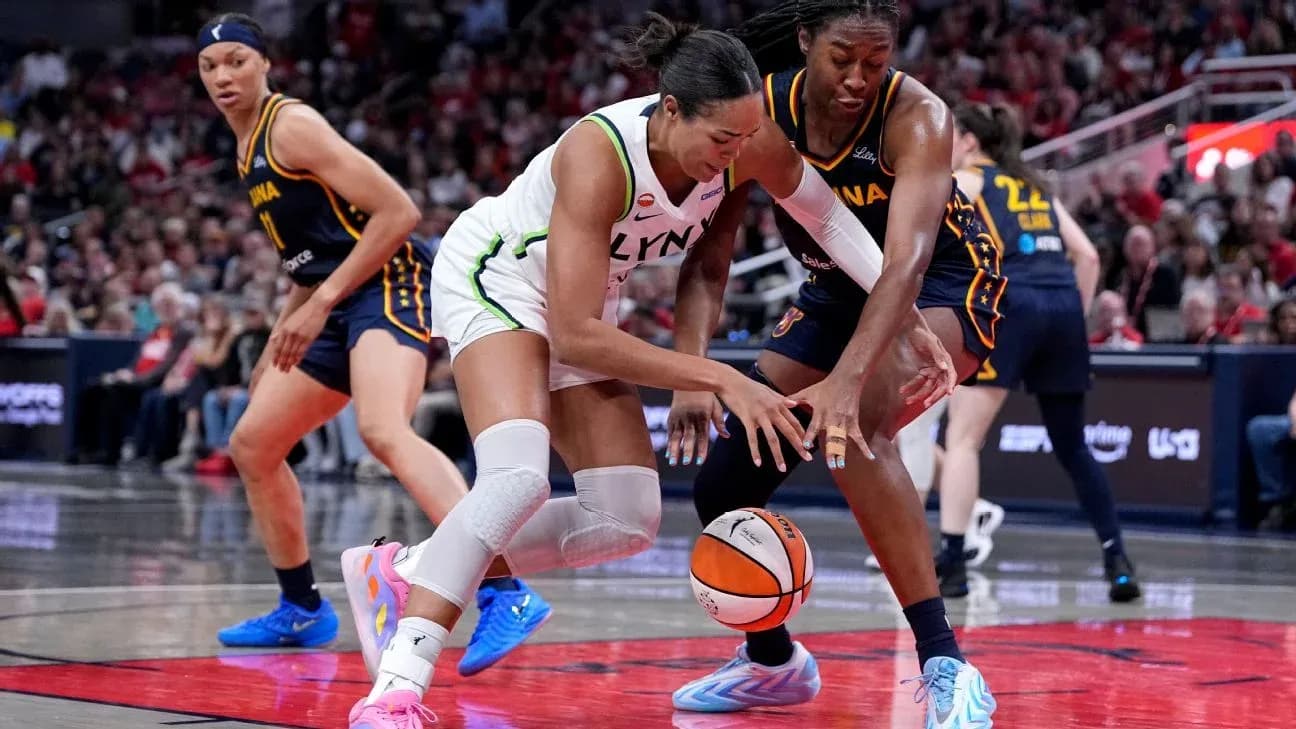
At center, Moussa Diabaté became a cult favorite—endless motor, glass-eating presence, and the kind of energy that changes the feel of a game. Charlotte, though, wanted more scoring from the frontcourt and found it in Naz Reid, acquired in the Ball deal.
Reid is the modern big in a nutshell. He stretches the floor, toggles between power forward and center, and can punish slower defenders on the perimeter. He’s the one piece in this frontcourt you can pencil in for heavy minutes. Expect him to start at power forward and slide to the five when Charlotte downsizes. In fantasy terms, he’s a straightforward starting option.
Around him, the competition is fierce. The Hornets spent the 14th pick on Hannes Steinbach after a monster college season at Washington: 18.5 points, 11.8 rebounds and 1.2 blocks. Those are not empty numbers. They’re the profile of a big who can step into an NBA rotation and hold his own quickly. Ryan Kalkbrenner, a 2025 second-rounder, remains in the mix, lurking as a steady, if unspectacular, option.
The pressure this time falls on Diabaté. His minutes could swing wildly as Charlotte experiments with combinations and searches for balance between defense, rebounding and floor spacing.
Steinbach is the long-view play. If he carves out more than 20 minutes a night, he becomes relevant in 12-team and deeper leagues, and his best outing in any given week will look a lot like a starter’s line. Reid is the sure thing. Everything else is a bet on upside and patience.
The Hornets may have traded their star, but they didn’t trade away intrigue.
Memphis Grizzlies: Life After Ja and a Backcourt Up for Grabs
Ja Morant’s time in Memphis is over. The franchise face now belongs to Portland, and in return the Grizzlies picked up Jerami Grant and Kris Murray—one a proven scorer, the other a versatile forward who fits neatly into a new frontcourt core.
The future, though, clearly points toward Cameron Boozer. Memphis used the third pick in the 2026 Draft on him, pairing him with Zach Edey to form a towering, high-upside front line. The bigs look set.
The guards do not.
Scotty Pippen Jr. and Ty Jerome headline the fight at point guard. Pippen lost most of last season to injury, limited to just 10 games, which opened the door for Cam Spencer to step in and run the offense. Spencer responded with 11.1 points and 5.6 assists in only 24 minutes per game, proving he can steer an NBA attack and rack up fantasy value in a hurry.
Jerome’s versatility keeps him in both guard conversations. He can initiate the offense, spot up off the ball, and slide between roles depending on who he shares the floor with.
At shooting guard, Cedric Coward stands out. Memphis took him 11th in the 2025 Draft, and teams don’t invest that kind of capital just to bury a player. He should get every opportunity to claim the starting job. Walter Clayton Jr. lurks as another option, giving the Grizzlies yet more depth and yet more lineup possibilities.
The likeliest outcome: Pippen reclaims the starting point guard role, Jerome becomes the primary backup across both spots, Coward gets the first crack at shooting guard, and Spencer forces his way into consistent minutes with his playmaking.
In a standard fantasy league, that’s a headache. A five-man rotation that keeps everyone under 30 minutes caps individual ceilings. In High Score, it’s a different game. You only need one of them to explode in any given week. With this much talent sharing the ball and minutes, someone in that group will post a big line more often than not.
Spencer already showed the template—those 5.6 assists alone translated into more than 11 High Score points per night. All five guards are late-round options, but in this format, they’re the kind of late picks that can quietly win weeks.
Memphis doesn’t have a star guard anymore. It has a committee. And committees, in the right scoring system, can be just as dangerous.
New Orleans Pelicans: Three Bigs, One Question
New Orleans walked into the offseason at a crossroads and chose continuity. After a bruising 2025-26, the Pelicans largely ran it back, reportedly adding Bennedict Mathurin and banking on a full, healthy season from Dejounte Murray to change the tone.
They also brought back DeAndre Jordan on a two-year, $7.9 million deal. At this stage, he’s less about rim-running and more about presence—someone to steady a young frontcourt that still hasn’t fully defined itself.
The center spot is crowded. Derik Queen flashed real potential when he saw extended minutes last season, hinting at a skill set that can mesh with Zion Williamson. Yves Missi remains firmly in the conversation, an athletic big who can protect the rim and run the floor. Then there’s Herbert Jones, the defensive heartbeat who finished last season as the starting center.
Jones won’t wow anyone with scoring volume, but he tilts games with his defense. Nearly two steals and a block per night translates to nine High Score fantasy points from defense alone. That’s a rare baseline.
From a long-term perspective, though, starting Queen next to Zion makes the most sense. The Pelicans need to know if that partnership can anchor their next playoff push. Queen offers the highest ceiling of the three, with the offensive potential to complement Zion rather than just coexist.
Still, Jones opening the season at center is a very real possibility, especially if the coaching staff leans on what worked late last year. Missi should see minutes regardless, carving out a role as an energy big and matchup piece.
For fantasy purposes, all three are late-round swings. Queen is the priority—his upside is simply higher. But in a High Score format, shared minutes don’t kill value the way they do elsewhere. One big night is all you need, and this trio has enough combined talent to deliver those spikes even in a split timeshare.
The Pelicans know the question hanging over their season: which big man can grow alongside Zion and drag this team back toward the postseason? The answer will shape not just their future, but plenty of fantasy rosters too.