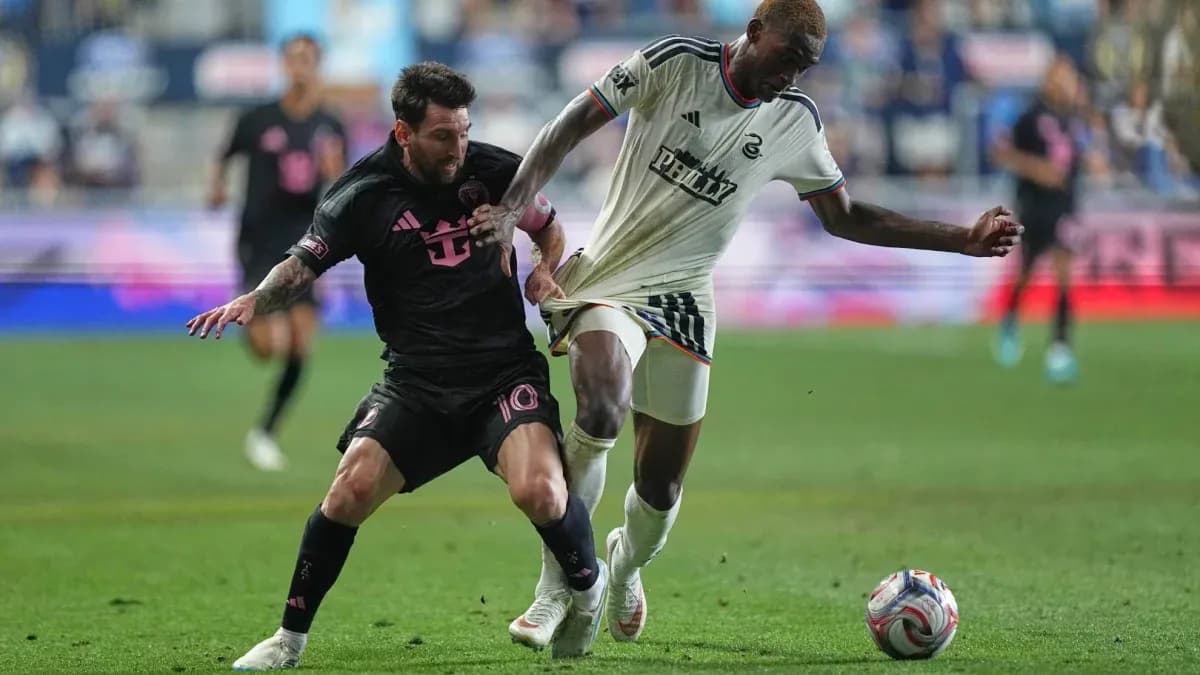
The United States men’s national team is being rebuilt in real time. Not with sweeping slogans or grand manifestos, but with squad lists that look younger, bolder, and far more local than in years past.
At the heart of that shift sits a teenager who has turned heads in Philadelphia and now caught the eye of Mauricio Pochettino: Neil Pierre.
A new spine for a new cycle
Pochettino, the Argentine coach entrusted with steering the U.S. into its next wave of international competitions, has made his intentions clear. Established stars will not carry this alone. Major League Soccer’s best prospects are being dragged into the spotlight, asked to grow up fast and prove they belong on the international stage.
Few academies have fed that ambition more aggressively than Philadelphia Union’s. Their conveyor belt has altered the tempo of the club and now is bleeding into the national setup. Careful scouting by the U.S. staff has turned into concrete decisions: call-ups, minutes, responsibility.
Pierre is the latest—and perhaps the most imposing—example.
Building a tower in Pennsylvania
Born in Lebanon, Pennsylvania, and of Haitian descent, Pierre did not begin as a pure soccer prodigy. His childhood belonged partly to basketball courts, where his frame and coordination first stood out. Only at 11 did he decide to commit fully to soccer, following the path opened by his older brother, Nelson Pierre.
From Super Nova FC to the Philadelphia Union academy, his climb was steep. Coaches pushed him against older age groups, testing his decision-making and positioning against quicker minds and stronger bodies. That gamble hardened him. It sped up his tactical education and sharpened his defensive instincts.
The reward came early. Pierre signed as a Homegrown Player, the Union locking in a center-back who already looked physically ready for the professional game. Minutes with the club’s reserve side in MLS NEXT Pro followed, but the next step came from across the Atlantic.
A loan move to Lyngby Boldklub in Denmark handed him something no training session in Pennsylvania could: the grind of European football, week after week.
Europe sharpens the edge
In Denmark, Pierre’s profile grew beyond the label of “promising defender.” He became a set-piece threat. His aerial dominance, already a natural strength, turned into a weapon. Across ten matches for Lyngby, he scored four goals—numbers that demand attention for a center-back that young.
Those performances forced a decision in Philadelphia. The Union brought him back into the first-team squad midway through the season, not as a project, but as a piece they needed now.
The impact came instantly.
Immediate impact in MLS
Under interim coach Ryan Richter, Pierre stepped onto an MLS pitch for the first time against the New York Red Bulls. He did not ease his way in. Coming off the bench, he scored on his debut, announcing himself to the league with the sort of moment defenders rarely get and rarely waste.
That was not a one-off. Installed in central defense, he has delivered steady, mature performances that belie his age. He has added four goals in the MLS season, again underlining that his presence in both penalty areas changes games. At the back, he has helped Philadelphia stitch together the kind of solid defensive displays that give attacking talent the platform to win matches.
For a national team manager watching closely, it was impossible to ignore.
Pochettino’s statement call
Pochettino’s decision to call Pierre into the senior U.S. squad for the upcoming international window is more than a pat on the back for a good run of form. It is a clear statement about where he believes the future of the national team lies.
Pierre joins two of his Philadelphia teammates, Cavan Sullivan and Frankie Westfield, in the squad—a trio that underlines the value Pochettino places on the Union’s academy and, more broadly, on MLS as a proving ground rather than a fallback option.
This is not a token camp invite. It is a test. Can a young center-back who has risen rapidly through youth levels, tasted Europe, and imposed himself in MLS now handle the pace, pressure, and scrutiny of international football?
If the answer is yes, the United States may have found a new pillar for its back line at the very start of this cycle—and a fresh symbol of what this generational renewal is supposed to look like.