For decades, netball has been the sport Australian girls grow up with and grow into. Courts full, clubs thriving, Diamonds glittering on the world stage.
Yet when it comes to First Nations representation at the very top, the record is stark. Just three Indigenous women have worn the green and gold of the Diamonds: Marcia Ella-Duncan, Sharon Finnan-White and, after a 22-year silence, Donnell Wallam.
Three. In a sport this big.
Wallam’s decision in 2024 to leave Australia for New Zealand ripped the lid off what many inside the game already knew. On her way out, she pointed directly at “respect for inclusion and culture” across the Tasman as a decisive factor in her move, a pointed message to her former club, the Firebirds, and to Australian netball more broadly.
The fallout was swift. Accusations of a “toxic culture” at the Firebirds forced Netball Australia to do more than nod and move on. An investigation began, and with it a shift in language: “cultural safety” for First Nations athletes was no longer a slogan. It had to become policy.
The rise of the Black Swans
Out of that reckoning came something tangible. Netball Australia appointed Ali Tucker-Munro as General Manager First Nations, a former Diamonds squad member now charged with reshaping the pathway she once had to navigate largely alone.
Her fingerprints are all over the sport’s new architecture.
There is now a First Nations Cultural Council. A national cultural safety review has been completed, built not just on player feedback but on the views of coaches, umpires and the wider workforce. And, most visibly, there is a new team: the Black Swans, Australia’s inaugural First Nations side.
Alongside the Black Swans sits a new national showpiece, the First Nations Tournament, currently being staged in Melbourne, and the Spirit Series, launched in 2026, where the Black Swans went undefeated against Pacific opposition.
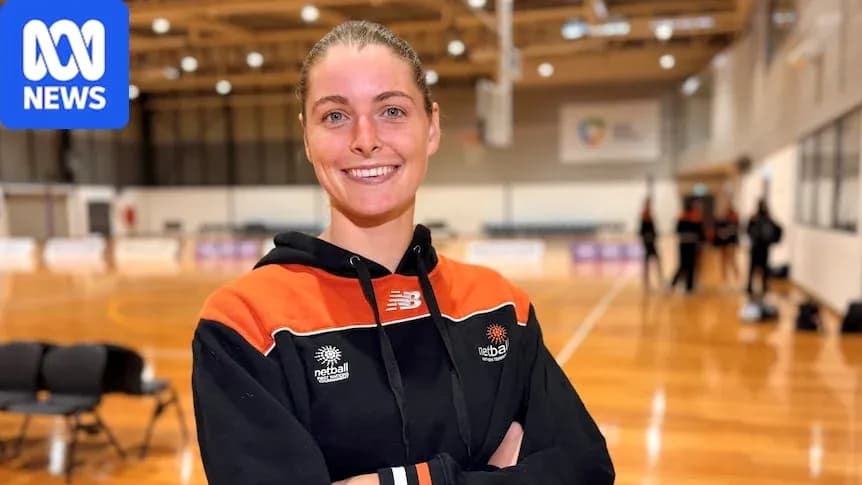
At the State Netball and Hockey Centre, Tucker-Munro stands with two of the faces of this new era, defenders Gabby Coffey and Scarlet Jauncey. Their presence, she says, is the start of something the sport has been missing for far too long: visible role models.
The work, she knows, is nowhere near done. But at least the next generation can now see something that looks like them.
A defender on the edge
Coffey, 26, knows exactly what it means to live on the fringes of elite netball. Representing the Northern Territory this week, she is part of a cohort of First Nations players who have hovered just outside the Super Netball bubble. Close enough to feel it. Not close enough to break through.
She spent four years as a Melbourne Vixens training partner. Four seasons of turning up, pushing, waiting. Eventually, she read the signs.
“I knew there wasn't much movement in their defensive end, and the same with a lot of defensive ends around Australia,” she told ABC Sport.
So she left.
Coffey crossed the world to the UK, signed for Birmingham, and played two seasons there before returning home to Alice Springs. The move didn’t just change her game; it altered her sense of what her role in the sport might be.
She still wants a professional contract. She hasn’t let that dream go. But she’s also realistic enough to see another path: helping other First Nations athletes chase theirs.
Her own story begins far from the bright lights of Super Netball. A Wiradjuri woman who grew up in Alice Springs, away from her mob and country, she found herself welcomed into the Arrente community.
“When you grow up on other Indigenous land and tell people you're Indigenous, they pull you into their culture,” she said. “So [my family and I] were super lucky and blessed to grow up in the centre of Australia where arguably their Indigenous culture is very sacred and traditional.”
The netball dream pulled her south. Coach Gillian Lee urged her to move to Melbourne, and the transition hit hard.
“It was really hard being away from home,” Coffey said. “I was really lucky with the team I entered [the Vixens] and the support I did have, but it's not the same for everyone. There's a lot of girls who do get those opportunities to move and then don't last because there's just not that support in place.”
Coming from the Northern Territory added another layer.
“Even with competitions like these, we don't get together until we're here, and we're training away from each other, so it can be quite a challenge.”
Distance, cost, isolation. All the invisible barriers that don’t show up on a team sheet.
‘If you can’t see it, you can’t be it’
Ask Coffey what would actually change things, and she doesn’t hesitate.
Role models.
“If you can't see it, you can't be it,” she said, pointing to the fact that there are only two Indigenous players currently in Super Netball.
Her own experience as a long-term train-on player is a case study in how hard it is to crack an Australian list. The league is elite, the margins are tight, and the influx of international stars has raised the standard again.
“We get a number of internationals [coming to Super Netball], which I think makes the game better and more exciting, and I don't think [that] should be restricted,” she said. “But I do think there should be more focus on bringing Indigenous girls into the elite level.”
Netball Australia’s plan to introduce two new teams into the competition could be a turning point. More teams mean more list spots, more opportunities for players like Coffey to finally step through the door.
A New Zealand team entering the competition, she added, might ease the squeeze on Australian players fighting for contracts. The pressure cooker could cool just enough for more First Nations talent to stay in the system.
Chasing stars, becoming one
On the other side of the country, another defender is living a similar balancing act.
Scarlet Jauncey has spent the last year as a training partner with West Coast Fever, tasked with marking one of the most dominant shooters in world netball, Jhaniele Fowler-Nembhard, at training. It’s the kind of assignment that can terrify or transform a young defender.
A Yaruwu woman from Rubibi/Broome in Western Australia, Jauncey shares Coffey’s view on international talent. Don’t cut it. Compete with it.
“We're happy to be playing against the best in the world, that's what we want,” she said.
Like many of her teammates in Melbourne this week, she grew up idolising Donnell Wallam.
“I think it just gives us something to strive towards, knowing that we can be in that space,” she said.
Now she’s becoming that figure for others. In 2025, Jauncey captained the Black Swans, stepping into the role of leader and symbol all at once.
“It was the best tournament I've played in, the best teams I've been with,” she said. “I think just being able to come to First Nations tournaments and having that connection with each other has been really great.”
Coffey feels it too. She describes the experience of playing for the Black Swans in simple, physical terms.
Goosebumps.
“I think it gives not only myself, but a lot of players so much power and push to keep going and play at the highest level,” she said.
Building cultural safety, not slogans
Tucker-Munro listens to those reactions with a smile that carries both pride and responsibility. The Black Swans, the First Nations Tournament, the Spirit Series – these aren’t just fixtures on a calendar. They’re proof that when you build spaces with First Nations athletes in mind, something changes in the air.
“These tournaments are aspirational in terms of trying to inspire the next generation of our kids — who we know love sport and netball in particular — to trial for their respective state and territory,” she said.
The aim is simple and ambitious at once: kids watching this week’s tournament should leave wanting more. Wanting Super Netball. Wanting the Diamonds.
“It's about the kids that are here this week wanting to aspire to take that next step into the big leagues in terms of Super Netball and Australian representation as well.”
But bringing more First Nations athletes into elite environments only works if those environments don’t break them.
“First Nations people come into these spaces with our culture and community on our back, as well as cheering us on, so you want to do them proud,” Tucker-Munro said. “It's also a tough journey, especially for the kids who have to relocate, so it's about thinking strategically about how we can support them.”
That’s where the less visible work matters. The First Nations Cultural Council. The cultural safety review done with community, not just about community. The recognition that the barriers are “multi-faceted”: financial strain, geography, limited access to high-performance programs.
“For too long our voice has been very silent,” she said. “We're not a homogenous people, so it's really important that we make sure we're hearing the voices of many.
“One thing we're really big on in our community is not to do things for us or to us, you've got to do it with us. There's real intent and good will to actually drive some of this change across the sporting landscape of netball in Australia.”
The question now is whether that intent can finally turn three Indigenous Diamonds into a number that reflects the courts, the communities and the talent that have been there all along.