
The rain lashed down in Belgrade, but the real storm hit Amsterdam.
Under new coach Xavi, the Netherlands tore Greece to pieces in a 7–0 demolition that sounded less like a group game and more like a warning shot to the rest of the Nations League. Unbeaten under their new boss, they now walk into a group decider against Jürgen Klopp’s Germany with momentum, swagger and a scoreline that echoes around Europe.
Reijnders runs riot, Dutch hit historic seven
From the sixth minute, this was a mismatch.
Crysencio Summerville opened the floodgates with a sharp finish, and Greece never recovered. The Dutch pressed high, passed with tempo and attacked in waves. The visitors couldn’t live with it.
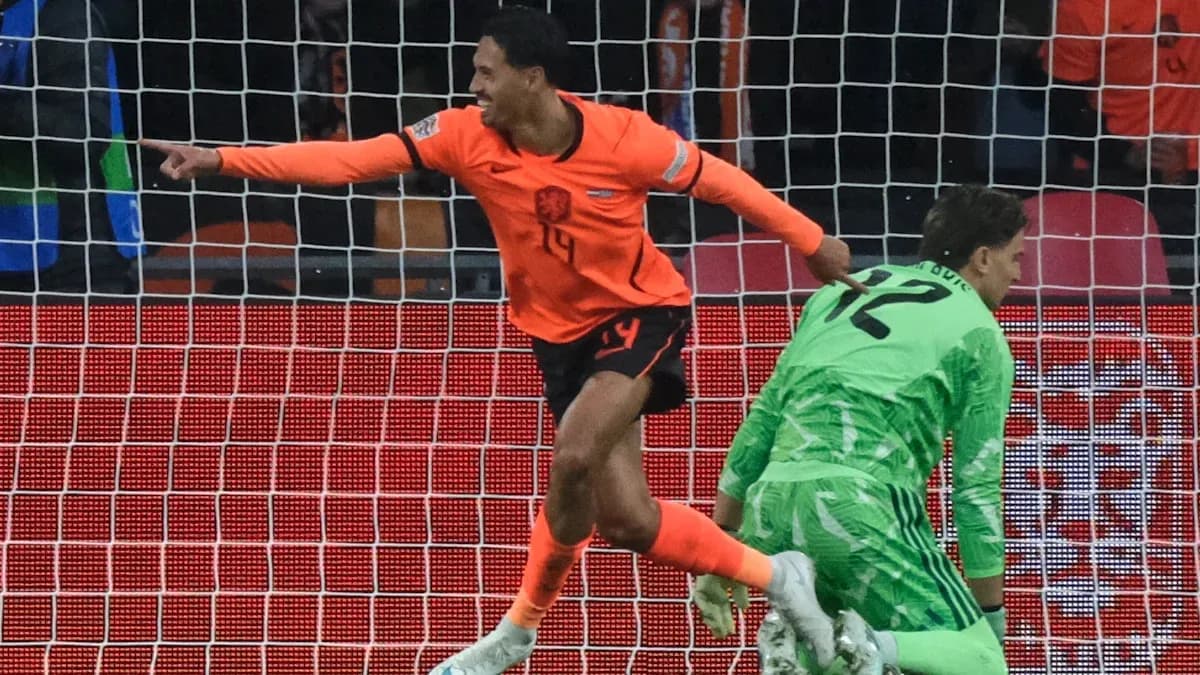
Tijjani Reijnders turned a strong start into a rout. His first goal arrived as the Netherlands sliced through the Greek back line with crisp, one-touch combinations. His second and third followed in a blistering 21‑minute spell, each the product of slick movement and ruthless finishing. By the time he wheeled away beaming, three fingers raised to the Amsterdam crowd, the game was long gone.
Jurrien Timber, stepping forward from the back like an extra midfielder, added two more before the break. At 5–0 by halftime, the Netherlands had already matched the intensity of their new coach’s touchline energy. Donyell Malen then piled on a seventh to complete a night that equaled the biggest winning margin in the eight-year history of the Nations League.
Xavi called the first half “amazing” and praised the work his players are putting in on the training ground. The scoreline backed him up. The performance did too.
The result places the Netherlands in a select group. They join England, Germany and Finland as the only teams to win a Nations League match by seven goals. England’s 7–0 over Croatia came just last month; the Dutch have now answered with a statement of their own.
Germany handle the rain and the noise – or lack of it
While Amsterdam celebrated, Germany went about their work in very different surroundings.
At the 50,000-capacity Rajko Mitic stadium, there were barely any fans. Only around 5,000 children and teenagers were allowed in as UEFA punished the Serbian federation for previous offensive fan behavior. The stands looked empty, the atmosphere muted, the rain relentless.
Klopp’s team didn’t seem to mind.
Germany led after just three minutes, Serbia defender Srdjan Babic turning Kai Havertz’s header into his own net. The early goal settled any nerves and exposed the gulf in quality and organization.
The pressure didn’t relent. When Milinkovic-Savic parried another Havertz effort, Florian Wirtz reacted first, lifting a clever flick over the stranded goalkeeper for 2–0. It was a goal full of instinct and composure, the kind of finish that underlines why Wirtz has become central to Germany’s new era.
Klopp had rotated again, sending out an experimental squad that included Freiburg winger Derry Scherhant and left no place for Barcelona’s Karim Adeyemi. The changes didn’t blunt Germany’s edge. Debutant Brajan Gruda made sure of that.
Picking up the ball through the middle, the Leipzig man drove at the heart of the Serbian defense, slipped past challenges and finished decisively for Germany’s third. A first international goal, and a reminder of the depth at Klopp’s disposal.
Babic did pull one back for Serbia, reacting to a rebound to atone partially for his early own goal, but any hint of a comeback vanished with the cards. Vanja Dragojevic saw red for a reckless lunge on Joshua Kimmich’s ankle, and Andrija Zivkovic followed late on for dissent. Serbia ended with nine men, and Germany ended with a 3–1 win that never truly looked in doubt.
Klopp admitted his side could have scored more but refused to criticize. For him, this was about control, progression and building a platform. Two wins from five under his tenure isn’t spectacular on paper, yet the performance in Belgrade suggested a team beginning to understand its new identity.
Group A2 on a knife-edge
All of this leads to Monday.
The Netherlands sit three points clear at the top of Group A2, with Germany chasing them down. The head-to-head record will decide the tiebreaker, and both teams still have work to do with Greece also mathematically in the hunt. Serbia, beaten in all five of their games, are out of the picture.
What matters now is Berlin.
Xavi brings a side that just equaled a Nations League record win. Klopp brings a team that has started to click, with new faces stepping up and a clear attacking threat. The top two in the group will reach the quarterfinals, but first place carries weight, prestige and a psychological edge.
One coach will walk away with that. One won’t.
Switzerland steady, Scotland climb
Lower down the ladder, Switzerland’s push to return to the top tier stayed on track. Playing in League B for the first time, they ground out a 0–0 draw with Slovenia, their closest rival in Group B1. It wasn’t pretty, but it was enough to keep their promotion bid pointed in the right direction.
Scotland, meanwhile, claimed a 2–1 victory over North Macedonia, a result that keeps their own Nations League campaign moving forward.
But the spotlight now swings back to Group A2. After a seven-goal statement in Amsterdam and a composed away win in Belgrade, the stage is set: Xavi vs Klopp, the Netherlands vs Germany, with first place – and perhaps a glimpse of the future of European football – on the line.





