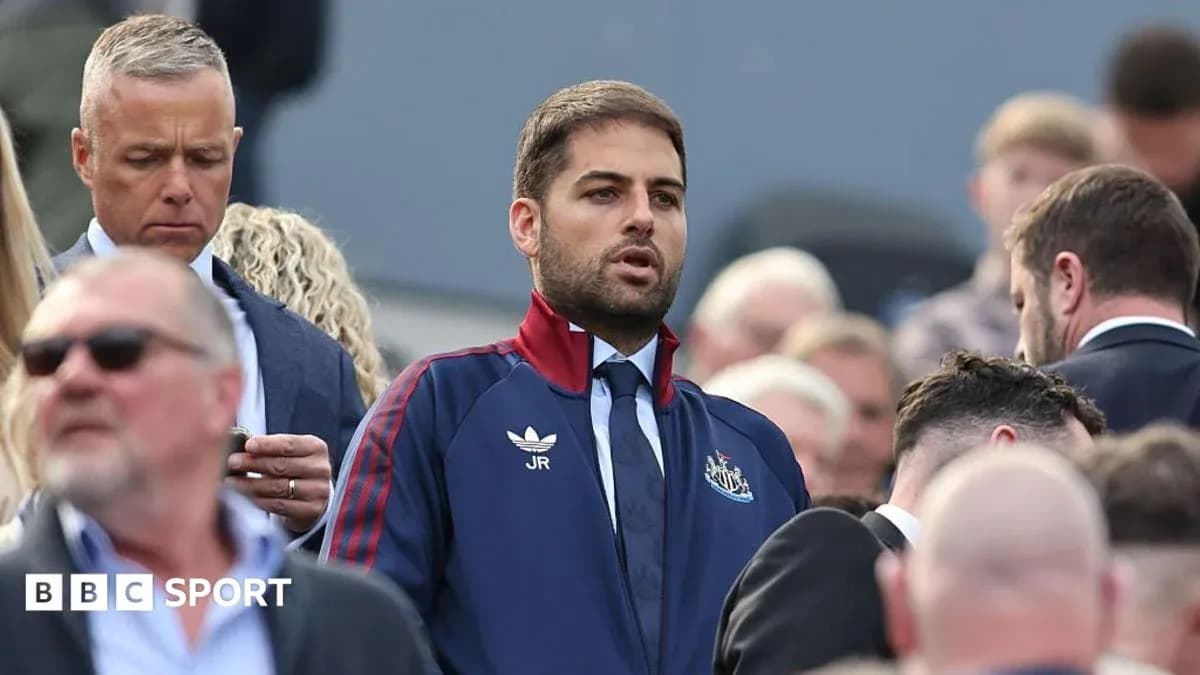
Newcastle United’s summer has not so much unfolded as exploded, and Stephen Warnock believes the spark was lit the moment Eddie Howe walked out of St James’ Park.
The former Liverpool defender sees the manager’s departure as the trigger for a full-blown reset on Tyneside. Since the end of the 2025-26 season, Newcastle have watched Anthony Gordon depart for Barcelona, Sandro Tonali join Tottenham and Bruno Guimaraes head to Arsenal. Three pillars of a project, gone in a single window.
For Warnock, the story starts in the dugout.
“Newcastle were the ones who chose to get rid of their manager this summer, in my opinion,” he told BBC Radio 5 Live’s Monday Night Club. “They pushed Eddie Howe and gave him a decision to make.”
That line cuts to the heart of the unease. In his view, Howe wasn’t simply walking away; he was nudged towards the exit by a hierarchy reluctant to fully back him in the market.
If a manager looks around and sees key players leaving while reinforcements stall, the calculation changes. Warnock painted that picture bluntly: if you don’t support your manager, you leave him “sitting there thinking: ‘Well, hang about, I need money to strengthen here and you are tying my hands around my back.’”
The sense is of a club that engineered a dilemma rather than solving one. “The club didn't need to do that,” Warnock argued. “They left him with a decision to make about his future at the club.”
Player Departures
Then there are the sales. Gordon to Barcelona. Tonali to Tottenham. Guimaraes to Arsenal. Big names, big fees and even bigger questions about ambition.
Warnock doesn’t buy the idea that Newcastle were dragged into those deals against their will. “Do people really think they didn't want to lose Sandro Tonali and Bruno Guimaraes? Because I think they absolutely would've taken £100m. These haven't been forced decisions.”
That suggestion goes right to the core of the ownership’s strategy. Are Newcastle still building towards the elite, or cashing in to recalibrate?
Rory Smith of The Observer sees the same summer, but reads it differently. He accepts that what Newcastle have done under pressure has been smart, even admirable in parts.
“What Newcastle have done, amid all of the change, has been really impressive,” he said, before adding the crucial caveat: “but it is reactive to a situation they maybe wouldn't have chosen to be in at the start of summer.”
In other words, this is not the grand plan being rolled out with calm precision. It is a club adjusting on the fly to circumstances that have spun away from the script.
Where Smith draws a firm line is on the idea that Newcastle actively wanted to cash in on Tonali and Guimaraes. On that point, he is clear.
“I disagree that they wanted to sell Tonali or Guimaraes. If they could have kept those two players, they would have.”
So the debate splits in two. Warnock sees a club complicit in its own upheaval, pushing out a manager and accepting huge bids for core players. Smith sees a club firefighting, responding well to a storm it never truly invited.
Somewhere between those positions lies the truth of Newcastle’s summer: a club with vast resources, staring at a new season without its manager, without three of its brightest talents, and with a fanbase desperate to know whether this is a controlled evolution or the start of something far more fragile.
The answers will not come from the radio studio. They will come when the first bad run hits and St James’ Park looks towards the dugout and the pitch, and asks: who exactly are Newcastle United now?