Nikola Jokic: The Hall of Famer Seen by Ognjen Stojakovic
Nikola Jokic has spent 12 years dismantling every neat little box basketball tries to put him in. At this point, the résumé is beyond debate: three MVPs, a title, a style of play that bends games to his rhythm. You don’t watch him so much as you experience him. The no-look lasers, the wrong-footed floaters, the back-to-the-basket puzzles he sets for helpless defenders — it all feels like the sport being rewritten in real time.
And from the very beginning, one man in Denver saw exactly what was coming.
The eye that saw a unicorn
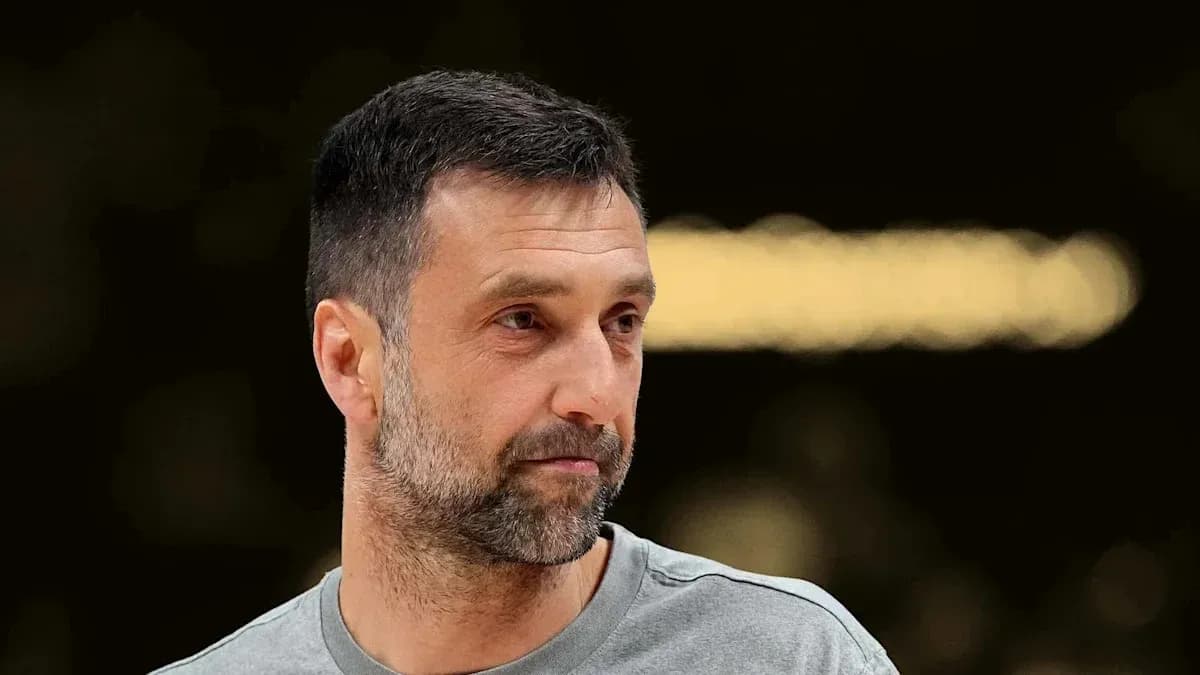
Ognjen “Ogi” Stojakovic isn’t the face on the billboards. He’s the Denver Nuggets assistant coach who has lived in the shadows of Jokic’s rise, helping turn raw genius into a complete, unanswerable problem for the rest of the league.
The first time Stojakovic watched him, he didn’t see the “chubby, slow and unathletic guy from Europe” that so many scouts shrugged at. He saw a blend of greatness.
“First thing when I saw him, in my mind, he was a mix of talent, and I always said it. I said Pau Gasol, Steve Nash, and Dirk Nowitzki when I saw him,” Stojakovic told Basketball Network.
Those are not casual comparisons. They’re a blueprint.
For Stojakovic, Nash offered the template: not fast, not explosive, but relentless, creative, impossible to predict. “Steve Nash wasn’t very fast, right? But he ran a lot. And then he wasn’t very athletic, but he could score. He had all those kinds of different shots that helped him to be kind of great. Also, a great passer and so on,” he said.
Gasol brought the size and skill, the big who could do “a little bit of everything.” Nowitzki added the scoring artistry, the tall, not-so-athletic forward who still poured in points from angles that broke defenses and logic.
“Dirk Nowitzki, again, not an athletic guy, but he was able to score a lot of points. And then I'm proud that I recognize that. I'm proud that actually I had the right approach,” Stojakovic added.
He didn’t just see a prospect. He saw a composite of Hall of Fame traits living inside a 7-footer who didn’t look the part.
A guard in a giant’s frame
With hindsight, the mix is obvious. You can see Nash in Jokic’s court vision and the way he manipulates pick-and-rolls like a point guard with a 360-degree rearview mirror. You can see Nowitzki in the impossible angles, the one-legged leaners, the shots that look improvised but land with ruthless consistency. You can see Gasol in the footwork, the soft touch, the ability to pivot from scorer to facilitator in a heartbeat.
Back then, it took conviction. It took someone willing to say: this “slow” center is actually a guard trapped in a big man’s body.
Jokic can shoot, rebound, pass, dribble, post up, and run an offense at an elite level. Not “good for a big.” Elite, full stop. Across eight decades of NBA history, only a handful of players have ever checked that many boxes at once.
Stojakovic recognized that the very things held against Jokic — the lack of vertical pop, the absence of highlight-reel athleticism — could become weapons. Nash, Gasol, Nowitzki had all turned similar “limitations” into defining strengths. Jokic, he believed, could do it in his own way, on an even bigger stage.
Building a Hall of Famer in plain sight
This era worships speed and explosion. Wings sprint the floor, guards live above the rim, bigs are expected to switch onto anyone and erase mistakes with sheer bounce. Jokic climbed through that landscape on his own terms.
Behind him, pushing, refining, insisting on the details, was Stojakovic.
Ogi knew talent wasn’t enough. Not at this level, not for what Jokic could become. So the work went underground — film sessions, footwork, angles, reads, all the invisible hours that never make a highlight reel but decide playoff series and legacies.
He saw flashes of Nash, Gasol, and Nowitzki and understood the pattern: the greatest don’t outrun their flaws, they absorb them, twist them, and build a game that makes those flaws irrelevant. With Jokic, that meant closing every gap until there were no real holes left to attack.
The result is what the league is dealing with now: a center who plays like a point guard, scores like a stretch forward, and thinks the game two beats ahead of everyone else.
Stojakovic won’t be the one lifting trophies at center court or hearing his name on Hall of Fame night. But he was the first in Denver to look at Nikola Jokic and see not a curiosity, not a risk, but a future Hall of Famer waiting to be sharpened.
He trusted that vision. The rest of the basketball world is still catching up.