Nikola Jokic's Journey: Balancing Wealth and Normality
Nikola Jokic has spent two straight summers turning down Denver’s offers to extend his contract, and each time the temperature in Colorado has risen a few degrees. Eleven seasons, one franchise, three MVPs – and no signature on the dotted line. For Nuggets fans, the thought of their franchise pillar walking away has hovered like a storm cloud.
Then Jokic did what he usually does. He cooled everything down with a single, matter‑of‑fact explanation: this is about timing and numbers, not loyalty.
The Serbian center is lining himself up for a $359.5 million supermax extension next summer, the richest contract in NBA history. That deal would push his career earnings past $700 million and place him ahead of LeBron James and Kevin Durant on the all‑time money list. The stakes are historic, and Jokic knows it.
Yet when he speaks, the conversation keeps drifting somewhere else entirely.
A fortune, and a fight for “normal”
On the “Jao Mile” podcast, Jokic pulled back the curtain on the part of superstardom that doesn’t show up on a box score: raising children inside a fortune he never imagined.
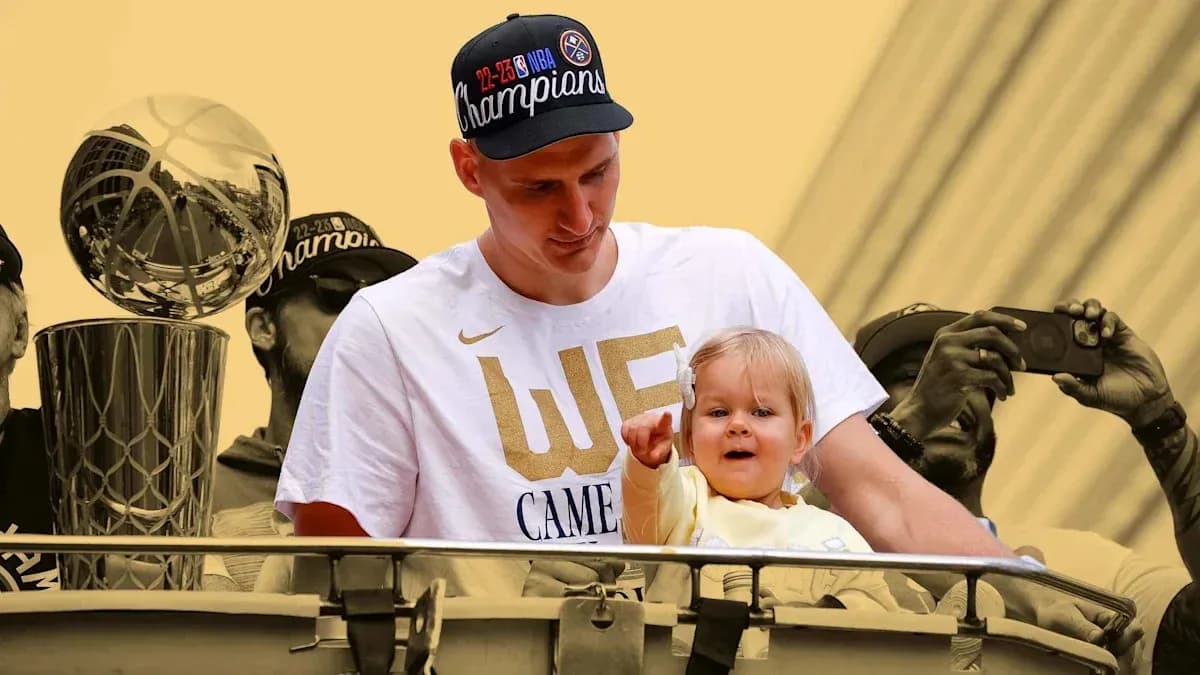
“My parents taught me values I want to pass on to my kids. If I had to single something out, it would be a sense of ‘normality,’” he said. “For my kids, their baseline of what’s normal is already set high: a swimming pool and a nice car are normal to them, whereas back in the day, we didn’t even have a car. So I want them to learn to think about what true normality really means.”
That word – normality – lands differently when you picture where he started.
Jokic grew up in Sombor, a small town in Serbia, in a working‑class family that scraped and sacrificed so he could get to basketball practice. They were not destitute, but life was tight. Every opportunity cost something. Every step required effort.
Now? His son and daughter run around a luxurious villa in Colorado, surrounded by comforts their grandparents never dreamed of, while their father edges toward becoming the highest‑paid player the league has ever seen.
The contrast is stark. Jokic knows it, and he doesn’t sugarcoat the challenge.
An impossible balance
He can preach humility. He can tell stories of cramped apartments and long days. He can explain why a car, any car, once felt like a luxury. But he also understands there is a gap he may never close.
No matter how many lessons he repeats, his children will grow up with privileges that were simply unimaginable in his own childhood. That is the quiet tension that runs through so many NBA households: players who fought their way out of scarcity now trying to teach perspective to kids who have never had to worry about anything.
This is not a new dilemma in the league. Today’s stars sign deals that dwarf those of previous generations, and nearly all of them, at some point, wrestle with the same question Jokic is asking: how do you keep your kids grounded when their “normal” is private chefs and indoor courts?
For Jokic, the answer starts with who he is away from the cameras.
The superstar who refuses to act like one
In an era built on brands, Jokic remains an outlier. No social media presence. No mega‑campaigns built around a signature sneaker. No curated image popping up on every platform.
He plays, he goes home, he disappears into family life and horses. He shows up again when the ball goes up.
That low‑key approach has turned him into one of the most unusual figures in modern sport: a generational talent who carries himself like a role player. Teammates and opponents rave about his game; he shrugs and talks about going back to Sombor.
Across years of dominance, Jokic has built a reputation as perhaps the most humble elite athlete on the planet. For his children, that is the real inheritance – not the square footage, not the cars, not the record‑breaking contract that waits around the corner.
They get a front‑row seat to a superstar who keeps insisting on being ordinary.