
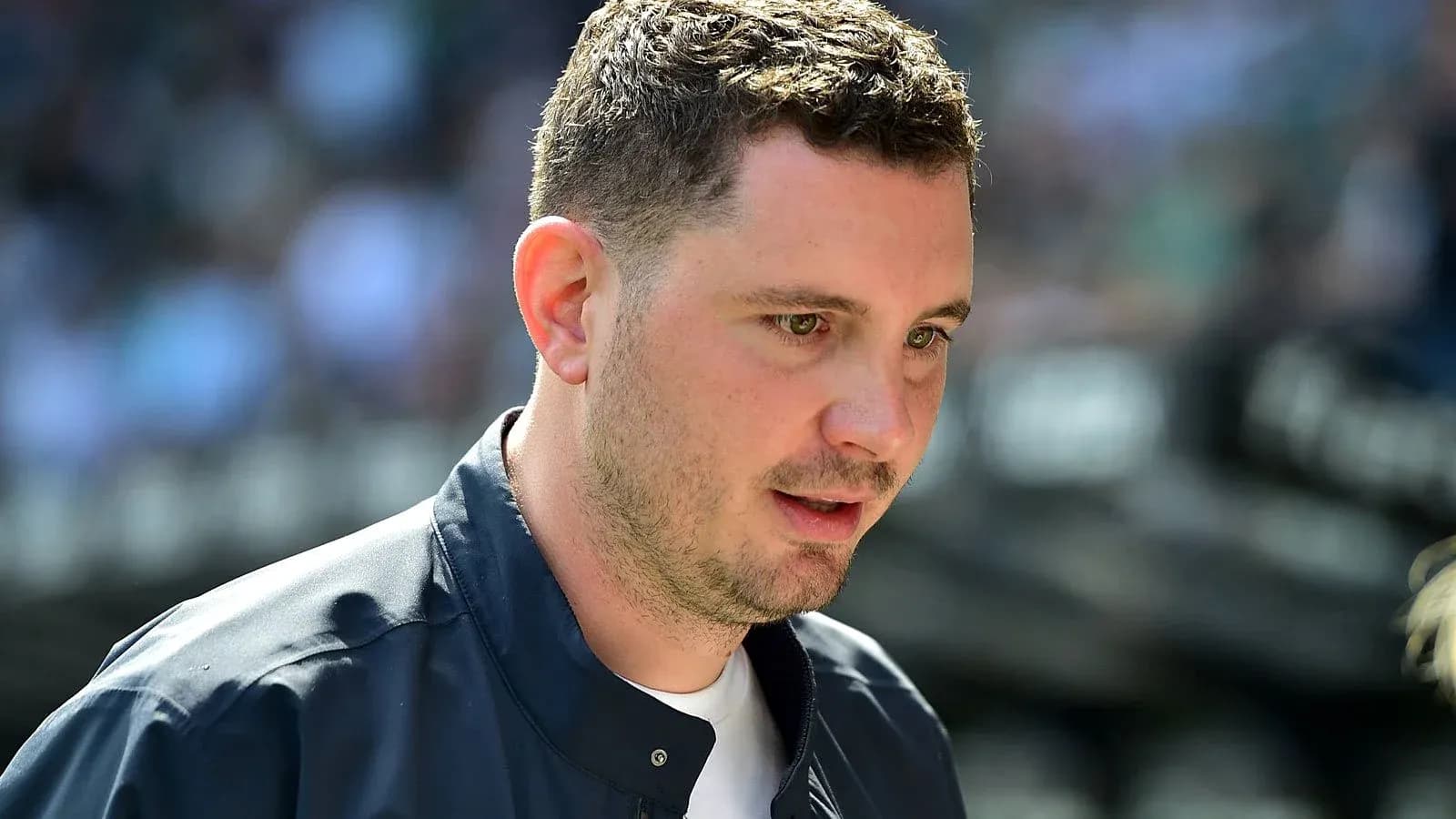
Nils Schmadtke has stepped out from behind the usual wall of sporting-director discretion to defend his name, issuing a sharp, personal rebuttal to reports surrounding his early departure from Bayern Munich.
The 37-year-old, son of long-time Bundesliga executive Jörg Schmadtke, chose LinkedIn as his platform on Thursday, making it clear this was not about tactics, transfers or scouting lists. It was about character.
“I spent a long time considering whether to comment on the reports of recent days. Normally, I let my work speak for itself. This time, though, it is not about my work but about my character. So here are a few clear words,” he wrote.
From there, the tone hardened. Schmadtke directly rejected accusations that he had leaked internal information or mistreated staff during his time in Munich.
“I have never passed confidential information to the media. Not in Munich, and not anywhere else. I have never belittled people under my responsibility. I am demanding, and can be difficult when it comes to quality. I am not disrespectful,” he stated.
He also insisted that the swirl of allegations had “nothing even remotely” to do with his Bayern exit and underlined a core principle of his career: “I do not discuss internal matters publicly. I have not done so at any of my previous clubs, and I will not do so now.”
The questions, though, remain. Bayern announced on Monday that Schmadtke would leave his role on 31 January 2027, several months before the end of a contract that had been due to run until the summer of 2027. He did not offer his own explanation for the early separation.
Recent reports had painted an unflattering picture: an abrasive management style, friction within his department, and suspicions that internal information had found its way into the media. Schmadtke’s post was a direct attempt to slam that door shut.
Search for a successor stalls
Attention inside Säbener Straße has already turned to the future of Bayern’s scouting operation, but even that process has hit turbulence.
Christopher Vivell, currently responsible for scouting at Manchester United and previously a key figure in the RB network, initially emerged as the leading candidate to replace Schmadtke. Sporting director Christoph Freund, who worked with Vivell at RB Salzburg, had been entrusted with finding a successor and naturally knew his profile well.
The move has cooled. According to TZ, doubts have grown at board level. Max Eberl, Bayern’s board member for sport and one of the most powerful voices at the club, is said to be unconvinced about importing yet another major decision-maker from the RB structure into Munich.
For a club that has wrestled with questions of identity and direction in recent years, that hesitation is not a small detail. It hints at an internal debate over how much of the RB blueprint Bayern really wants.
A trusted ally of Eberl
Schmadtke’s own arrival in October 2024 had looked like a clear, strategic piece of business. Put a trusted, detail-obsessed operator in charge of scouting for both the first team and the youth sector, and tie that work closely to the vision of Eberl, with whom he had already collaborated at Borussia Mönchengladbach.
Inside the club, he was considered a close confidant of Eberl. That only makes his early exit more striking.
On LinkedIn, though, Schmadtke chose to highlight the work rather than the rupture.
“My time at Bayern Munich was instructive and a very positive experience. Working at a club of this size, with these demands and at this pace, helped me develop professionally and personally,” he wrote.
“I am proud of what we built over these two years. We restructured the scouting department, brought the first team and campus closer together and took new approaches to contacting players. It was a team effort. To my team, thank you for your commitment, your ideas and your trust. None of it would have been possible without you.”
The message read like both a defence and a farewell note: protective of his reputation, loyal to his staff, careful not to fan internal flames.
Bayern, meanwhile, must now decide what kind of figure they want at the heart of their talent strategy – another RB-style architect, a different profile entirely, or a promotion from within the structure Schmadtke helped reshape.





