Mexico’s Independence Day card has quietly become one of the UFC’s most reliable annual showcases. Noche UFC 4 kept that tradition alive: only four finishes, but almost every main-card winner walked away with something more valuable than a bonus—momentum, leverage, and a clear next step.
Now the matchmaking gets interesting.
Jean Silva vs. Yair Rodriguez: Unfinished Business
Jean Silva had to walk through fire before he could celebrate. Jose Delgado started fast, made him uncomfortable and, for a while, looked like he might derail the Brazilian’s rise. Silva absorbed it, adjusted, then did what finishers do.
Once “Lord” finally found his rhythm, the tide turned sharply. He took Delgado’s back, locked in the rear-naked choke and forced the tap at 2:57 of Round 3, securing the 16th finish of his 18 career wins and moving to 7-1 in the UFC.
That kind of closing power deserves a marquee name, and there’s an obvious one: Yair Rodriguez.
They were already booked for this very card before Rodriguez withdrew with an injury. Stylistically, it still sings—Silva’s aggression and finishing instincts against Rodriguez’s wild creativity and proven five-round engine. The stakes are simple: one of them moves into striking distance of a title eliminator, the other gets shoved back into the pack. This matchup didn’t vanish when it fell through; it just started simmering. Time to bring it back to a boil.
Brandon Moreno vs. Kyoji Horiguchi: A Champion’s Crossroads
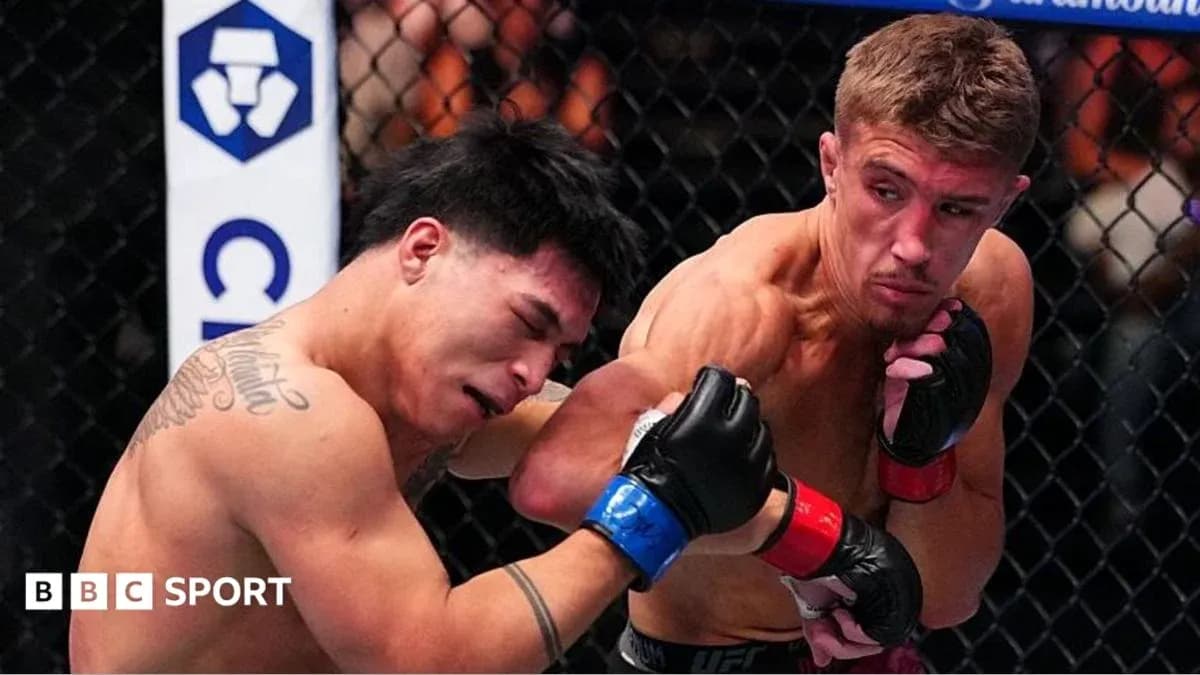
Brandon Moreno and Glendale have history. It’s where he first became UFC flyweight champion at UFC 263, and it’s where he clawed his way through a brutal, high-paced scrap with Joseph Morales to claim a split decision at Noche UFC 4.
It wasn’t vintage domination. It was grit. Three rounds of traded momentum, three rounds that reminded everyone why “The Assassin Baby” has remained a central figure at 125 pounds for so long. When the cards came in, two judges leaned Moreno’s way, pushing his record to 24-10-2 and reaffirming his place among the division’s elite.
What he needs now isn’t a tune-up. It’s a legacy fight.
Kyoji Horiguchi fits that bill perfectly. A former two-division Rizin champion and Bellator titleholder, Horiguchi brings championship pedigree and a wealth of experience. He’s coming off a loss to Manel Kape and needs a statement just as badly as Moreno does.
Yes, this matchup might feel a couple of years late. It still carries weight. Two veterans, two globetrotting careers, one more chance to prove they’re not done chasing the very top. Moreno-Horiguchi would be less about rankings and more about relevance—and that’s exactly what makes it compelling.
Tommy McMillen vs. Losene Keita: Prospects on a Collision Course
Tommy McMillen didn’t get the finish, but he got something that matters just as much: validation over 15 hard minutes.
In a battle of featherweight prospects, McMillen outworked fellow DWCS graduate Marwan Rahiki, staying composed and busy from start to finish. The 28-year-old moved to 12-0, 3-0 in the UFC, with a clear unanimous decision that underlined why so many see him as a future player at 145.
He used his mic time wisely. He asked for Dec. 12. He asked for a step up.
Losene Keita is exactly that. The former two-division Oktagon MMA champion just announced himself to the UFC audience with a first-round knockout at UFC Paris, bringing serious power and big-fight experience into a suddenly crowded featherweight field.
McMillen vs. Keita feels less like a “maybe” and more like an inevitability. You don’t keep two rising contenders apart forever. Match them now, let one of them break through, and you’ve got a fresh name to throw into the ranked mix. The timing, the trajectory, the stakes—they all line up.
Alexa Grasso Back for Gold
The only women’s bout on the main card carried quiet but significant implications. Alexa Grasso, the former flyweight champion, stepped in against Manon Fiorot in a fight that could easily have gone sideways.
It didn’t. It just got hard.
Fiorot tested her. Grasso had to dig, adapt and lean on the layers she’s added to her game over the years. After three rounds, the judges were unanimous: Grasso had done enough. The win pushed her to 18-5-1 overall and 10-5-1 in the UFC, and, more importantly, it restored her momentum at 125.
The division around her is in flux. Valentina Shevchenko is out injured. Natalia Silva and Cong Wang are set to headline UFC 332 on Oct. 3, with the winner likely to claim a share of the spotlight.
Grasso is now the obvious No. 1 contender. She has the résumé, the recent form and the name recognition. She’ll be watching Silva vs. Wang closely, because whoever emerges from that fight will almost certainly find Grasso waiting on the other side, ready to try and reclaim the belt she once wore.
Curtis Blaydes vs. Serghei Spivac: Gatekeeper Meets Grinder
Not every fight on this card thrilled. Curtis Blaydes vs. Waldo Cortes-Acosta was proof.
The stakes were big; the action wasn’t. Across three rounds, Blaydes did enough to win a unanimous decision, moving to 20-6 (1 NC) and maintaining his position near the top of the heavyweight rankings. He remains what he has been for years: the division’s gatekeeper to the top five, a nightmare matchup for anyone who can’t stop his takedowns.
The problem for Blaydes is simple. He’s alternating wins and losses, and after a performance like this, he’s nowhere near a title shot. The solution is just as clear: give him a fresh, stylistically intriguing opponent who can either break through him or be sent back down a rung.
Serghei Spivac is that opponent. At 18-7 (9-7 UFC), “The Polar Bear” has built his reputation on grappling pressure and top control. Pair him with Blaydes—the division’s premier takedown machine—and you get a fight that answers a key question: can Spivac’s grinding style survive against someone who does it better, faster and more explosively?
It’s a matchup that hasn’t happened yet, and the heavyweight division is running low on new, meaningful pairings. This one still has some teeth.
David Martinez vs. Mario Bautista: A Contender Test at 135
Dan Ige dropping to 135 pounds was supposed to be a moment. David Martinez turned it into a lesson.
“Black Spartan” never let Ige breathe, piling on precision and volume, walking him down and outworking him in almost every phase. The crowd didn’t love it, but the judges did. Martinez walked away with a clear unanimous decision, extended his win streak to 11, and quietly improved to 15-1 overall and 4-0 in the UFC.
At bantamweight, that kind of run demands a real test. Mario Bautista is exactly the kind of hurdle that separates “promising” from “proven.”
Bautista, now 18-3 (12-3 UFC), is coming off back-to-back wins, including a significant victory in his rematch with Cory Sandhagen at UFC 329. He’s durable, well-rounded and battle-tested against the division’s best.
Match Martinez with Bautista and you don’t just get a fun fight—you get clarity. One of them steps into the title conversation; the other goes back to rebuilding. In a division as stacked and unforgiving as bantamweight, that’s the kind of matchup that shapes the next challenger.
On a night built to celebrate Mexico’s fighting spirit, Noche UFC 4 did something else as well: it quietly set the table for the next wave of pivotal bouts. Now it’s on the matchmakers to turn these trajectories into the kind of fights that define divisions.