Norchad Omier's Impact in Cavaliers' Victory Over Mavericks
Norchad Omier didn’t miss a shot against Dallas. That was the headline number. It wasn’t the story.
In a game that belonged on the marquee to Tyrese Proctor and his triple-double, Omier quietly bent the night in Cleveland’s favor. The Cavaliers beat the Mavericks 127-117, and every time the game tilted, Omier seemed to be somewhere near the fulcrum.
He finished with 13 points, eight rebounds, two assists and a steal, going a perfect 5-for-5 from the field and 2-for-2 at the line. On paper, it’s tidy. On the floor, it was disruptive, timely, and exactly what a rotation hopeful needs to show.
A spark off the bench
Omier checked in late in the first quarter and immediately left fingerprints all over the game.
He stripped Kyrie Irving, sprinted the floor, and finished a layup through contact off a Craig Porter Jr. feed. The free throw dropped. Cleveland led 26-23. One sequence, two messages: he could bother Dallas at the point of attack, and he could punish them before their defense reset.
The tone of his night never really changed.
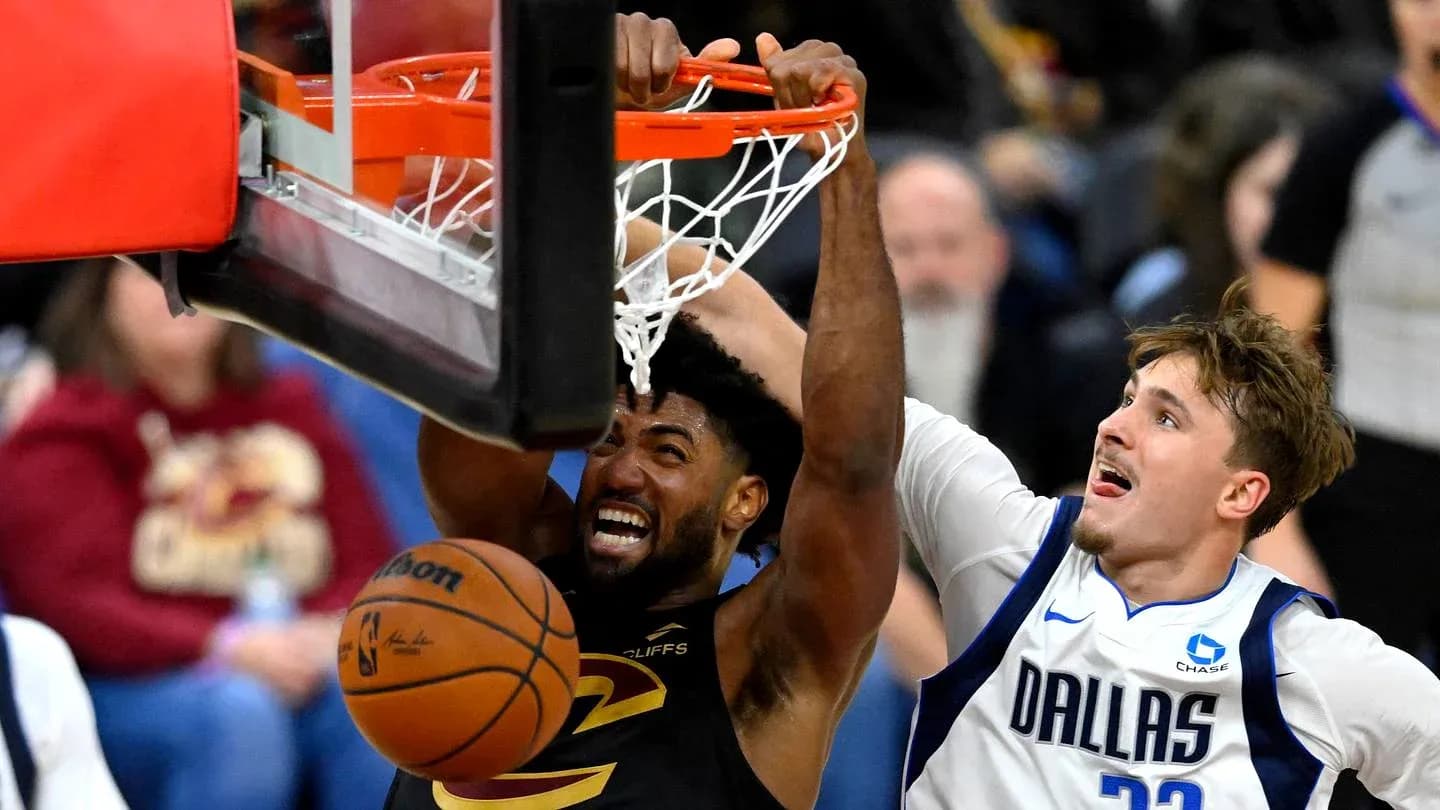
He cut hard off the ball and hammered home a dunk from a Mario Hezonja pass. He crashed the glass, turning a Riley Minix miss into an extended possession that ended with a Meleek Thomas 3-pointer to tie it at 33. Those are the plays that don’t lead every highlight reel but change the temperature of a game.
By then, Dallas knew: ignore him at your peril.
Owning the margins
The numbers underlined what the eye test kept flashing.
With Omier on the floor, Cleveland posted a team-best net rating of plus-21.1. His defensive rating of 105.2 was the lowest on the roster. Those are lineup metrics, not solo acts, but they match what his minutes felt like — the Cavaliers simply functioned better when he was involved.
He controlled the glass to steady Cleveland’s grip on the game. In the first four minutes of the second quarter alone, he grabbed three defensive rebounds, cleaning up possessions and allowing the Cavaliers to push. He added another board later in the period and kept winning those little battles that wear on an opponent.
The pressure eventually showed on the scoreboard. Omier powered through Daniel Gafford for a second three-point play, again off a Porter feed, and walked into halftime with eight points as Cleveland built a 71-53 lead. The Mavericks were chasing both the score and the energy.
More than a finisher
This wasn’t just a big man camping in the paint and living off scraps.
Omier logged 37 touches, enough volume to show he could keep the offense humming instead of stalling it. Late in the third quarter, he rewarded Minix’s cut with a sharp pass for a layup. In the fourth, he spotted Hezonja slicing to the rim and dropped off another assist for a dunk.
Both passes told the same story: he saw the floor, trusted movement, and didn’t need shots to matter.
When the ball did come back to him, he stayed perfect. In the third quarter, he stepped out and calmly buried a 24-foot 3-pointer off a Proctor assist — his lone attempt from beyond the arc. Inside or out, every look was efficient, every decision clean.
Five shots. Five makes. Two free throws. Two more points. No waste.
Learning on the fly
It wasn’t flawless.
Omier picked up five fouls, including his third in the second quarter and his fifth early in the fourth. The aggression that makes him effective also puts him at risk. For a young big trying to carve out a place in the rotation, the next step is obvious: stay on the floor without losing the edge that makes him useful.
The coaching staff trusted him to walk that line. He returned with five fouls and didn’t retreat into caution.
Dallas made one last push, trimming Cleveland’s lead to 122-112. The building tightened. The game, briefly, felt open again. Then Omier cut hard, Proctor found him, and he rose for another dunk with 1:25 left. The lead went back to 12. The door, for all practical purposes, slammed shut.
The perfect complement
Proctor’s 24 points, 11 rebounds and 10 assists will dominate the box-score chatter. That’s how this works. But his triple-double needed structure around it, and Omier helped provide it.
He finished plays. He created a few. He chased loose balls, jumped passing lanes for three deflections, and pulled down eight rebounds to give Cleveland extra security. Every possession he touched seemed to tilt toward productivity.
On a night when the Cavaliers showcased a lead guard in full command, they also saw a big man make a compelling case for more minutes — not with volume, but with impact.
If this is what Omier looks like while still learning the league’s rhythms, what happens when the fouls come down and the minutes go up?