Northwest Division: A New Era in the NBA
The Northwest Division used to be an afterthought. Not anymore.
From Nikola Jokić’s fading prime window in Denver to LaMelo Ball’s splashdown in Minnesota and a reloaded backcourt in Portland, this has quietly become one of the NBA’s most unforgiving neighborhoods. Every team walks into 2026-27 with a storyline that matters. Some are chasing titles. Some are chasing relevance. None are standing still.
Denver Nuggets: Racing the Clock on Jokić’s Prime
The Nuggets just survived a season that would’ve broken most franchises.
Aaron Gordon played barely half the year. Jokić missed nearly a month. Denver still ground out a 54-28 record and then crashed in the first round. That’s the kind of ending that lingers in a locker room all summer.
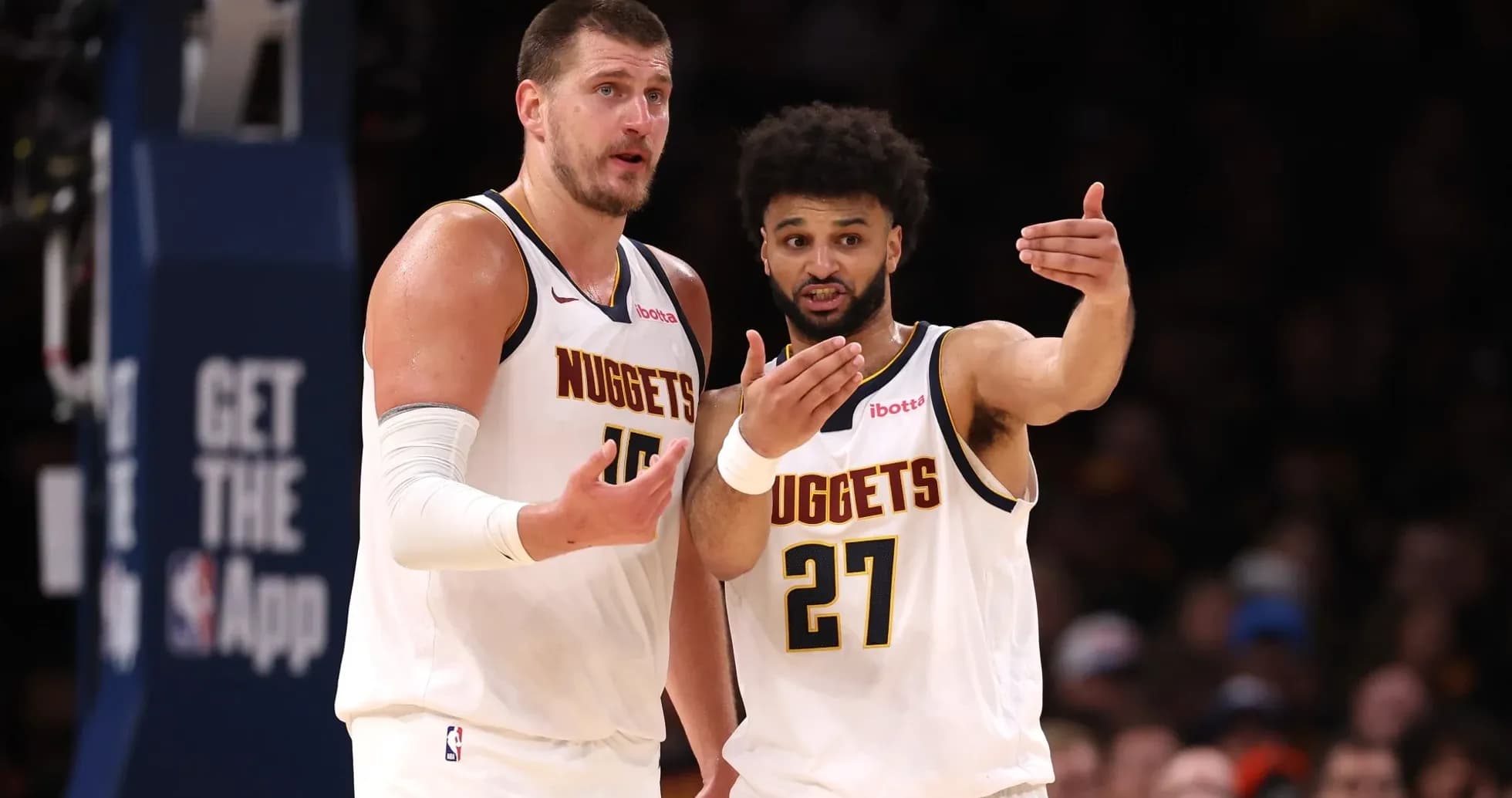
The mission hasn’t changed: wring every last ounce out of Jokić’s MVP-level years. This is Denver’s version of the late-stage Stephen Curry Warriors, or what the Bucks just went through with Giannis Antetokounmpo. The difference? Jokić still has Jamal Murray beside him and, if his body finally cooperates, Gordon as the third pillar. Those three alone keep Denver firmly in 50-win territory.
Around them, the cast has shifted again.
Tim Hardaway Jr., Jalen Pickett, Jonas Valančiūnas and Peyton Watson are gone, with Watson moved mainly to ease financial pressure. In their place: Marvin Bagley III, Bruce Brown, Trevon Brazile, Alpha Diallo and Bryce Hopkins. No headline-grabbing superstar, but plenty of responsibility.
DeMar DeRozan, Cam Johnson, Christian Braun and Bagley now carry the burden of bumping Denver from “very good” back to “terrifying” in a Western Conference that refuses to soften. If they can’t supply the scoring punch and two-way edge around the core, the Nuggets won’t just be fighting the rest of the conference.
They’ll be fighting time.
Minnesota Timberwolves: Edwards Finally Gets His Floor General
The Timberwolves took a step back on paper. Inside the building, it feels like a reset.
Two straight trips to the Western Conference Finals gave way to a second-round exit and a 49-33 record. Anthony Edwards was brilliant again, but the ceiling felt familiar. The backcourt, once more, was his burden to carry.
That ends now.
LaMelo Ball arrives as the kind of point guard Minnesota has never put next to Edwards. Not close. Ball’s vision and feel for the floor should immediately strip away some of Edwards’ playmaking load and free him to do what he does best: attack, score, and bend defenses until they snap.
Ball isn’t perfect. He can be reckless. He’ll take risks with the ball that will infuriate Chris Finch on certain nights. But he’s also never shared the court with a teammate in the thick of the MVP conversation. Edwards has never had a guard who can see the game a step ahead for him. They’re about to find out how much easier life can be when both are true.
Minnesota didn’t just add Ball. Isaiah Evans, Jonathan Kuminga, Trey Lyles and Cody Williams deepen what might be the most athletic roster of Edwards’ tenure. They do lose a chunk of institutional memory and toughness: Kyle Anderson, Mike Conley, Joe Ingles, Julian Phillips, Julius Randle and Naz Reid are all gone.
Still, line up the names: Edwards, Ball, Jaden McDaniels, Ayo Dosunmu, Terrence Shannon Jr., Rudy Gobert. That’s length, speed, and defensive teeth at almost every spot.
The Wolves have been a good story the last two years. With this group, they’re angling for something bigger.
Oklahoma City Thunder: Depth Tested, Standard Unchanged
The Thunder just finished a season that would be a peak for most franchises: 64-18, best record in the league, Shai Gilgeous-Alexander repeating as MVP, and another run to the Western Conference Finals.
It still ended with a sour taste.
Jalen Williams played only 33 games. A Game 7 at home slipped away to the Spurs. That’s how thin the margins are when you’re chasing back-to-back titles.
OKC now enters a new phase of its experiment: can a contender keep reshuffling around its stars and stay at the top? Salary cap realities forced out key role players. Lu Dort, the defensive heartbeat on the perimeter, is gone. So are Isaiah Joe and Aaron Wiggins, dependable guards whose minutes allowed Shai to stay fresh and lethal when it mattered most.
The Thunder didn’t panic. They rarely do.
They added Aday Mara, Otega Oweh and Bennett Stirtz, betting once again on internal development and the strength of their system. The expectation is simple: depth remains one of their biggest weapons. Ajay Mitchell and especially Jared McCain now step into the spotlight to soak up the minutes and responsibilities vacated by Dort, Joe and Wiggins.
All of it orbits around health and star power. A fully available Jalen Williams changes OKC’s offensive versatility. Chet Holmgren, fresh off an All-NBA season, gives them a defensive anchor and a stretch big who warps matchups.
The bar in Oklahoma City isn’t “contender” anymore. It’s “champion or disappointment.”
Portland Trail Blazers: Dame Returns to a New Backcourt Reality
Portland was supposed to be rebuilding. Then Deni Avdija took off, the group overachieved, and suddenly the Blazers were a 42-40 playoff team that nobody really wanted to see in a first round.
Now they’re something else entirely.
Micah Nori steps in as a first-time head coach at a moment when the franchise is bracing for a very different kind of pressure. He inherits not a blank canvas, but a crowded backcourt full of history, questions and star power.
The headline is simple: Damian Lillard is back.
After missing all of last season with injury, the franchise icon returns to a city that still ranks him alongside Bill Walton and Clyde Drexler in its basketball mythology. Whether he’s second, third or first on that list is barstool debate material. What matters on the floor is how he meshes with Ja Morant.
Morant arrives from Memphis with his own point to prove, looking to rebuild a career that once seemed destined for perennial MVP ballots. Sharing a backcourt with Lillard is both a lifeline and a challenge. There are only so many possessions, only one ball, and a lot of shots that both guards are used to taking.
Jerami Grant, Kris Murray, Matisse Thybulle and Blake Wesley depart. In their place, Branden Carlson, Micah Potter and Jeremy Sochan join Morant to thicken the rotation.
Even with Shaedon Sharpe working back from a knee injury, Nori has options most rookie head coaches never see: Lillard, Morant, Avdija, Jrue Holiday, Scoot Henderson, Donovan Clingan. That’s a nucleus with the talent to skip the “play-in hopeful” phase and aim straight at the heart of the West playoff picture.
Portland wanted a new era. It might have gotten three at once.
Utah Jazz: Banking the Future on Darryn Peterson
Utah spent last season doing what so many small-market franchises dread but eventually accept: leaning into youth, swallowing the losses, and hoping the draft will eventually reward the pain.
The result was a 22-60 record and no postseason. The payoff might finally be here.
For the first time, the Jazz didn’t pick No. 1 overall, but at No. 2 they may have landed a player with that level of upside anyway. Darryn Peterson arrives as the kind of scorer Utah has been searching for since the Donovan Mitchell–Rudy Gobert era ended in a flurry of trades and draft picks.
Peterson brings three-level scoring—deep range, mid-range touch, and the ability to finish at the rim. If that skill set translates against NBA defenses, the Jazz will have their new offensive centerpiece, the star they’ve been sifting for through a mountain of lottery tickets.
The price of progress, though, is real. Walker Kessler, the seven-footer they carefully developed into a defensive anchor with soft hands and elite instincts, is gone to the Lakers in a sign-and-trade. For a franchise that prides itself on internal growth, that one stings.
Utah moved quickly to stabilize the frontcourt, adding Jaxson Hayes and Jusuf Nurkić as big-man insurance. Josh Green and Josh Okogie arrive to thicken the perimeter rotation. Hayden Gray, John Konchar, Kevin Love, Bez Mbeng and Cody Williams exit as the roster tilts even further toward the future.
The blueprint is clear: Peterson, Keyonte George and Ace Bailey must grow fast enough to support Jaren Jackson Jr. and Lauri Markkanen. If they do, the Jazz’s long, grinding rebuild starts to look like a calculated climb instead of a stall.
If they don’t, the rest of the Northwest will keep sprinting away, and Utah will be left wondering how many more swings it can afford to take.