Opals Face Heartbreak in Quarterfinal Loss to Spain
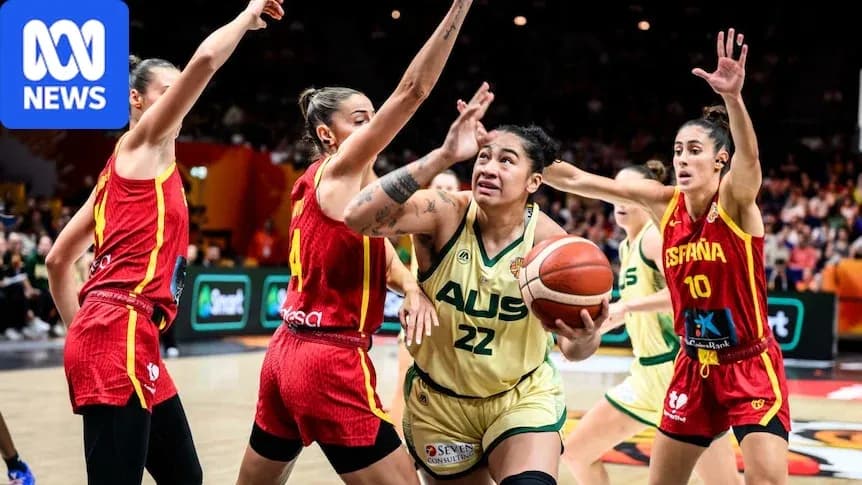
The Opals walked into their quarterfinal with Spain already bruised. They walked out battered, beaten, and out of the Women's Basketball World Cup.
An 89–66 defeat ended Australia’s campaign in stark, unforgiving fashion, just hours after the team absorbed the shattering news that captain Ezi Magbegor had torn her ACL.
The timing could hardly have been crueller.
Barely 30 minutes before tip-off, Magbegor’s WNBA franchise, the Seattle Storm, confirmed the diagnosis. The 25-year-old, who had only just returned in early July from a partial Achilles tear suffered in March, now faces another long, lonely road back.
She had gone down early in the qualification final win over Italy after a knock to her right knee. At the time, there was hope. By the time the Opals lined up against Spain, that hope had turned into a grim reality.
“It makes me emotional when I see anyone go down,” head coach Sandy Brondello said after the loss. “But Ezi's come back from an injury and it's just another injury. [It's] just really unfortunate. She's a key part of what we want to do. It sucks, but that's sport isn't it?
“She’s got to have a great recovery and she’ll get back, I don’t have a doubt about that. Just disappointed for Ezi that she’s going through another rehabilitation.”
Spain show no mercy
On the floor, Spain sensed vulnerability and went to work. They controlled the tempo, punished turnovers and never allowed Australia to settle. The Opals coughed up the ball 23 times and shot only 40 per cent from the field, numbers that tell the story of a team stretched to breaking point.
Ally Wilson fought to keep Australia in touch, finishing as the Opals’ leading scorer with 13 points. It was honest toil on a night when every basket felt hard-earned and every mistake felt fatal.
The pressure finally told in the second half. As Spain pulled away, Australia simply did not have the depth or experience to mount another escape act.
Too many absences, too much to cover
Magbegor’s absence only highlighted the growing list of casualties that had stalked the Opals all tournament.
- Alanna Smith, one of the team’s key frontcourt weapons, suffered a lower-leg injury in the opening game and never returned.
- Jade Melbourne, battling illness, managed just three minutes against Italy and could not take the floor in the quarterfinal.
- Veteran guard Sami Whitcomb never made it to the start line, ruled out before the tournament with injury.
- Cayla George, another seasoned campaigner, did not play due to pregnancy.
By the time the ball went up against Spain, Australia were running with a skeleton crew.
Steph Talbot, one of the few veterans left standing, admitted the situation felt surreal.
“It’s very weird. It was very quiet, very unusual. We were all looking around like, ‘Is this it?’” she said.
“But a job’s a job and we fought hard to the end. I’m really proud of the effort they put in. It’s definitely a different experience.”
From miracle escape to hard reality
Only days earlier, the Opals had flirted with disaster and somehow survived. Against Italy in the qualification final, they watched a 20-point lead at three-quarter-time evaporate, then were rescued by a stunning 30-point outburst from 21-year-old Izzy Borlase.
That great escape felt like it might become a defining moment for a new-look group. Against Spain, the fairytale ran out of chapters.
With Magbegor, Smith, Melbourne, Whitcomb and George all out, the gaps were simply too large. Seven players were experiencing their first major international tournament. On this stage, against a polished Spanish side, the inexperience showed.
Lessons for Los Angeles
Brondello didn’t sugar-coat the difficulty of the campaign but pointed to its value. The World Cup exposed flaws, yes, but it also handed real minutes and real pressure to the next generation with the 2028 Los Angeles Olympics already looming on the horizon.
This was a brutal way to learn. A 23-point defeat, a captain facing another long rehab, and a locker room stripped down to eight available players.
Yet for a young core thrown into the deep end, these scars may become the foundation of something far stronger by the time the lights go up in LA.