Breaking into Manchester City’s first team is not a fairy tale. It is a filtration process. Only the ruthless survive.
At that level, technical talent is just the entry ticket. What really counts is whether a young player can handle the tactical demands, the mental strain, and the unforgiving standards of a dressing room built to win everything, every year.
O'Reilly has lived that reality. Last season, the 21-year-old left-back didn’t just break through; he burst onto the scene, stringing together a campaign so impressive it earned him the PFA Young Player of the Year award and a reputation as one of Europe’s standout young defenders.
It looked like a rapid rise from the outside. It wasn’t.
Guardiola’s brutal lesson
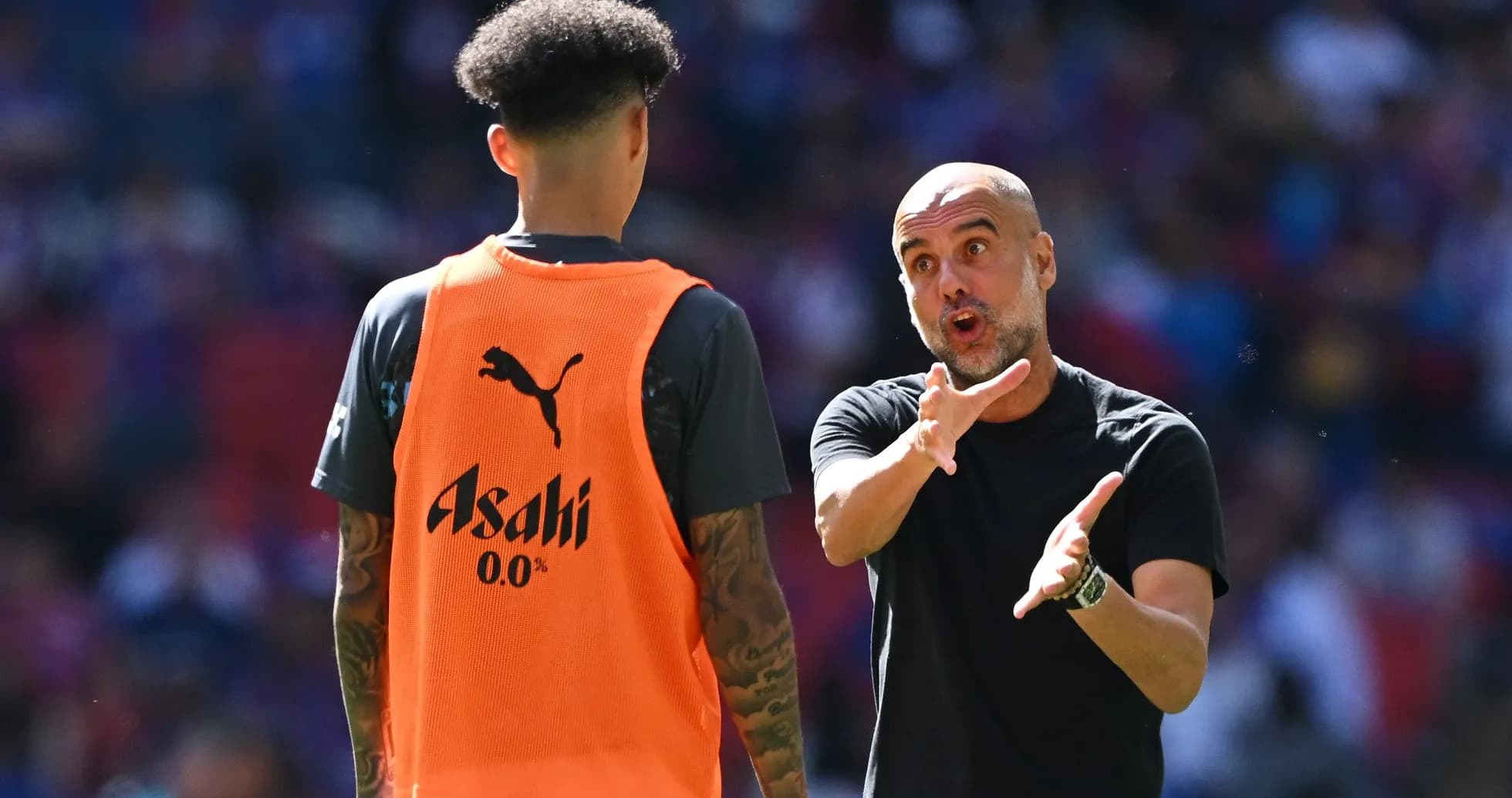
Under Pep Guardiola, there is nowhere to hide. Even the most gifted academy graduate quickly discovers that being “good on the ball” is the bare minimum, not a badge of honour.
Speaking on the Beast Mode On Podcast with Adebayo Akinfenwa, O'Reilly lifted the lid on the blunt verdict that changed his career. Guardiola, he explained, had no issue with his technique. The problem lay in everything that happened when City didn’t have possession.
“When I first came through he said; ‘On the ball, no problems, but off the ball you need to be more aggressive. More hungry. More desire’,” O'Reilly recalled. “And that's something I picked up and that's what helped me get to where I was last season and the trust he had in me. I think that was the biggest lesson he gave me.”
That message cut straight through the noise. It demanded a response. O'Reilly had to rewire his game, sharpen his edge, and embrace the ugly side of defending that separates promising full-backs from elite ones.
The reward? A place not just in the squad, but in the core of a City side now reshaped under Enzo Maresca, where his role feels less like a promotion and more like the natural outcome of years of hard decisions.
A childhood that wasn’t “normal”
Those decisions started long before Guardiola’s critique. They began in school corridors and on quiet evenings when his phone lit up with invitations he knew he couldn’t accept.
“In the school days, when you were younger, 14, 15, even a bit younger than that,” he said. “Your friends would go out to parties, hang around out late and you kind of have to not go and say; ‘I can't go, I've got training’.”
That became the pattern. While his friends stayed out, he went home. While others drifted between hobbies, he doubled down on one.
“That was one of the sacrifices, growing up different to everyone else,” he added. “Throughout my whole life and career I've just dedicated everything to football. You don't grow up as a normal kid.”
There is no glamour in those moments. Just early nights, relentless training sessions, and the quiet knowledge that you are betting your entire youth on the hope that one day, the sacrifice will be worth it.
For O'Reilly, that day arrived when he started lining up against the very best the sport has ever seen.
Facing Messi and eyeing the future
Those sacrifices now place him on the same pitch as generational talents. Asked to name the toughest opponent he has faced, O'Reilly didn’t hesitate: Lionel Messi.
That single name says enough. It underlines how far he has travelled from those missed parties and early curfews to the sharp end of elite football, where one lapse in concentration against a player like Messi can undo a decade of work.
O'Reilly is not just looking back, though. He is already scanning the horizon for the next wave. Among them, one name stands out for him: Liverpool prospect Rio Ngumoha, whom he expects to explode in the 2026-27 season. The City defender described the teenager as “very, very special” – high praise from someone who has already seen the game at its highest level.
From Guardiola’s ruthless assessment to Maresca’s trust, from lonely evenings as a teenager to marking Messi, O'Reilly’s story is a reminder of what it really takes to make it at Manchester City.
The question now is no longer whether he belongs there. It’s how high this trajectory can still climb.