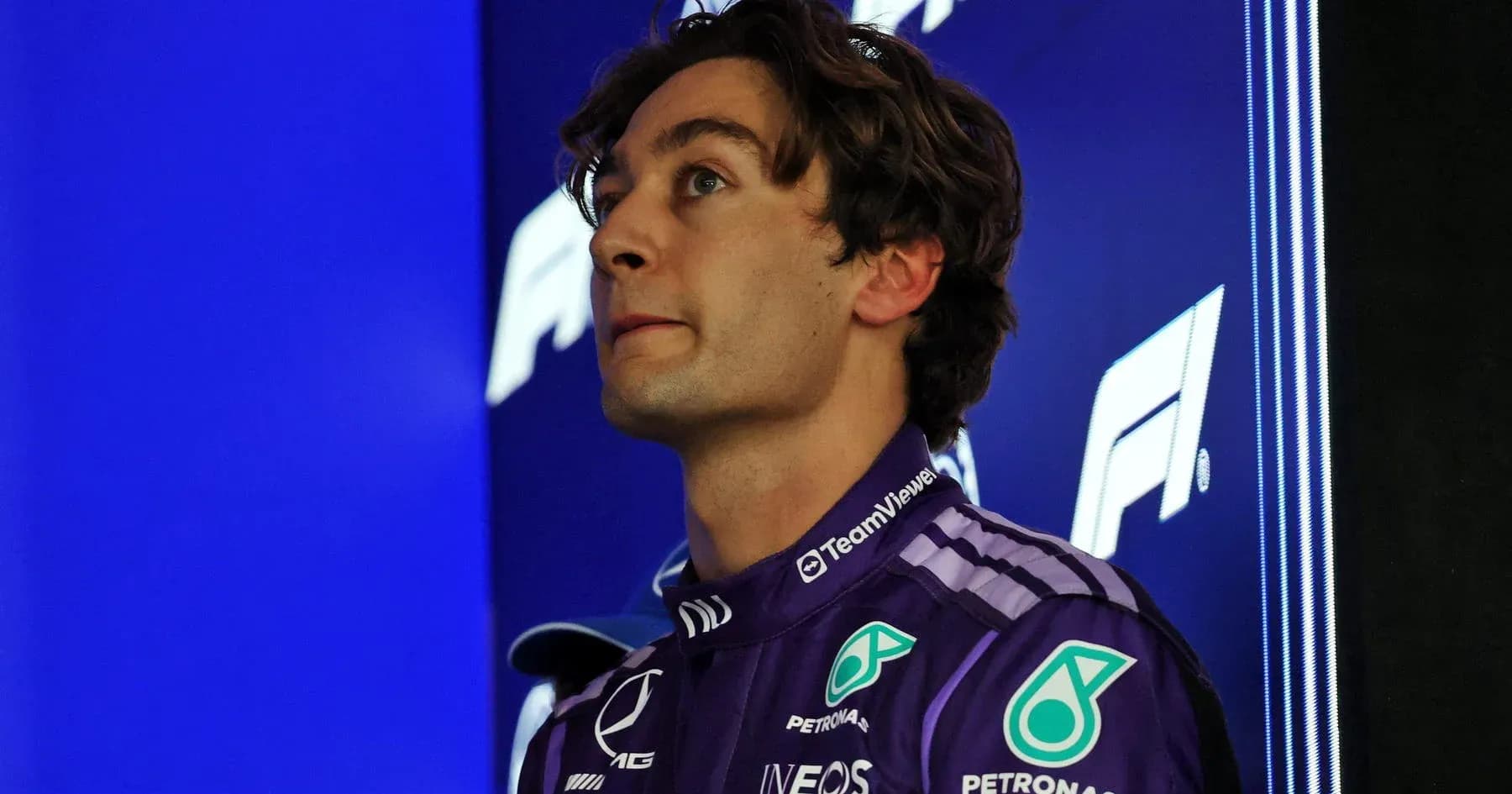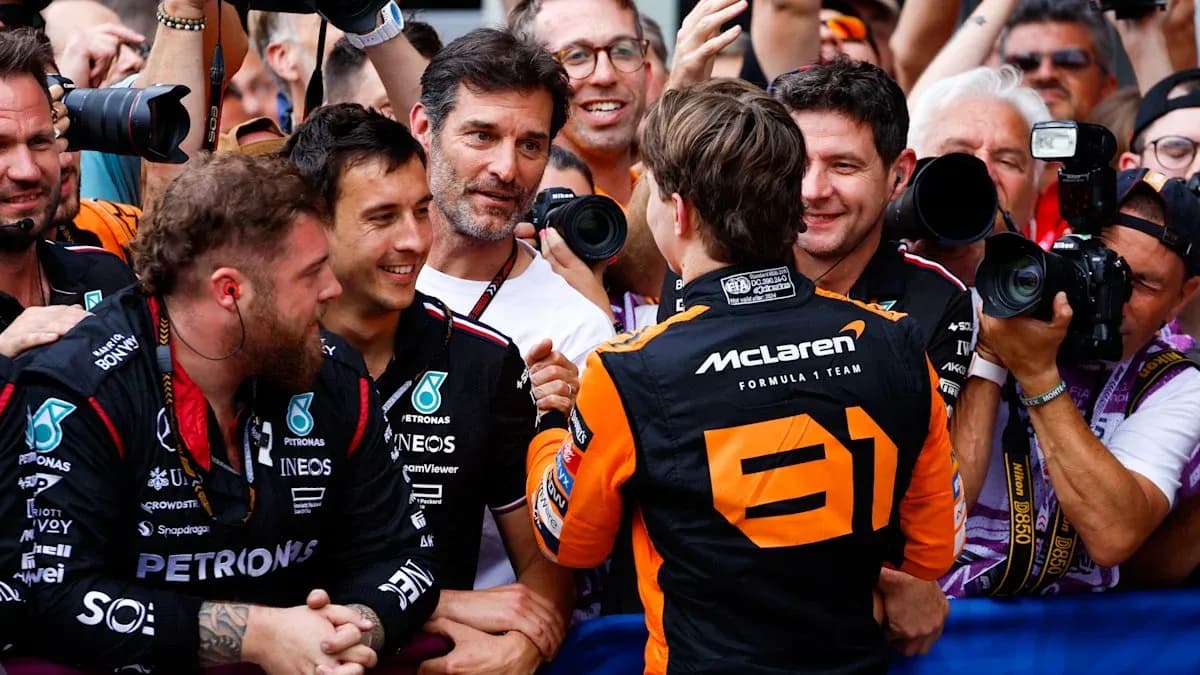
The partnership that quietly reshaped one Australian’s path to the top of Formula 1 is over. After seven years together, Oscar Piastri and Mark Webber have formally split, ending a management arrangement that had become one of the paddock’s most intriguing double acts.
For much of Piastri’s rise, Webber wasn’t just a familiar face in the garage. He was the constant in the background – adviser, fixer, shield and sounding board – operating through JAM Sports Management, the agency he founded with Ann Neal and Jason Allen in 2019. Now that structure has been dismantled.
The decision finalises what had already begun to unfold in slow motion this season. Webber had eased away from regular trackside duties, focusing more on commercial work than on the week‑to‑week grind of practice sessions, debriefs and late-night strategy chats. The step back has now become a clean break.
A Blueprint That Worked
The Webber–Piastri relationship was never a standard “sign with a big agency and disappear into the client list” story. It was hands-on, personal and unusually protective.
Neal’s role was central. The architect behind Webber’s own journey from Australia to the European junior ladder and ultimately to Formula 1 in 2002, she spent seven years grinding through that system, building contacts, finding money and opening doors. Together, Webber and Neal took that same playbook and applied it to Piastri.
The results were spectacular. Under their guidance, Piastri stormed through the junior categories, winning Formula 3 and Formula 2 in consecutive rookie seasons. Webber’s experience allowed him to shave off some of the sport’s harsher learning curves, giving his young compatriot shortcuts that most rookies never see.
By the time Piastri reached McLaren and started winning grands prix, the partnership looked like a case study in how a former driver could shepherd a prodigy through modern motorsport. Piastri often spoke openly about the value of Webber’s perspective – how to think about racecraft, how to navigate politics, how to survive the mental strain of life at the front.
But drivers grow. Needs change. And in Piastri’s case, the evolution has been obvious.
New Voices in the Garage
As Piastri has settled into the F1 paddock, his dependence on Webber’s racing insight has naturally eased. The young Australian no longer walks into every weekend as a wide-eyed newcomer. He knows the circuits, understands the rhythms, feels the pressure without needing it explained.
That shift became visible at the start of this season when Webber reduced his presence at races. In his place, other familiar figures have stepped forward.
Pedro Matos, Piastri’s race engineer from his Formula 2 days, has taken on a more influential role in shaping how the McLaren driver prepares and debriefs. Performance coach Emma Murray, who has worked with some of Australia’s most decorated athletes – Dustin Martin, Scott McLaughlin, Cate Campbell among them – has become increasingly prominent around his race weekends.
This is closer to the modern F1 norm. Most drivers now plug into large, multi-layered agencies that divide responsibilities between commercial, sporting and personal management. Former drivers often advise or consult, but rarely do they run the entire operation as comprehensively as Webber did for Piastri.
That’s what made the JAM model unusual. It was small, tight and fiercely protective of its star client. Now Piastri steps away from that cocoon.
A Split in a Difficult Season
The timing is impossible to ignore. While Webber’s withdrawal from trackside involvement began before this announcement, Piastri’s 2026 season has been his most difficult since arriving in Formula 1.
After emerging as a genuine title contender in 2025, he was widely tipped to push on again this year, perhaps even wrestle the internal number one status at McLaren away from Lando Norris. Instead, the campaign has stalled.
Piastri’s last win remains the 2025 Dutch Grand Prix. This year he has stood on the podium only twice, and not since the Miami Grand Prix back in May. The numbers tell the story with brutal clarity: he sits seventh in the drivers’ standings, 94 points behind Norris, who occupies sixth.
The comparison inside the McLaren garage is stark. Norris, revitalised under the new engine regulations, is coming off a gritty victory in Brazil – his third of the season – and is just 33 points shy of second-placed Max Verstappen. Piastri’s average finishing position in grands prix has slipped to 6.8, nearly three places worse than Norris’ 4.1. Across all races, the head-to-head reads 16–4 in Norris’ favour.
Pressure is building from behind as well. Red Bull’s Isack Hadjar is closing in, adding another layer of scrutiny to every mistake, every strategy call, every off‑weekend. For a driver who rose so fast, this is the first sustained period where the curve has flattened.
Does the management split cause that? No. But it arrives right in the middle of it.
Life After Webber
Off the track, the biggest question now is how Piastri chooses to fill the vacuum left by Webber and Neal.
He remains securely tied to McLaren until the end of 2028, so there is no immediate urgency around contract talks or a shock move elsewhere. The intrigue lies instead in how he structures his career away from the cockpit.
One of the defining features of the old setup was how carefully Webber and Neal guarded Piastri’s time. They controlled access, limited distractions and were notoriously selective about commercial commitments. The idea was simple: a young driver only has so much bandwidth; spend it on speed, not on noise.
A new management team will inevitably bring a different rhythm. Larger agencies often mean more sponsors, more media, more appearances, more moving parts. Some drivers thrive in that environment. Others miss the tight-knit circle that helped them get there.
What is clear is that Piastri hasn’t forgotten how he arrived at this point. Webber’s role in that journey is undisputed, and the respect between the two camps remains. But sentiment doesn’t win championships, and the next phase of his career will be defined by how he adapts without that familiar safety net.
A prodigy who once sprinted through every category he touched now faces something new: the grind of expectation, the weight of comparison, the reality that early success is only the beginning.
The management chapter with Mark Webber is closed. The question now is whether Oscar Piastri can write the next one with the same ruthless efficiency that first put his name on the F1 map.