Pablo Torre's Investigation into NBA Violations and Its Fallout
Pablo Torre didn’t need the NBA to make him feel right. But the league certainly handed him one hell of a closing argument.
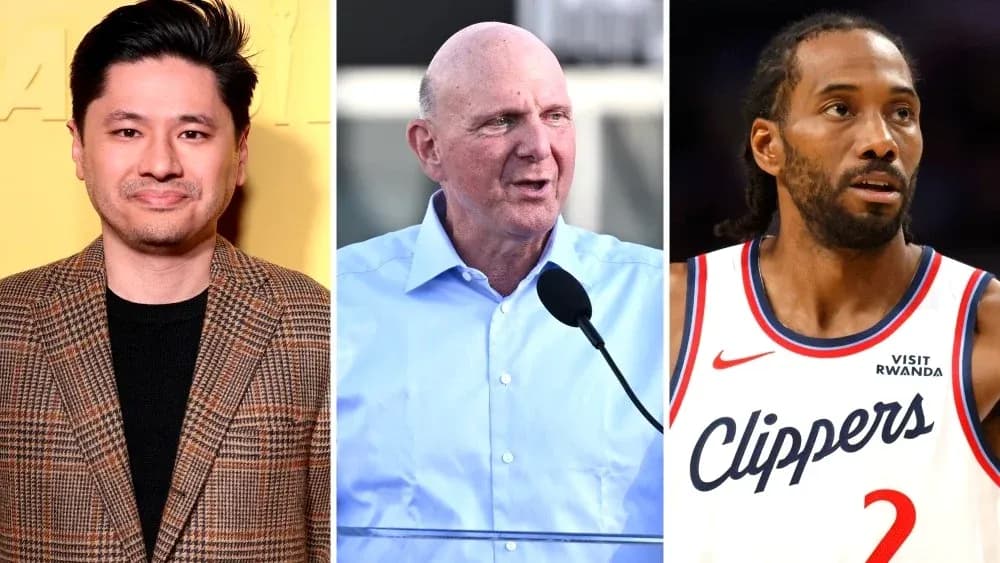
For months, the veteran journalist’s podcast, “Pablo Torre Finds Out,” had lived in that uneasy space where explosive reporting meets entrenched power. His series detailed how the Los Angeles Clippers were alleged to have skirted the NBA salary cap through a $28 million no-show endorsement deal for Kawhi Leonard from Aspiration, whose co-founder later received a 14-year prison sentence for defrauding investors — including Clippers owner Steve Ballmer.
Ballmer called the whole thing a lie. His allies lined up behind him. Torre, despite a Pulitzer Prize for the work, found himself painted as an opportunist chasing clicks.
Then came Sept. 2.
The league, armed with an outside investigation by the law firm Wachtell Lipton, announced the harshest team punishment in NBA history. The Clippers, the NBA concluded, had “committed multiple significant rules violations.” Leonard, through his uncle Dennis Robertson, had pushed the organization to “assist him in obtaining off-court income opportunities, successfully obtaining those opportunities, and failing to reimburse payments by the Clippers for personal expenses.”
The pressure finally told.
The result: a $30 million fine, five first-round draft picks stripped, and a year-long suspension for Ballmer. Leonard, by comparison, walked away with a $700,000 fine and no suspension — a financial sting, but hardly a body blow for a superstar who’d pocketed tens of millions.
Adam Silver did not mince words. The commissioner said he was “deeply disappointed by the flagrant violations of our rules and by the Clippers’ institutional and leadership failures that led to this misconduct,” adding that “the severity of the penalties reflects the seriousness of the violations.”
Ballmer fired back, blasting what he called “a heavily biased investigation” and vowing to explore “every legal remedy to address this gross injustice.”
Somewhere in the middle of that crossfire stood Torre, the podcaster who’d been told, loudly and publicly, that he’d gone too far.
Journalism, he insists, cannot be judged by whether the subject of an investigation eventually nods and says, “You know what? This podcaster had a point.” That’s not the job. That’s not the standard. Yet it is impossible to ignore the twist: the league’s findings landed squarely in the neighborhood where his reporting had been living for a year.
What unsettled him most over that year was not just the pushback from the billionaire and the superstar, but who chose to believe them.
His series was deeply reported, Pulitzer-winning, anchored in documents and human sources. Still, a sizable slice of the public defaulted to the richest owner in the league and a Finals MVP, not the reporter laying out the receipts. For those who actually listened and watched, Torre says, “there was no ambiguity about what this was.” The ambiguity came from everyone who didn’t bother.
And some of those skeptics carried powerful platforms.
When ESPN — Torre’s former employer — published an Aug. 17 story under the headline, “Sources: NBA has no evidence Ballmer funneled money to Leonard via sponsors,” it cut against the spine of his reporting and, crucially, against what the NBA would later say. The piece read like a lifeline for the Clippers and Ballmer, a framing that suggested the league had cleared the owner on the most explosive allegation.
Torre’s experience with that story, as he puts it, was “not great.” It was a demonstration of what happens when a mainstream giant chooses a narrative.
He raises three simple questions: Why did ESPN feel comfortable framing the story that way without doing the year-long work he had? Why did no one call him before publishing, knowing his reporting sat at the center of the storm? And why, after he provided a statement — “We stand by our reporting. We look forward to the NBA’s ruling. And our investigation continues.” — did that statement never appear, despite assurances it would?
His own reporting points to a familiar playbook. The Clippers, along with a crisis PR manager hired by Ballmer, shopped around a version of events that suited the owner. The information, Torre says, matched almost word-for-word the press release the Clippers would later issue, and it was quickly undercut by the NBA itself once the investigation concluded.
The mystery, in his view, isn’t where ESPN’s story came from. It’s why a newsroom that knew his work, and had access to it, decided that the Clippers’ framing felt more credible than a former colleague who’d laid out multiple episodes backed by documents and on-the-record human sources.
The blowback didn’t stop there. At Puck, founding partner Peter Hamby used a podcast to question Torre’s motives, painting him as a clout-chaser more interested in building an audience than in the integrity of the work.
To Torre, that episode felt like character assassination from people who hadn’t meaningfully engaged with what he’d actually produced. He describes it as “darkly poetic” to be lectured on journalistic standards by an outlet that, in his view, showed little interest in practicing them. Whether that was incompetence or malice, he says, is a distinction that barely matters anymore.
If that all sounds bruising, there were rare reversals. Mark Cuban and Ty Lawson — both of whom had publicly criticized him — later apologized. Torre appreciated not just the apologies, but how they came. Direct. Unforced. Human.
The league’s punishment, though, raised a new set of questions, especially around Kawhi Leonard’s relatively light sanction.
On paper, Leonard’s role is clear. The NBA’s investigation and Torre’s own reporting both place him at the center of the scheme, with his uncle driving demands for off-court money and benefits. Yet Leonard emerged with a fine that barely grazes his earnings and no suspension, free to move on and, as Torre notes, free to leave the country and be traded to the Toronto Raptors.
To understand that gap, Torre argues, you have to separate truth from strategy.
According to his reporting, the NBA’s handling of Leonard was a calculated move. By giving Leonard what amounts to a slap on the wrist, the league secured a settlement with both the player and the union. That settlement removed arbitration as an option — a crucial pressure point Ballmer might have used to drag the league, and his fellow owners, into a far messier public fight.
Once arbitration was off the table, Ballmer’s remaining play was to head to court. Sue the NBA. Sue the commissioner. Sue Wachtell Lipton. Sue Torre, if he wants. But he could no longer use the league’s own internal machinery to wage that battle.
That, Torre says, is legal strategy — not a reflection of who did what, or how responsible each party truly was.
Leonard’s public statement only sharpened the tension. “Integrity and respect for this game are fundamental to who I am,” it read in part. “I accept full responsibility for the lapses in judgment by people within my inner circle and regret the distraction this situation has caused the fans and my family.”
The language sounds contrite. It also distances Leonard from the core of the scheme, as if he were a bystander to his own business.
Torre’s documents say otherwise. Leonard is 35. He sat in meetings with teams. He knew what his uncle was asking for. Torre has paperwork bearing Leonard’s signature in sections that affirm his knowledge and consent to the very deals he now frames as the work of others. The statement, to Torre, doesn’t square with the evidence. It does, however, make sense as an exit line: a way for Leonard to say, essentially, “I regret some things, I’m done with this, see you in Toronto.”
In Torre’s telling, that’s the heart of the saga: a star so coveted that Steve Ballmer, one of the richest men in sports, bent his franchise into dangerous shapes to land him — and never fully grasped how exposed that made him.
As for other franchises and stars, Torre is clear on one point: he is not investigating the New York Knicks or Jalen Brunson. They are “not a target,” he says. His focus lies elsewhere.
Specifically, on another powerful figure in Los Angeles.
On his podcast, Torre is about to launch a new investigation into Mark Walter, the Los Angeles Dodgers owner who is under federal scrutiny over $21 billion in undisclosed loans made by two insurance companies he owns. Walter recently sold the Lakers to Bob Iger and Joshua Kushner for $12.5 billion, a transaction that alone would be enough to command attention in the sports and business worlds.
Part one of Torre’s new series drops Friday. It again intersects with federal agencies, public interest, Hall of Fame basketball players, and another Los Angeles team — this time in baseball as well as basketball. The challenge, as with the Clippers saga, is to take something that looks impenetrably complex and show fans how directly it touches their world.
This first episode, he says, is just the way in. The sale of the Lakers to Iger and Kushner helped spark the reporting, but the story will unfold as new information arrives. Torre and his team have spent months digging, then accelerated the work in recent weeks.
He’s already seen what happens when powerful institutions feel threatened by what he finds. The last investigation ended with the NBA dropping a hammer and one of its most visible owners preparing for a legal war.
The next one again walks straight into the intersection of money, power, and the games people think are just played on the court.