Patrick Beverley Questions NBA Superstars' Adaptability in Europe
Patrick Beverley has never been shy with a microphone in front of him. This time, he’s gone straight at one of basketball’s sacred assumptions: that NBA superstardom automatically translates anywhere in the world.
On the YouTube show Thanalysis, hosted by Thanasis Antetokounmpo, the 38-year-old guard drew a hard line between the NBA and Europe — and he didn’t leave much room for nuance.
“There are NBA superstars right now who couldn’t play in Europe. I firmly believe that. They simply couldn’t,” Beverley said.
No winking, no soft landing. Just that.
“It’s not about their bodies”
Beverley’s point isn’t that Europe is packed with better athletes. He went out of his way to strip the debate of that easy out.
“It’s not a lack of respect for each individual’s physical ability, but for their mentality,” he explained.
That word — mentality — is where Beverley has planted his flag.
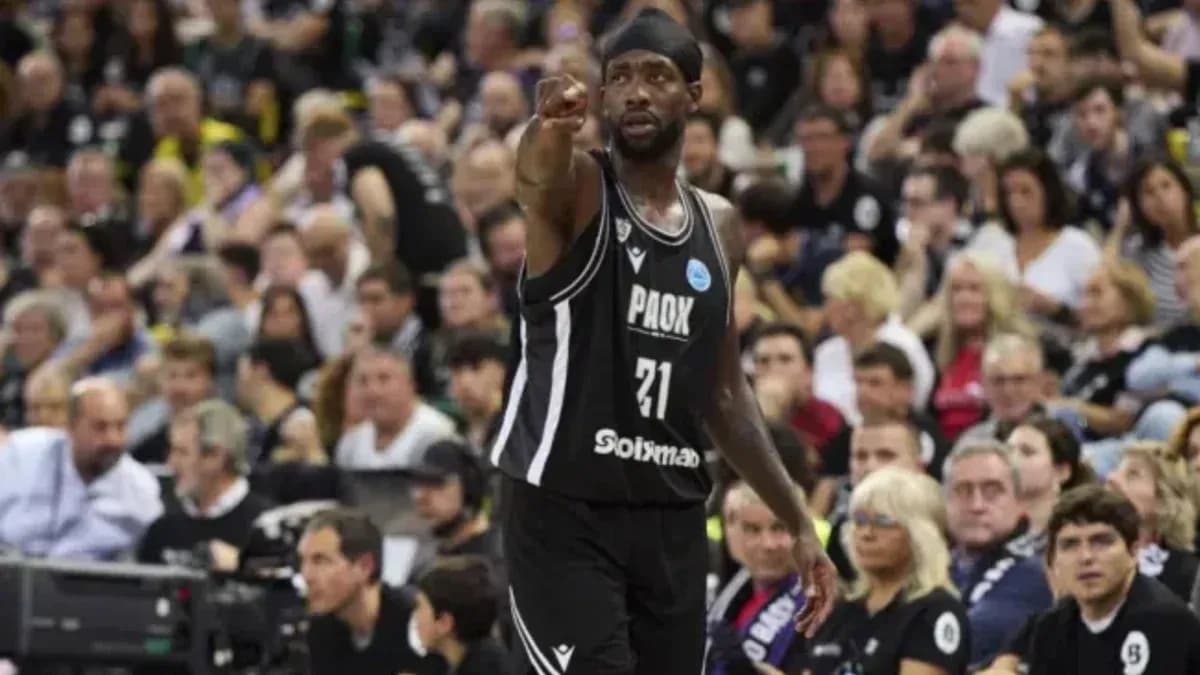
He’s one of the few players who can speak with real authority on both sides of the Atlantic. Before carving out a 12-year NBA career with the Rockets, Clippers, Wolves, Lakers, Bulls, Sixers and Bucks, he spent significant time in Europe, learning the game in a very different environment. Now, as he prepares to suit up for Boulazac in the French league, he’s circling back to that world with the perspective of someone who’s seen the league’s brightest lights up close.
What he’s arguing is simple: some of those lights would dim overseas, not because the rims are higher or the players are stronger, but because the game demands a different kind of obedience.
“The coach controls everything”
For Beverley, the divide starts with power and pecking order.
“In Europe everything revolves around the team. The coach controls everything. It’s almost like a college team made up of adults. The team is above each individual,” he said.
That’s the crux. In his eyes, European basketball is built on a strict hierarchy where the coach is king and the system is sacred. The star fits the structure, not the other way around.
In the NBA, the gravitational pull often runs in the opposite direction. Superstars bend schemes to their will, tilt franchises around their personalities, and dictate tempo, spacing, even locker-room tone. Beverley is suggesting that some of those players, raised in that ecosystem, would struggle when the ball — and the power — no longer lives in their hands.
The way he frames it, Europe doesn’t care about your shoe deal or your scoring title. It cares if you’re in the right spot on the weak side, if you accept being the third option for a night, if you swallow a reduced role because the game plan demands it.
A different kind of challenge
Beverley isn’t attacking talent. He’s questioning adaptability.
To him, Europe is a mental test: can you accept fewer touches, tighter systems, harsher coaching, and a style where mistakes are punished not by social media but by a quick trip to the bench? Can a player used to 30 minutes and full creative license handle 18 minutes, rigid sets, and a coach who doesn’t blink at sitting his biggest name?
That’s where he believes some NBA stars would crack.
Beverley has made a career out of surviving in tough environments — from European gyms to hostile NBA arenas — by embracing structure and confrontation. Now, as he heads back across the Atlantic, he’s lighting up a debate that never really goes away:
Is the ultimate test of a player’s greatness their numbers in the NBA, or their ability to thrive in any system, under any coach, in any country?
For Beverley, the answer is clear. And he’s convinced not everyone at the top of the NBA food chain is ready for that exam.