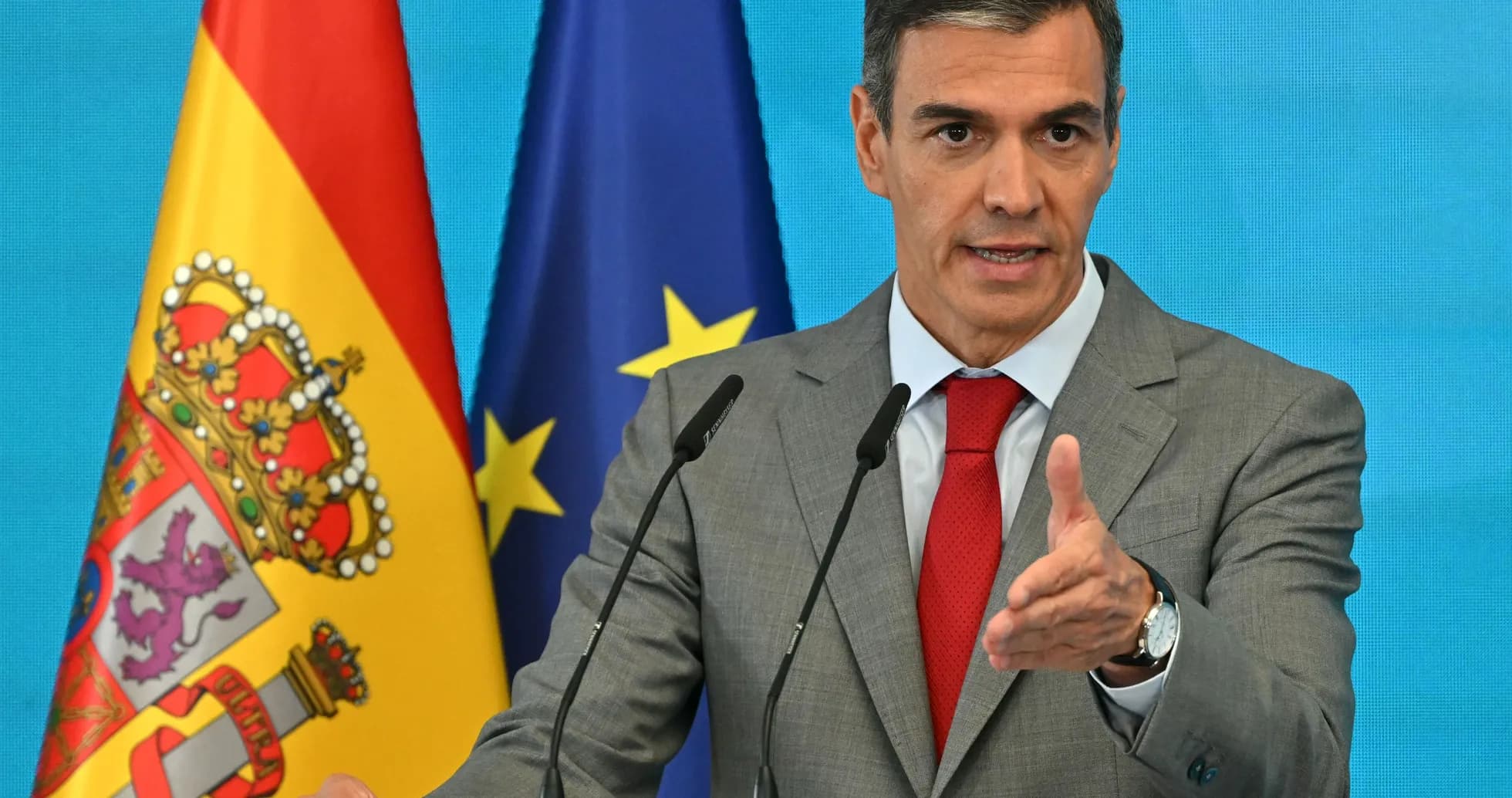
Pedro Sánchez has stepped directly into football’s biggest argument of the decade and left no room for doubt. Spain’s prime minister wants the 2030 World Cup final in Spain – and he is prepared to use all the weight of his government to keep it there.
Speaking to Spanish network SER on Monday, Sánchez dismissed the idea that the showpiece could be moved to Morocco and made it clear that, politically, Madrid is now on the pitch.
“We will work to ensure that the final is held here,” he said, when asked about the possibility of FIFA president Gianni Infantino favouring Morocco. Then came the broader message, aimed well beyond the radio studio: “The time has come for Spain to win the World Cup on its own soil.”
This is not just about prestige. It is about timing, history and power.
Spain’s argument
Sánchez anchored his case in results. Spain have become the defining national team of this era, he suggested, and that status should be reflected in where the tournament reaches its climax.
La Roja won their first World Cup in South Africa in 2010. Fourteen years later, they climbed back to the summit, taking a second title at this year’s edition shared by the United States, Mexico and Canada.
Those two trophies, spaced across different generations and continents, form the backbone of the prime minister’s claim: a modern powerhouse deserves the biggest night of all, at home.
The most recent triumph still feels fresh. On 19 July, Spain edged Argentina 1-0 after extra time, Ferran Torres delivering the decisive goal. Another tight final, another moment of Spanish control on the biggest stage. For Sánchez, that victory is not just a sporting memory. It is a political tool.
A three-continent World Cup with one giant question
The 2030 World Cup is already unlike any other. Spain, Portugal and Morocco will co-host, with the tournament stretched across Europe and Africa. On top of that, FIFA has awarded opening matches to Uruguay, Argentina and Paraguay to mark 100 years since the first World Cup in 1930.
Back then, every game took place in Montevideo. One city, one country, one continent. A century on, football’s showpiece will be scattered across six nations and three continents, an ambitious, sprawling anniversary project.
Amid that complexity, one issue remains unresolved: where the final will be played.
Spain wants it. Morocco wants it. Portugal, a partner in the bid, watches closely. The decision has drifted far beyond stadium plans and transport links and into the realm of geopolitics and influence.
A political contest for the biggest night in football
By going public, Sánchez has turned what was already a strategic battle into an open political contest. Spain’s government is now visibly and loudly in the race.
The message is clear: this is not just a federation wish-list or a quiet lobbying effort. It is a state priority.
Morocco, too, has strong claims. It is a full co-host, it has invested heavily in football infrastructure and it has the backing of a continent eager to see more marquee events on African soil. That is the tension at the heart of FIFA’s choice.
Spain, though, believes its recent success, its footballing heritage and its status within European football should tip the scales. Sánchez has chosen to say that out loud.
The final decision will fall to FIFA. The pressure, now, will come from the highest political offices on both sides of the Mediterranean. One game, one stadium, one night in 2030 – and two nations determined it will belong to them.