The Pelicans' Bold Bet on Internal Growth
The numbers from last season are blunt enough: 26-56, 11th in the West, nowhere near the postseason. Most teams in that position tear something up — the roster, the staff, the identity. New Orleans has chosen a different path.
They’re running it back. Mostly.
Yes, there are new faces — AJ Johnson, Bennedict Mathurin, Jaron Pierre Jr., Trendon Watford — but the heart of this project hasn’t changed. The Pelicans are gambling that internal growth will do what cap space and splashy trades have not. That the kids grow up. That the stars stay on the floor. That the pieces finally fit.
It’s a bold kind of patience.
A Young Core Under Pressure
The franchise’s future is increasingly tied to Jeremiah Fears and Derik Queen. Both showed flashes as rookies, the kind of small, encouraging moments that front offices cling to in lean years: a poised fourth-quarter stint here, a smart read out of a double-team there.
This season, flashes won’t be enough.
Fears and Queen are expected to push hard for bigger roles and heavier minutes. They’re not side projects; they’re the blueprint. If they stall, the whole “growth from within” plan starts to wobble.
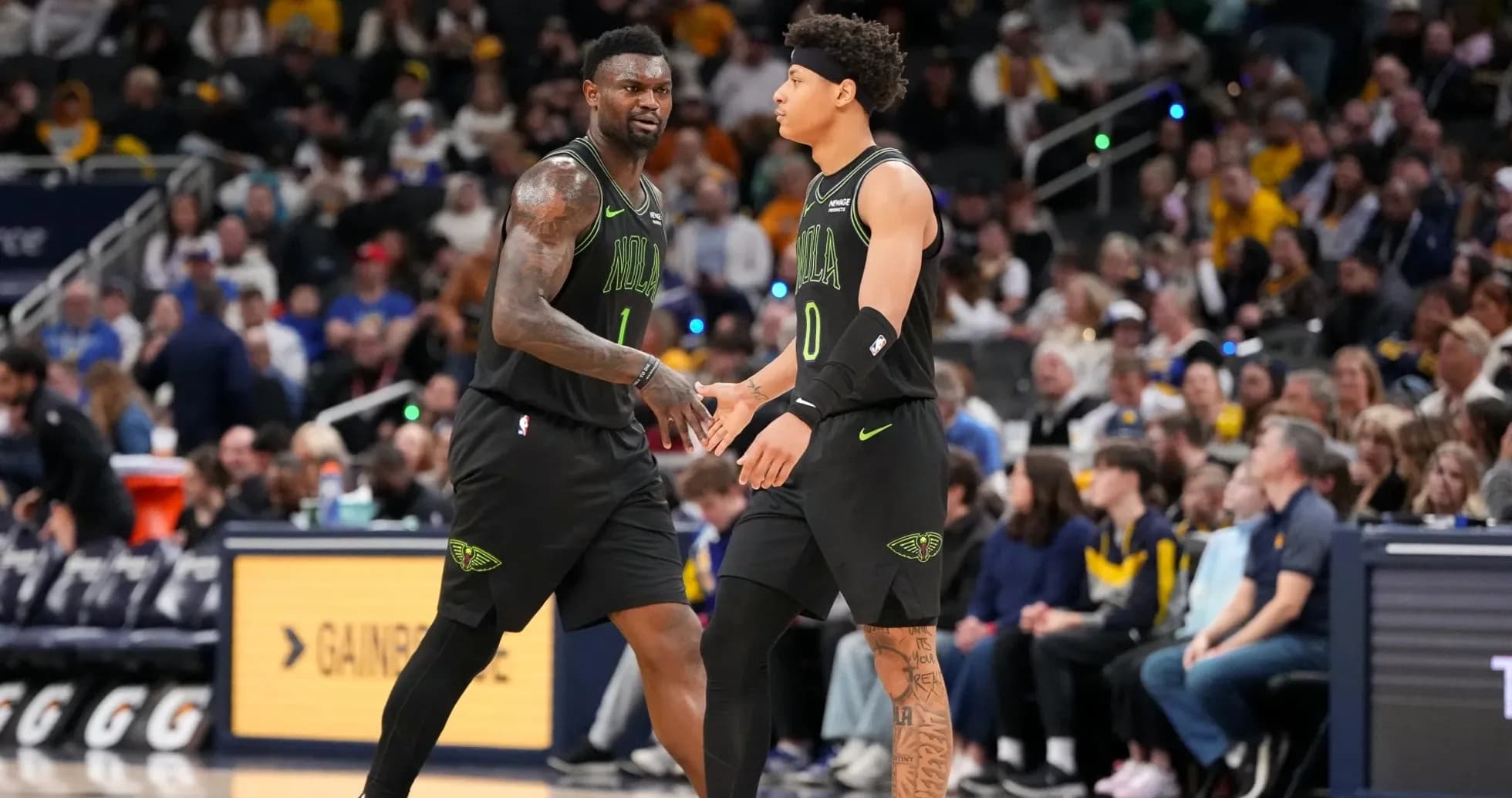
Around them, the names are more familiar and the stakes higher. Trey Murphy’s shooting and versatility remain vital. Zion Williamson’s health, as always, hovers over everything. Dejounte Murray, the proven guard with the ball in his hands when it matters, now shares the perimeter spotlight with Mathurin, the headlining addition.
If those players don’t seize games late, if close contests keep slipping away, Murray’s name will echo through trade rumors as the deadline creeps closer. That’s the reality of a 26-win team that chose continuity over upheaval.
Herbert Jones at the Crossroads
If there’s a player who embodies this make-or-break feel, it’s Herbert Jones.
Not long ago, Jones looked like one of the league’s premier defensive risers. His length, anticipation and discipline let him guard up and down the lineup, smothering wings and bothering bigger forwards. In 2024, he landed on First Team All-Defense and stood at the center of the Pelicans’ brief defensive surge.
Then the climb stalled. His impact dipped. The regression wasn’t dramatic enough to push him out of the rotation, but it was noticeable enough to raise questions.
Now he’s 28. This is the window. Prime years. The season that will likely define his value — either as a long-term pillar in New Orleans or as one of the more coveted defensive wings on the trade market.
The checklist is clear. His 3-point shooting has to bounce back after sitting at 31% over the last two seasons. Defenses have been daring him to shoot; he has to make them pay again. And he wants his name back in the conversation with the league’s best stoppers, not just as a “solid defender,” but as a game-changer.
If he hits those marks, the Pelicans’ ceiling rises. If he doesn’t, the front office has decisions to make.
Living in the Paint — and Wasting It
One number frames the Pelicans’ offensive identity: 58%.
That’s the share of their shots that came in the paint last season, the highest rate in the league. They got to the rim. Constantly. On paper, that’s exactly where you want to live in the modern NBA.
Zion Williamson drove that approach. He ranked third in total field goal attempts in the paint with 791 and converted 60.3% of them — better than the league average of 57.8% and his best mark in the last three years. When he got there, he finished. That part of the formula worked.
The rest of it did not.
As a team, New Orleans shot just 55.4% in the paint, the second-worst mark in the league. They turned the most valuable real estate in basketball into a problem area. Three Pelicans — Jones, Micah Peavy and Jordan Poole — were among the 41 players who shot below 50% in the paint on at least 100 attempts.
That’s a lot of empty trips right at the rim.
Mathurin’s arrival won’t magically fix that. Over his career, he’s hit 51.5% in the paint, respectable but not elite. His real value comes from his ability to draw fouls and live at the line. For a team already getting to the paint in volume, turning some of those misses into free throws could quietly transform their efficiency.
The blueprint is there: keep attacking, finish better, and squeeze more value out of every Zion drive and every paint touch from their guards and wings.
Dates That Will Tell the Story
We won’t have to wait long to see what this all looks like.
On Oct. 21, the Pelicans open against the Pacers. It’s a clean measuring stick. Mathurin faces his former team, while Murray and Tyrese Haliburton go head-to-head in a matchup that will say plenty about New Orleans’ backcourt direction.
Two weeks later, on Nov. 6, the Timberwolves come to town. Zion and Anthony Edwards entered the league as No. 1 overall picks, but their paths have veered sharply. Edwards is surging toward superstardom. Zion is still fighting the same battle: can he stay healthy long enough to chase that same arc?
By Nov. 18, a three-game stretch against the Pistons, Thunder and Spurs will offer an early-season gut check. Those are young, ambitious teams on their own timelines. New Orleans will see exactly where it stands in the West’s youth movement.
On Nov. 29, the narrative shifts to the 2019 Draft. Pelicans vs. Trail Blazers. Zion vs. Ja Morant. Picks 1 and 2, both trying to reclaim trajectories that once felt inevitable.
And on Feb. 2, there’s an emotional twist: Jamahl Mosley returns to Orlando to face the Magic, the team he led to three straight playoff appearances. For him, it’s a homecoming. For the Pelicans, it’s a chance to see how far his imprint has spread in New Orleans by midseason.
Mosley’s Mandate
That imprint is the real storyline of this preseason.
Mosley arrives with a clear brief: give this young roster structure, accountability and a defensive backbone. In Orlando, he did exactly that, shaping a tough, disciplined group around Franz Wagner and Paolo Banchero. The Magic under his watch defended, competed and steadily climbed.
New Orleans badly needs that kind of edge. The Pelicans have sat in the bottom 10 defensively in each of the last two seasons. Too many breakdowns, too many soft possessions, too little resistance when games tightened.
This hire is more than a sideline change. For team president Joe Dumars, it’s a culture play. If Mosley connects with Fears, Queen, Zion, Murphy, Jones and the rest of the core, the franchise can finally move past the constant churn of “what are we?” and focus on a simpler question: “who can we add to elevate this group?”
If he doesn’t, if the defense stays leaky and the growth stalls, the Pelicans won’t just be shopping players at the deadline. They’ll be asking whether this entire experiment needs to be torn down.
They’ve chosen to bet on continuity, on internal development, on a coach known for molding young talent. Now comes the only part that matters: does this version of the Pelicans finally grow up, or is this just another year of waiting for a leap that never arrives?