Pierre Gasly has lost his Monaco podium – again.
Three months after the chequered flag fell in Monte Carlo, the Frenchman has been pushed back from third to seventh, as the FIA’s International Court of Appeal (ICA) reinstated the two five‑second penalties that were originally handed to him for speeding in the pit lane.
Isack Hadjar, the Red Bull junior who had been shuffled down the order when Gasly’s sanctions were first scrapped, is now back on the podium.
From street‑race glory to courtroom defeat
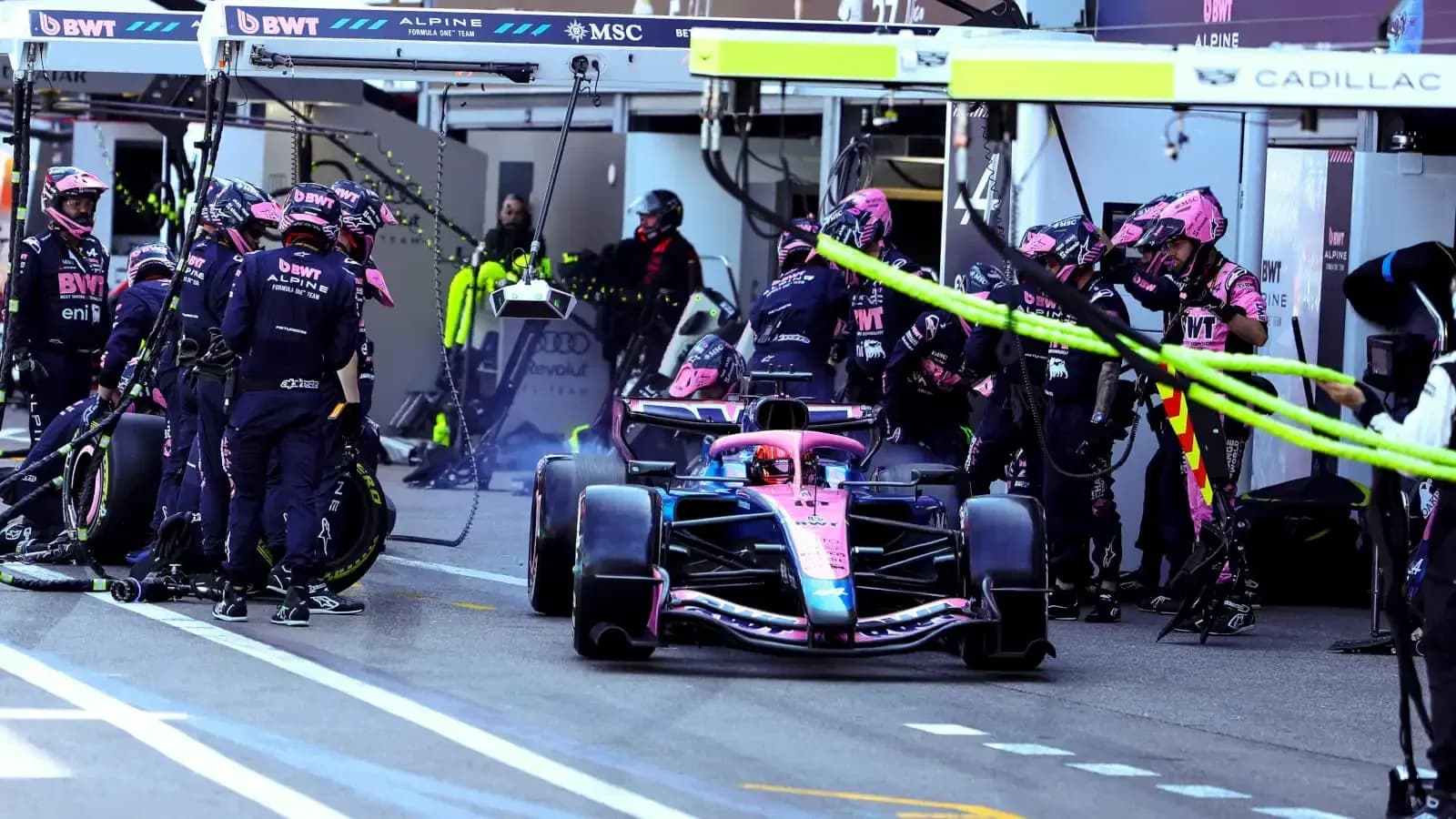
On the day itself, Gasly finished third on the road at the Monaco Grand Prix, only to be hit with a pair of time penalties for two separate pit‑lane speeding infringements. Those sanctions dropped him to seventh.
Alpine fought back. The team argued that the stewards could not actually prove Gasly had exceeded the 60 km/h pit‑lane limit because of uncertainty created by how the timing loops were positioned and calibrated. Six drivers were flagged for pit‑lane speeding that afternoon; five served their penalties during the race. Alpine held Gasly’s until after the flag, which allowed the team to seek a right of review.
They won. The stewards accepted Alpine’s case, overturned the penalties and restored Gasly’s third place. The story should have ended there.
It didn’t.
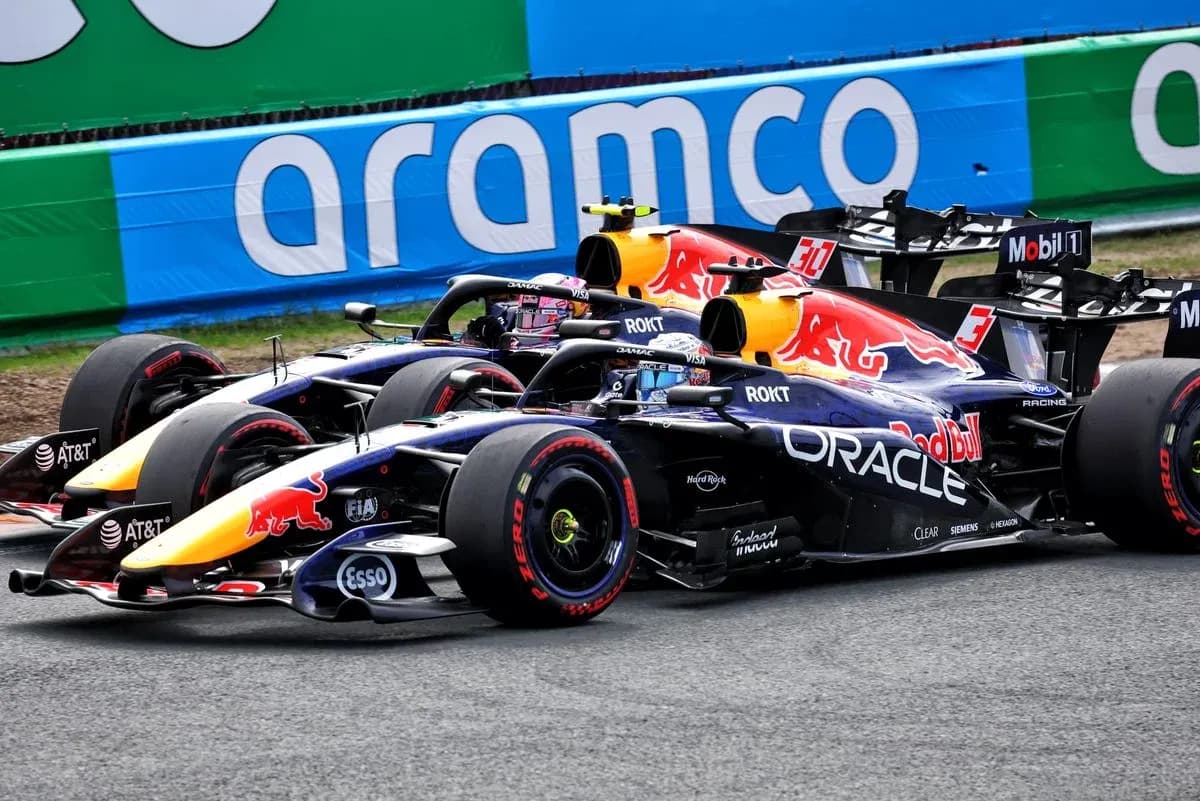
McLaren and Red Bull both appealed to the ICA in Paris, arguing that the stewards had been wrong to reverse their own original decision. Those hearings took place behind closed doors after the Dutch Grand Prix. On Friday at Monza, the verdict landed: appeals upheld, Gasly’s penalties reinstated, Hadjar promoted back to third.
The teams’ case: one rulebook, one benchmark
McLaren and Red Bull went after the core of Alpine’s successful review. Their stance was blunt: the stewards should never have set aside the initial penalties.
Their argument centred on sporting fairness and equal treatment. Every team had relied on the same official timing system – FOM’s timing data used by the FIA stewards – to calibrate pit‑lane speed. That system does not measure instantaneous speed; it uses an average, based on the time taken to travel between two timing loops and a fixed distance between them, set at 2692 cm for Monaco.
Five drivers took their medicine in‑race under that benchmark. Gasly did not, because Alpine chose to delay serving his penalties and then challenged the basis of the measurement afterwards. McLaren and Red Bull argued that allowing one team to rewrite the benchmark retrospectively, when everyone else had raced to the original one, tore at the principle of equal treatment.
The teams also stressed the safety dimension. The pit‑lane speed limit is not a trivial technicality; it is there to protect mechanics, officials and drivers. They warned that if competitors could later undermine the common calculation with their own bespoke measurements, it would erode the consistency and predictability of safety‑critical rules.
They pointed out that an electronics debrief meeting early in the Monaco weekend had already highlighted discrepancies between team data and the official timing system. Mercedes and Williams had flagged mismatches. The FIA’s F1 Electronics Team Leader, Olivier Kieffer, circulated those findings to all teams. FOM and Alpine did not attend that meeting.
For McLaren, Red Bull and Motorsport UK – which joined as an interested third party – the point was simple: the established, accepted official measurement system had to be the reference. If that could be set aside after the event because one team later produced a different calculation, national associations and championships everywhere would face chaos.
They accused the stewards’ original reversal of Gasly’s penalties of “evidentiary errors” and said the standard of proof had not been met. The contentious decision, they argued, was “insufficient, contradictory, and legally inadequate”.
Alpine’s fight: the rule, not the reputation
Alpine stayed locked on the letter of the regulation. Its case was that the FIA rules never explicitly state that the official timekeeper’s method is the only way to determine whether the 60 km/h limit has been breached.
The team argued that the distance used by the timing system – 2692 cm – was wrong for the actual path a car could take through the Monaco pit lane. If that input is wrong, Alpine said, then the average speed calculation can’t be trusted, and a penalty based on it must be open to challenge.
To prove it, Alpine commissioned three different methods to check the pit‑lane distance:
- FOM’s own GNSS data
- Leica laser measurements taken by Alpine
- An independent survey by Ridge & Partners LLP
FOM’s data, Alpine said, showed that the relevant minimum distance between the timing loops was 2615 cm, not 2692 cm. Using that shorter distance, Gasly’s recorded times would have produced an average speed below 60 km/h. No breach, no penalty.
The team insisted this did not undermine safety. They argued that correcting an illegitimate penalty is legitimate regardless of what had happened to other competitors, that other teams had not sought a right of review, and that the stewards had enough evidence to be satisfied their driver stayed within the limit.
How the court saw it
The ICA did not reopen the debate on the 60 km/h limit itself. It focused on how that limit is applied and judged during an event.
Key for the court was the concept of a “common calibration parameter”. The 2692 cm distance between the timing loops, used by FOM, was the reference for every competitor all weekend. Teams set their pit‑lane speed limiters to that benchmark. It was not a physical measurement of each car’s exact path, but a notional input used consistently across the field.
The court found that 2692 cm was not an error in the sense Alpine claimed. It was one possible distance within the geometry of the pit lane, and it had been used for everyone. Later geometric analysis that produced a different distance could not be allowed to overrule the event‑wide parameter for one team alone.
Sporting fairness and equal treatment, the ICA ruled, demanded that all competitors be judged against the same 2692 cm benchmark. That principle, it said, is embedded in FIA regulations.
Crucially, the court did not declare the timing system beyond challenge. It left the door open for future cases where evidence of malfunction, incorrect timing, misidentified signals or other technical faults could be shown. But Alpine’s approach – replacing the common parameter after the event with a different methodology only for Gasly – crossed a line the court would not accept.
The numbers also counted against Alpine. Gasly’s times through the pit‑lane loops were 1.604 and 1.602 seconds. At an average of exactly 60 km/h, his actual distances would have needed to be around 2673 cm and 2670 cm. FOM had not measured his precise trajectory and could not prove he had travelled those distances. Alpine’s own reconstruction of Gasly’s path, which it described as its “best estimate”, could not be guaranteed accurate to within a few centimetres.
That meant Alpine could not establish with sufficient precision that Gasly’s actual path was short enough to keep him under the limit.
The ICA concluded that the Monaco stewards had erred when they set aside Gasly’s penalties on the basis of that later reconstruction. The appeals from McLaren and Red Bull were granted, the rescinding decisions overturned, and the original two five‑second penalties came back into force.
The court ordered the FIA and Alpine to share its costs.
Alpine fumes, FIA reflects
Alpine, unsurprisingly, is furious. The team maintains that Car #10 never exceeded the pit‑lane speed limit at any point in the race and has made clear it disagrees with the ICA’s reasoning. It is now weighing its options, including the possibility of escalating the case to the Court of Arbitration for Sport.
Publicly, Alpine has framed the outcome as an unjust punishment but insists it will keep its focus on performance and a tight championship battle rather than becoming consumed by the legal fight.
The FIA, for its part, has taken the verdict as a trigger for introspection. The governing body has confirmed it is reviewing both the methodology and operation of the current Formula 1 timing system, along with the related regulatory framework. It will also look again at judicial procedures, including the right of review and appeal processes.
The federation has moved to defend its stewards, stressing their independence and the different environment in which they operate compared to the Court of Appeal, which can call on extensive legal counsel and additional evidence. Every ICA decision, the FIA said, is examined carefully by stewards as part of a process of “continuous improvement”.
For now, the record books will show Hadjar on the Monaco podium and Gasly back in seventh. The question that lingers is whether Alpine will keep fighting to rewrite that line, or accept that in this sport, sometimes the hardest battles are not won on the track but in the rulebook – and not always by the fastest car.