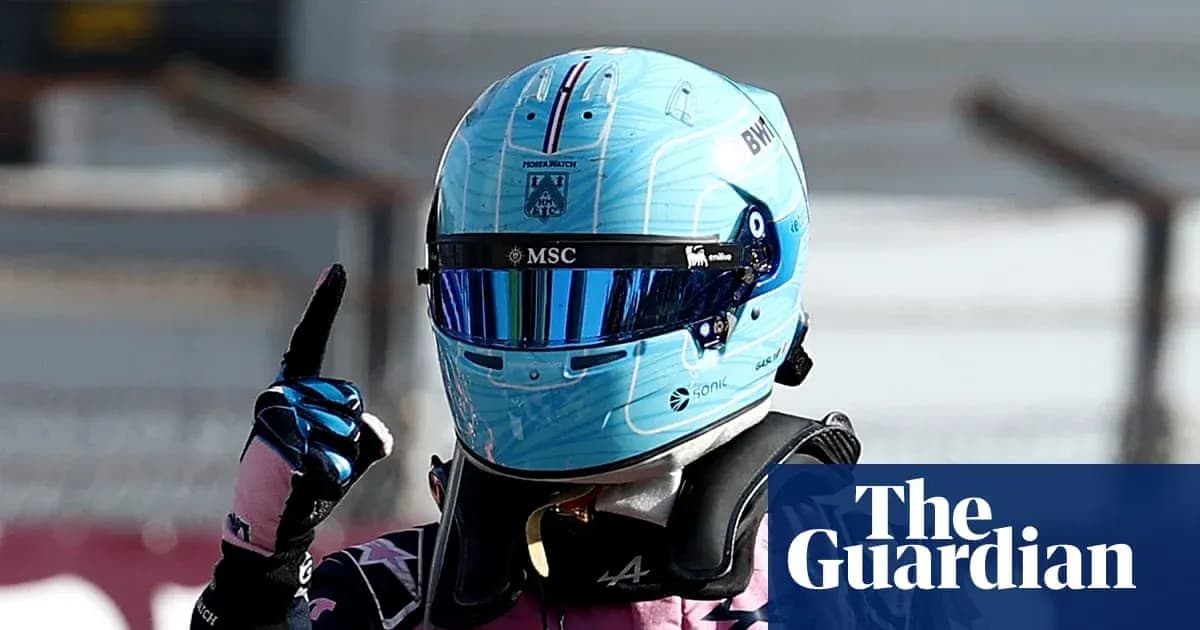
Pierre Gasly has always had a thing for Monza. On Saturday, he turned it into something else entirely.
The Frenchman delivered a stunning, against-the-odds pole position for the Italian Grand Prix, his first in Formula One and Alpine’s first in this era, on a circuit where they had no right to bully the heavyweights. In a qualifying session decided by the width of a visor strip, Gasly found a lap that Mercedes and McLaren could not match, stopping the clock at 1min 21.786sec.
He beat George Russell by six-hundredths of a second. Oscar Piastri was third. Charles Leclerc and Lewis Hamilton lined up fourth and fifth. Defending world champion Lando Norris could do no better than ninth.
For Gasly, now in his ninth full F1 season and only 10th in the championship, it was a lap that cut through the noise of a difficult year. Alpine sit sixth in the constructors’ standings, usually nowhere near the sharp end. Monza’s long straights and low downforce should have exposed them. Instead, Gasly turned the place into his stage again, four years after his shock 2020 victory here.
That win came in chaos – a red flag, a perfectly timed pit stop, Hamilton’s penalty. This time there were no gifts. Just raw speed, precision and a car on the edge.
The session built towards him. In Q3, with the tow almost as important as horsepower, Mercedes executed their plan to perfection. Kimi Antonelli, the championship leader, was deployed as the hare, sent out to punch a hole in the air for Russell. McLaren mirrored the strategy, Norris towing Piastri.
Russell laid down the first serious marker with a 1min 21.929sec, Piastri slotting in just behind. Gasly, already sharp all weekend, hustled the Alpine to third on that opening run. The top four were separated by seven-hundredths of a second. It felt like Mercedes’ fight to lose.
Then the final runs turned tense.
Mercedes again sent Antonelli out early, alone, before wheeling him back into his support role. The Italian, though only seventh on the timesheets, was crucial in the wider picture, his slipstream meant to arm Russell for one last attack. Ferrari and McLaren copied the playbook: Leclerc pulled Hamilton along, Piastri did the same for Norris.
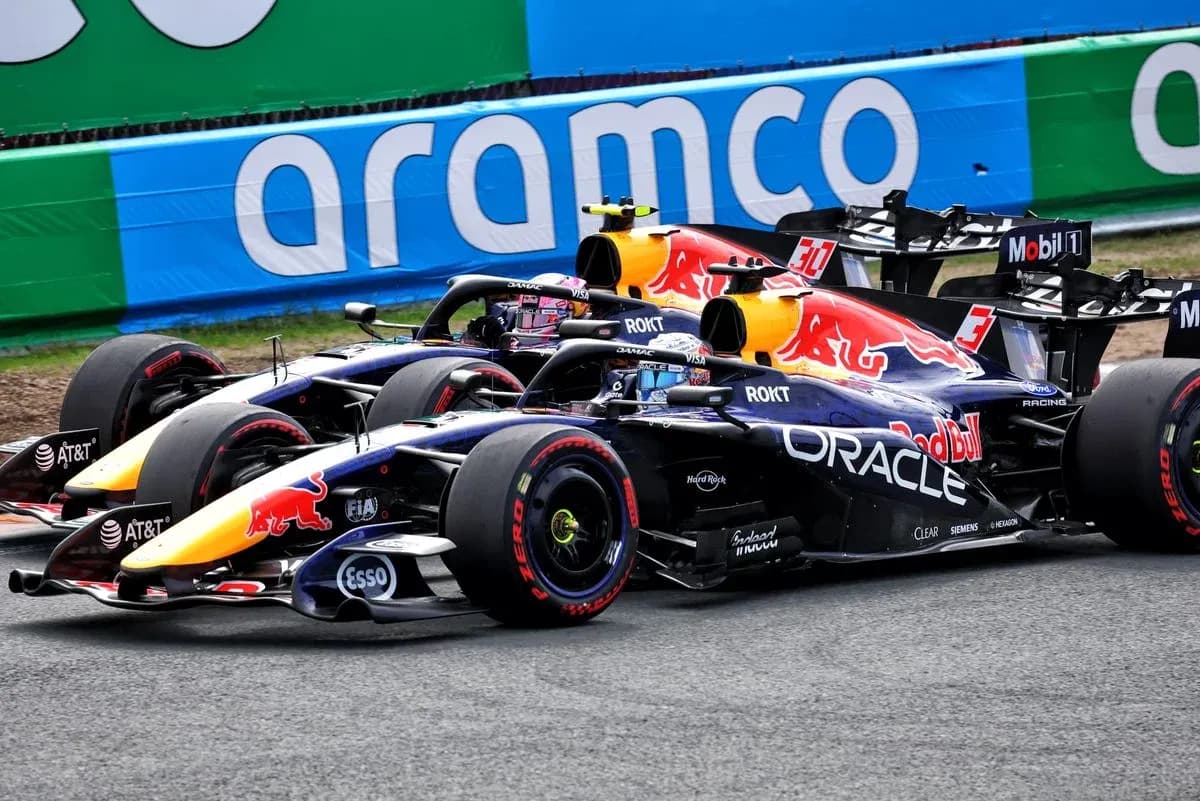
This time, it backfired for McLaren. Piastri overcooked it into Turn 1, wrecking Norris’s shot at a proper pole lap and leaving the champion marooned in ninth. At the front, Russell hooked up his tow, pieced together a clean lap and looked to have done enough. The Mercedes camp relaxed, fractionally.
Gasly was still coming.
Running in Russell’s wake, he threaded the Alpine through the chicanes with a kind of defiance, the car dancing on the limit through Ascari and Parabolica. When he flashed across the line, the timing screens flipped. Pole. By 0.06sec. A Monza upset, again, only this time in blue.
If Saturday was a breakthrough for Gasly, it was also a strategic gamble for Mercedes. Antonelli, the runaway points leader, will start from the back row despite qualifying seventh after taking a full suite of new power unit components. Monza’s long straights and slipstream battles make it one of the few tracks where such a penalty can be softened, and Mercedes have taken the hit here with eyes on the bigger picture.
They believe Antonelli can climb back to the top five. He leads both Russell and Hamilton by 59 points in the standings; Russell, starting from the front row, knows this is a rare chance to claw into that margin while his teammate fights through traffic.
Gasly, by contrast, has little margin and everything to gain. Alpine’s season has been a grind, their car usually marooned in the midfield. The team arrived in Italy under pressure and then found themselves dragged into a political storm.
On Friday, Alpine’s executive advisor and de facto team principal, Flavio Briatore, detonated a row by suggesting that one of the judges involved in overturning Gasly’s third place at the Monaco Grand Prix had been biased in favour of McLaren. He went as far as to name the judge, accusing him of acting like a “prosecutor” and describing him as “very linked with McLaren”.
McLaren principal Andrea Stella dismissed the remarks as “insulting” to his team. The fallout reached the FIA’s international court of appeal, which sits independently of the federation but oversees such disputes.
Before qualifying, the ICA issued a pointed response. It stressed that Alpine had been given every opportunity to challenge the composition of the judging panel in the Monaco case and had not done so.
“At both the beginning and conclusion of the hearing, the parties were invited to raise any issue concerning the proceedings or the composition of the court. None did so. No objection was raised during the hearing concerning the manner in which the court questioned the witness or conducted the proceedings,” its statement read.
The court underlined that its judges are appointed under FIA judicial procedures aligned with international standards, including guidelines from the International Bar Association on conflicts of interest. It noted that they are bound by independence and confidentiality rules, must file annual disclosures of interest to the FIA compliance officer and sign a specific declaration of independence for every case, shared with the parties involved.
Against that backdrop, Gasly’s lap cut through the politics. The noise will not vanish overnight, nor will Alpine’s structural problems, and the Mercedes pair will bear down on him relentlessly on Sunday. Yet for one qualifying hour at Monza, in a car that has rarely belonged at the front, Gasly seized control of the story.
Now he has to defend it over 53 laps on the most unforgiving slipstream runway in Formula One.