The battle to host the 2030 World Cup final has moved from boardrooms to the political stage, with Morocco’s prime minister publicly telling the country’s football chief to stop promising Casablanca the showpiece game while Spain steps up its own claim.
The tournament, which will be shared by Morocco, Spain and Portugal, already has a unique twist: the opening three matches will be played in Uruguay, Argentina and Paraguay to mark the centenary of the first World Cup. Everything else, though, is still in play – especially the right to stage the final.
Lekjaa’s promise – and a sharp rebuke
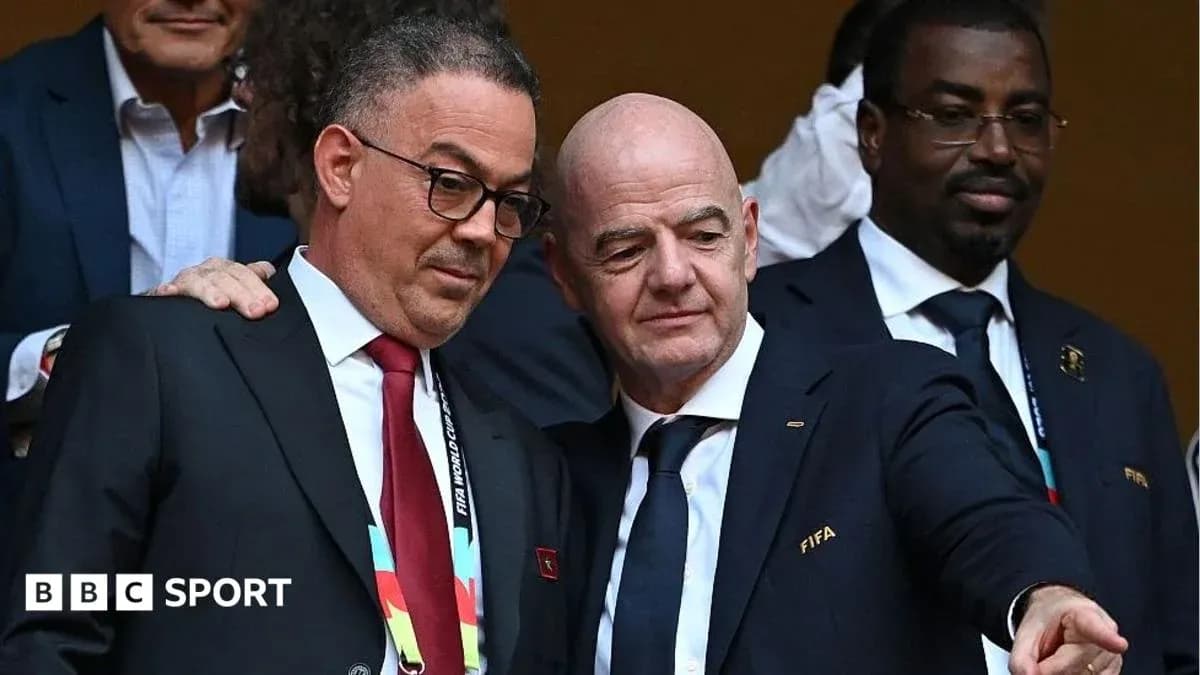
Fouzi Lekjaa, the powerful president of the Moroccan football federation (RMFF), raised expectations at a political party event when he said Casablanca would have the “honour” of hosting the final. In a football‑obsessed country already energised by the 2022 World Cup semi-final run, the message landed like a campaign slogan.
It also landed badly with the government.
At a rally, prime minister Aziz Akhannouch cut through the euphoria with a pointed warning aimed directly at Lekjaa.
“Do not offer to host the big final game in Morocco while we still have not discussed the matter with our allies, Spain and Portugal,” he said, calling for “respect” and accusing those making such pledges of using “electoral promises to pull the rug out from under us”.
“These are huge matters,” he added. “Deciding where the final will be held is a major issue.”
The intervention underlined the political weight of the 2030 project. This is not just about a football match; it is about prestige, diplomacy and regional influence across two continents.
Spain turns up the volume
While Morocco deals with its internal tension, Spain has not been shy about its own ambitions.
Rafael Louzan, president of the Spanish football federation (RFEF), has already gone on record saying the final will be held in Spain. The country’s position, he argued, has only been strengthened by winning the men’s World Cup for the second time this summer.
“Even though no decision has been taken, I believe Spain is the place because it cannot be any other way,” he told Cadena SER. “As you know, we are currently world champions.
“I believe Spain’s organisational capacity for major events is beyond question and that is why reality dictates that the grand final cannot and must not be held anywhere other than in Spain.”
That is not a formal bid. It is a statement of intent. And it puts pressure on partners and on Fifa alike.
World football’s governing body has kept its distance from the noise. On the question of where the final will be played, it has offered only a familiar line: “a decision will be made in due course”.
Stadiums, symbolism and a looming decision
Behind the rhetoric sit the hard details that will shape Fifa’s call.
Morocco is planning a vast new 115,000-seat stadium, a proposed venue that would instantly become the largest football arena on the planet. For a nation looking to project power across Africa and the Arab world, a World Cup final there would be a statement of arrival.
Spain counters with history, infrastructure and two modernised giants. Real Madrid’s Santiago Bernabeu has just emerged from a major renovation and now holds 83,000, a high-tech arena in the heart of the capital. Barcelona’s Spotify Camp Nou, once its own rebuild is complete, will boast a capacity of 105,000, restoring its status among the game’s great cathedrals.
Both countries can make a compelling case. One leans on scale and a new landmark, the other on proven organisational muscle and upgraded icons.
There is also precedent to consider. For the 2026 World Cup, New Jersey’s MetLife Stadium was only confirmed as host of the final in February 2024, two years out from the tournament. The 2030 hosts may be facing a similarly long wait.
For now, the World Cup that is meant to celebrate 100 years of football’s biggest stage is already sparking a very modern contest — part diplomacy, part politics, part stadium arms race — with the biggest game of all still looking for its home.