With the first weekend out of the way and the dust barely settled, the Premier League already feels different. New names, new shapes, old pressures. Matchday 2 arrives with managers a touch wiser, squads a touch sharper, and Fantasy managers poring over every hint of a settled XI.
This is how the weekend is expected to line up.
Crystal Palace vs Manchester City
Crystal Palace look ready to double down on structure and discipline. A 3-4-2-1 built on a solid spine: Henderson behind a back three of Tomiyasu, Richards and Canvot. Width comes from Muñoz and Mitchell, with Kamada and Wharton asked to do the hard running and the tidy passing in midfield.
Ahead of them, McNeil and Pino drifting inside to feed Mateta. It’s a system that leans on compactness and quick breaks, demanding ruthless efficiency from the lone striker.
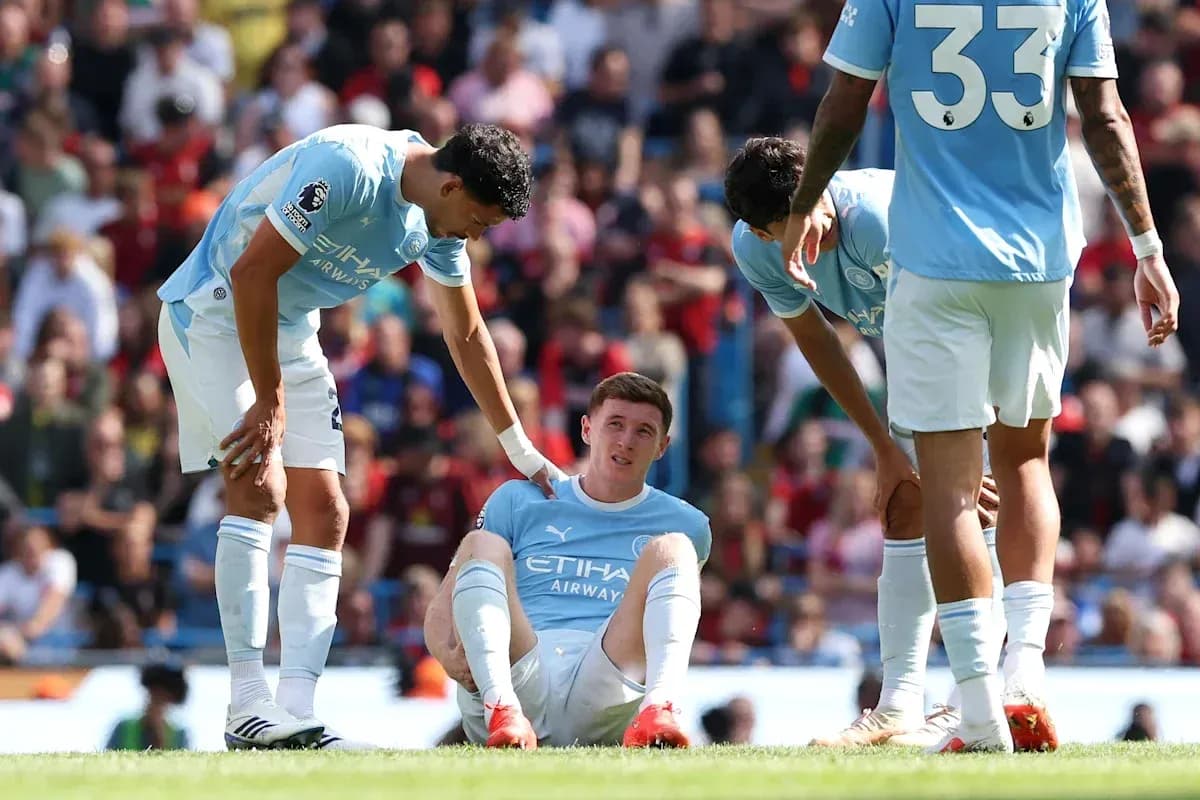
City, by contrast, travel with their usual authority but a slightly tweaked shape. A 4-2-3-1 anchored by Donnarumma, with Khusanov, Rúben Dias, Gvardiol and O'Reilly across the back. Anderson and Marc Guehi form a powerful double pivot, built to suffocate transitions and launch attacks.
Foden, Cherki and Semenyo operate behind Haaland, a trio capable of both subtlety and chaos. If Palace sit deep, that band of three will be tasked with prising open the door before Haaland kicks it off the hinges.
Liverpool vs Nottingham Forest
At Anfield, Liverpool are expected to lean into their attacking depth. A 4-2-3-1 that looks as dangerous on paper as it does on the pitch: Alisson protected by Frimpong, Jacquet, Van Dijk and Kerkez, a back four with pace, height and aggression.
Szoboszlai and Gravenberch sit at the base of midfield, but neither is there just to hold. Both can drive, both can shoot, both can pass through lines. Ahead of them, Víctor Muñoz, Wirtz and Gakpo form a fluid three behind Isak, whose movement and finishing give Liverpool a ruthless focal point.
Forest arrive with a different plan. Their 3-4-2-1 is about resilience and sharp counters. Sels starts in goal, with Diomande, Milenkovic and Murillo as a rugged back three. Aina and Williams provide the width, while McAtee and Sangaré control the centre, mixing bite with progression.
Ndoye and Gibbs-White float behind Igor Jesus, looking for space when Liverpool’s full-backs push high. Forest know they’ll spend long stretches without the ball. The question is whether they can make the few moments they do have it truly count.
Coventry City vs Hull City
Coventry’s predicted 4-3-3 speaks of ambition. Rushworth in goal, Van Ewijk and Jay da Silva as the full-backs, Thomas and Amenda in the middle. It’s a back line that will be asked to play, not just clear its lines.
Yirenkyi, Grimes and Onyeka form a hard-working midfield trio, the sort that covers ground and keeps the ball moving. Up front, Tchaouna and Mason-Clark flank Awoniyi, whose presence through the middle gives Coventry a direct outlet and a target for crosses and cut-backs.
Hull match them shape for shape. Tzolakis between the posts, with Ajayi, Egan, Mendy and Coyle across the back. Crooks, Slater and Giles bring energy and balance to midfield, while Belloumi and Stroud work either side of McBurnie.
On paper, it’s a straight tactical duel: two 4-3-3s, two sides trying to control territory and tempo. The detail in midfield and the sharpness of the wide forwards could decide it.
Bournemouth vs Everton
Bournemouth set up in a 4-2-3-1 that looks tailored for quick combinations and aggressive pressing. Petrovic starts in goal, with Smith, Hill, António Silva and Truffert forming a back four that mixes youth, power and attacking intent from full-back.
Cook and Scott sit as the double pivot, tasked with shielding and sparking attacks. Ahead of them, Rayan, Kluivert and Tavernier support Evanilson. That front four offers pace, trickery and movement, ideal for dragging Everton’s back line into uncomfortable areas.
Everton respond with their own 4-2-3-1. Pickford remains the constant in goal, behind Röhl, Tarkowski, Branthwaite and Mykolenko. Armstrong and Hackney hold the midfield base, aiming to give stability and a platform.
Ndiaye, Dewsbury-Hall and George line up behind Barry, who leads the line. It’s a side that will rely on structured build-up and set-piece threat, but it needs incision from those three behind the striker if Everton are to turn control into goals.
Tottenham Hotspur vs Newcastle United
Tottenham’s predicted XI hints at a side still evolving but already intriguing. Kinsky in goal, with Porro and Robertson providing thrust from full-back and Van Hecke alongside Senesi at centre-back. It’s a back four that can step high, but will be tested.
Tonali and Mateus Fernandes operate in the engine room, a blend of grit and guile. Ahead of them, Moore, Gallagher and Tel support Solanke. That trio behind the striker brings energy, pressing and late runs into the box, while Solanke offers link play and penalty-box presence.
Newcastle mirror the shape with their own 4-2-3-1. Hornícek in goal, Dedic and Lewis Hall out wide, Thiaw and Botman in central defence. Steur and Miley form a youthful but technically sound double pivot.
Elanga, Jacob Ramsey and Barnes line up behind Wissa. There’s pace on the flanks, creativity through the middle and a forward who loves to attack space. This one could swing on which double pivot copes better under pressure.
Chelsea vs Brighton
Chelsea are tipped to stick with a 3-4-2-1 that looks packed with talent. Sanchez in goal, behind a back three of Fofana, Lacroix and Colwill. Gusto and James patrol the flanks, with Moises Caicedo and Hato in central midfield.
Palmer and João Pedro take the two advanced roles behind Rogers. It’s a shape that invites overloads in the half-spaces and relies heavily on wing-backs for width. If Chelsea click, the movement between those front three could overwhelm Brighton’s back line.
Brighton go with a 4-2-3-1. Verbruggen in goal; Wieffer, Vuskovic, Boscagli and Kadioglu across the back. Ayari and Groß sit in midfield, the latter orchestrating as ever, the former adding legs and support.
Gómez, Hinshelwood and De Cuyper play behind Kostoulas. It’s a familiar Brighton blend: technical, brave on the ball, and always looking to create passing triangles. Chelsea’s extra defender versus Brighton’s extra midfielder sets up a fascinating tactical clash.
Leeds United vs Brentford
Leeds lean on a 3-4-2-1 that promises aggression and width. Trafford in goal, with Rodon, Bijol and Muharemovic as the back three. Bogle and Justin provide the running on the flanks, while Ampadu and Stach control the centre.
Wilson and Aaronson operate just behind Calvert-Lewin, who leads the line. That structure gives Leeds numbers in central areas and bodies around their striker, ideal for sustained pressure and second balls.
Brentford arrive with a 4-2-3-1 that feels familiar to their identity. Kelleher starts in goal, behind Kayode, Ajer, Collins and Lewis-Potter. Janelt and Sangaré form a robust, combative midfield pair.
Dango Ouattara, Jensen and Schade play behind Thiago. There is direct running from wide, craft in the middle and a forward capable of finishing off quick transitions. Leeds will want chaos; Brentford will try to control it just enough to strike.
Sunderland vs Fulham
Sunderland’s 4-2-3-1 offers balance and ambition. Roefs in goal, Meunier and Reinildo as the full-backs, Ballard and Alderete at centre-back. Xhaka and Sadiki form a combative, experienced double pivot.
Ahead of them, Hume, Le Fée and Angulo support Brobbey. There’s creativity through Le Fée, width from Hume and Angulo, and a strong focal point up front. Sunderland will look to pin Fulham back and feed their No 9 early and often.
Fulham respond in kind with their own 4-2-3-1. Leno in goal, behind Castagne, Andersen, Bassey and Robinson. Berge and Iwobi sit in midfield, a duo capable of both breaking play and threading passes.
Bobb, King and Palacios line up behind Gonzalo García. That attacking trio offers flair and unpredictability, with García tasked with finishing moves and occupying defenders. If Fulham can play through Sunderland’s first press, there will be space to exploit.
Manchester United vs Ipswich Town
At Old Trafford, Manchester United are expected to go with a 4-2-3-1 that leans heavily on technical quality in advanced areas. Lammens starts in goal, with Dalot and Shaw as full-backs and Maguire alongside Heaven at centre-back.
Tielemans and Andrey Santos form the midfield pair, a mix of experience and youthful energy. Mbeumo, Bruno Fernandes and Dorgu line up behind Matheus Cunha. That quartet brings creativity, movement and goal threat from multiple angles.
Ipswich won’t come just to admire the surroundings. Their 4-2-3-1 sees Scherpen in goal, with O'Shea, Diop, Greaves and Davis across the back. Lukic and Núñez hold midfield, tasked with disrupting United’s rhythm.
Fatawu, Enciso and Maeda support Emersonn. There is pace and directness in those three behind the striker, perfect for counter-attacks if United leave gaps when they push bodies forward.
Aston Villa vs Arsenal
Aston Villa round off the slate with a bold 4-2-3-1. Suzuki in goal, Wan-Bissaka and Maatsen at full-back, Lindelof and Torres in central defence. McGinn and Kamara sit as the double pivot, combining leadership, bite and distribution.
Cash, Barkley and Garnacho operate behind Buendía, who is expected to start up front. It’s an attacking quartet that can interchange positions, pull defenders out of shape and strike from distance.
The names tell their own story. Across the league, managers are already nudging their teams towards a settled identity. The second weekend won’t define a season, but it will reveal who’s learning fastest.