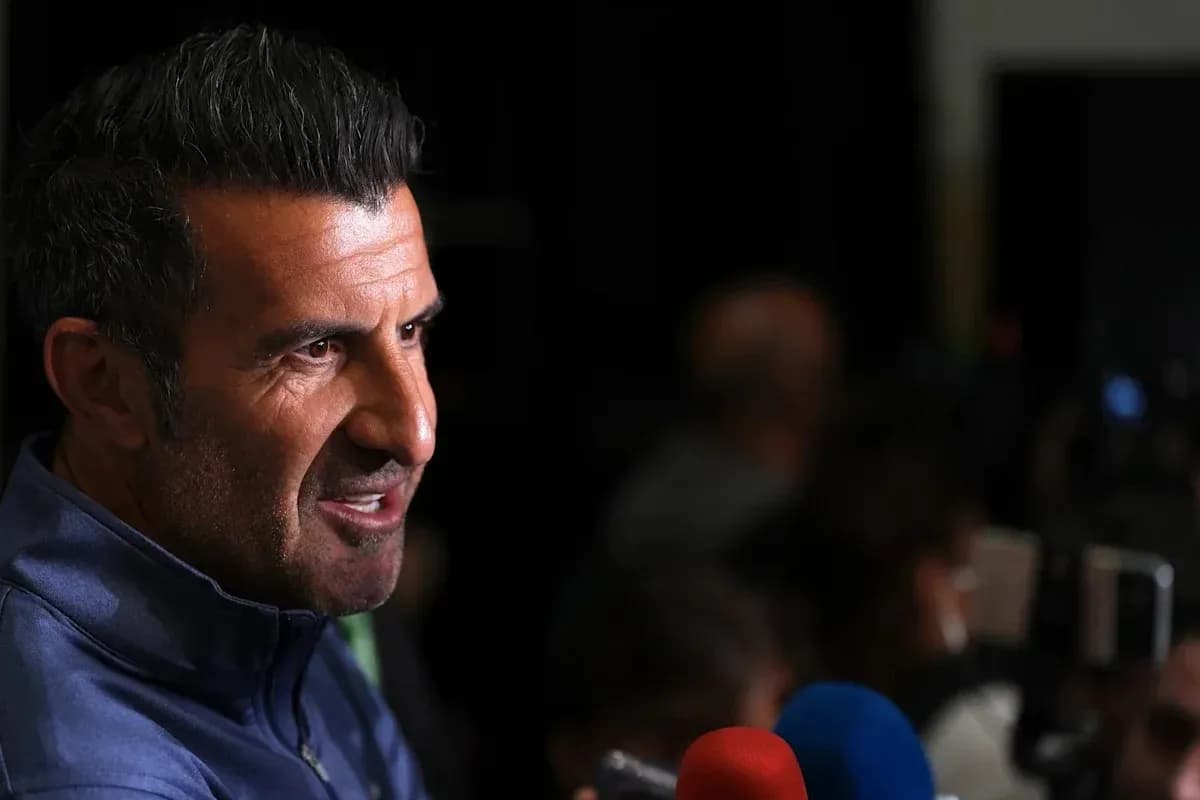
Anthony Mills stood outside Anfield and, for the first time since January, allowed himself to say it out loud.
“I’m kind of at peace.”
His son Aaron, 18, died suddenly from meningitis B at the start of the year. No warning, no long illness, just a brutal, rapid decline that ripped through a family in Kidderminster and left a father trying to work out how to live with the silence that followed.
On Sunday, that silence felt a little less heavy.
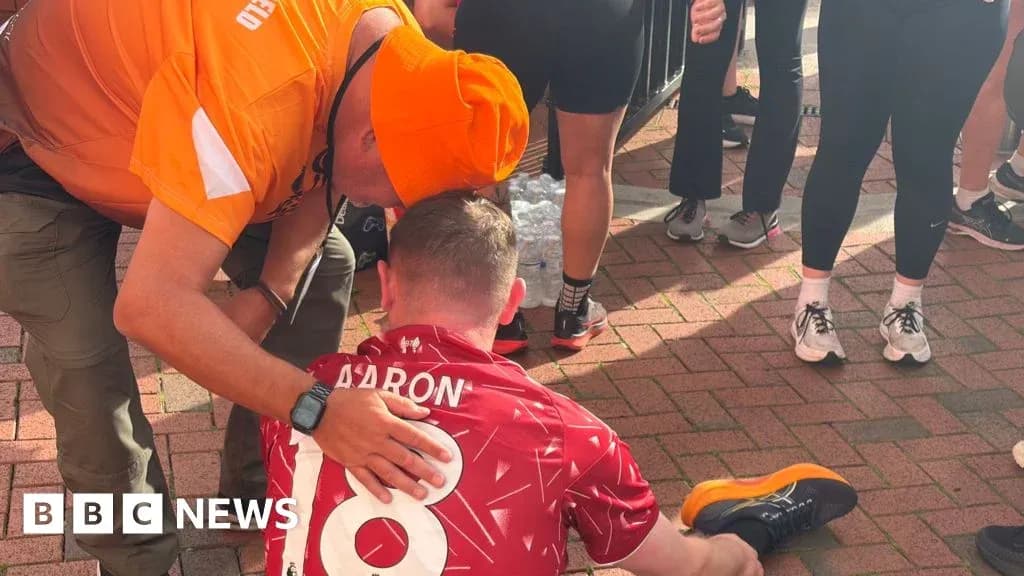
A family friend, Shaun McEntee, had just finished running more than 100 miles, from Kidderminster Harriers’ Aggborough Stadium to Liverpool’s Anfield, to make sure people heard Aaron’s story – and understood the disease that killed him.
A run for a life cut short
Five days on the road. Over 100 miles on tired legs. Wolverhampton, Shropshire, Nantwich, Chester. University to university, campus to campus.
McEntee ran. Mills talked.
At the University of Wolverhampton, Harper Adams University in Shropshire, Reaseheath College & University Centre in Nantwich and the University of Chester, they stopped and spoke to students about meningitis B – MenB – the bacterial infection that most of them, they discovered, knew almost nothing about.
Mills laid out the reality. His son’s potential. His son’s death. The vaccine that exists, and the gap that swallowed Aaron’s age group.
Although babies have been routinely vaccinated against MenB for more than a decade, those now in late teens and early twenties mostly missed that rollout. It is a generation that often lives in close quarters – halls, shared houses, busy social spaces – with little idea of the risk.
Mills told BBC Hereford & Worcester that most of the students they met simply had no idea.
Guilt, grief and a new purpose
For Mills, the journey north was more than an awareness drive. It was a way of fighting the feeling that his son’s story might fade.
“The whole experience was just amazing,” he said. “I feel a bit guilty because I enjoyed every single minute of it.”
He talked about Aaron the way fathers talk about sons when there is no longer a chance to prove them right.
“Aaron was an incredible person and to just let him go like that… it just felt so wrong. I’ve really tried to get his legacy over the last nine months to what it should be because his potential was unlimited.”
That word – legacy – has become his anchor. Every talk, every question from a student, every quiet conversation after a session is another small piece of it.
“I’m kind of at peace,” he said. “A lot of people know Aaron’s name, they know Aaron’s story, and it’s really helped me a lot. I feel like I can move forward a bit… I’ve healed a lot of wounds from it and it was incredible, the whole thing.”
He knows the campaign is far from finished. Awareness has grown among family, friends and the hundreds of students they met, but, as he put it, there is “still work to be done” to push vaccination higher up the list of priorities for young people.
Ashes, exhaustion and a promise kept
By the time McEntee reached Anfield, his body had been through almost everything the route and the weather could throw at him.
“I’m exhausted, so tired, but it’s been so worth it,” he said, standing outside the stadium. “I feel like we’ve actually got the message across.”
There were moments along the way when the effort cut through the fatigue. Faces in the crowd. Conversations that stuck.
“There were a couple of moments that in my head could have saved a couple of lives,” he said. “Those people said they’d get the vaccine as a result of what we’ve done, which is obviously massively worth it.”
When the run threatened to break him, he reached for something far more personal than gels or energy drinks.
“I had a little cannister of [Aaron’s] ashes that I’ve been carrying with me for the full five days and that’s what has pushed me through,” he said.
“Thursday and Friday were really tough. It was probably the lowest I had been. The weather was against us and I was already exhausted and I knew I had lots to go.”
Still, he kept moving. Step after step, mile after mile, carrying a small cannister and a huge responsibility.
Mills watched it all unfold and could only shake his head at the scale of what his friend had done.
“I owe Shaun a lot, he’s done all this in Aaron’s memory and it’s been phenomenal,” he said.
A father who lost his son. A runner who refused to stop. A disease that too many still don’t recognise until it is far too late.
The run is over. The real race – to turn Aaron’s story into lives saved – is only just beginning.