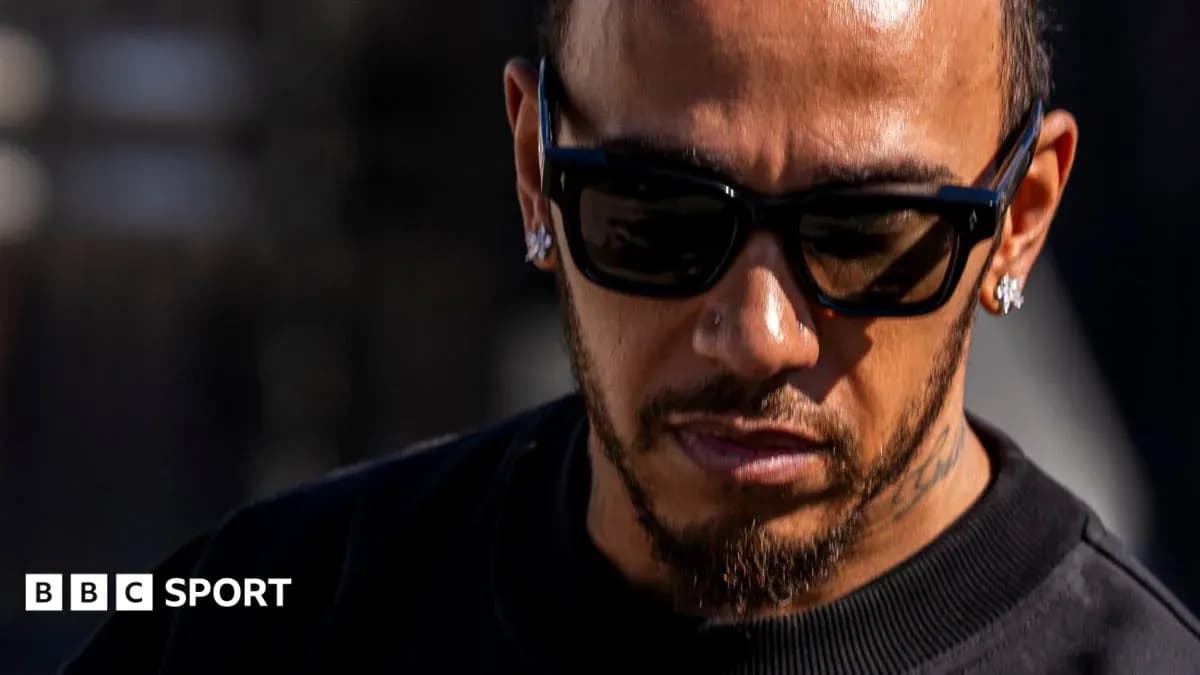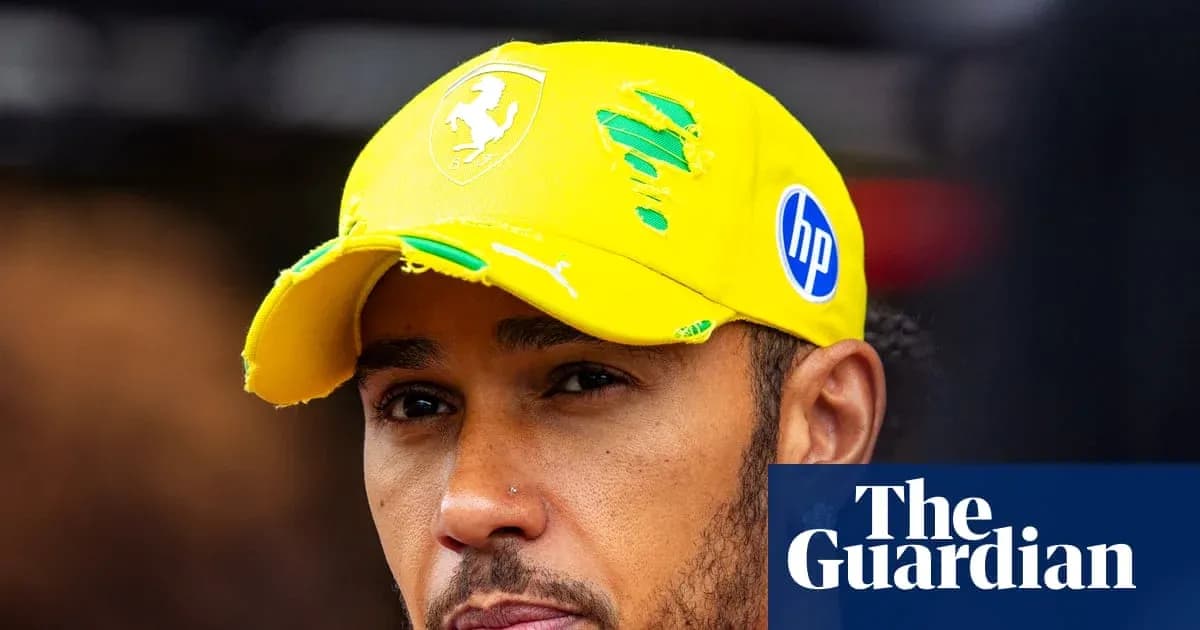
Ralf Schumacher has drawn a hard line in the Ferrari garage – and Lewis Hamilton is on the wrong side of it.
The younger Schumacher insists Hamilton has no claim to the kind of unquestioned number one status his brother Michael once enjoyed at Maranello, arguing the seven-time world champion simply hasn’t done enough in red to demand priority over Charles Leclerc.
“He is simply not fast enough”
For Ralf, the debate is blunt, not romantic.
“The problem is that he is simply not fast enough compared to Leclerc,” he said, making no attempt to dress up the verdict. “If he were clearly better than his team-mate, like my brother was back then, this discussion wouldn't even exist. He is the one causing it.”
That comparison cuts deep. Michael Schumacher’s Ferrari era was built on absolute hierarchy. Eddie Irvine knew it. Rubens Barrichello knew it. The team was constructed around one driver, one mission, and everything else bent to that will.
Hamilton, by contrast, has walked into a very different Ferrari. The history is the same; the politics are not.
A champion’s ego meets a team’s investment
Hamilton’s record speaks for itself: seven world titles, more wins, poles and podiums than anyone in history. This is not a man wired to play second fiddle. But Leclerc is not a stop-gap number two, nor a compliant support act. At 29, in his eighth season with Ferrari and locked into a fresh long-term deal, he is the driver the Scuderia have invested years in shaping.
And on raw numbers this season, the gap between them is razor-thin.
Hamilton leads Leclerc in the drivers’ standings, but only by 12 points. Each has one grand prix victory. Their head-to-head race finishes are almost perfectly balanced.
On Saturdays, Leclerc has the edge. He has out-qualified Hamilton 11 times in 20 attempts, a statistic that underlines his single-lap authority in the same machinery. On Sundays, the picture is more nuanced: they are level at 10-10 when it comes to being the lead Ferrari at the chequered flag. Hamilton once held a clear advantage there, but Leclerc has finished ahead in eight of the last 12 races, swinging the momentum his way.
Even the sprints offer no clarity. In both sprint qualifying and sprint races, the internal score stands at 3-3.
This is not the landscape in which a driver can credibly demand a Schumacher-style contract of obedience from the other side of the garage.
Hamilton’s demand – and Ralf’s verdict
Earlier in the season, when Hamilton still had a realistic shot at the title, he pushed Ferrari for priority over Leclerc. Strategic calls. Track position. The fine details that can decide a championship.
Ralf Schumacher believes those demands are premature.
For him, the route to status is brutally simple: prove it.
“[Hamilton must] always make sure he's ahead and be a second or half a second faster than Leclerc. Win every race or at least finish ahead of him – it's that simple,” he said.
In other words, earn number one the old-fashioned way. Not in the briefing room. On the stopwatch.
Mexico flashpoint exposes Ferrari fault line
The tension over hierarchy burst into the open in Mexico City. Ferrari had the race in their hands and let it slip away in the space of a few corners.
Hamilton started from pole. Leclerc launched alongside him into turn one. Both went for the same piece of tarmac, Leclerc eventually edging ahead – but by running off the track. In the chaos, Max Verstappen threaded his way through, passing Hamilton and then inheriting the victory when Leclerc’s off-track move earned him a penalty.
A potential Ferrari win dissolved into another Verstappen triumph, and the in-house fight for supremacy was at the heart of it.
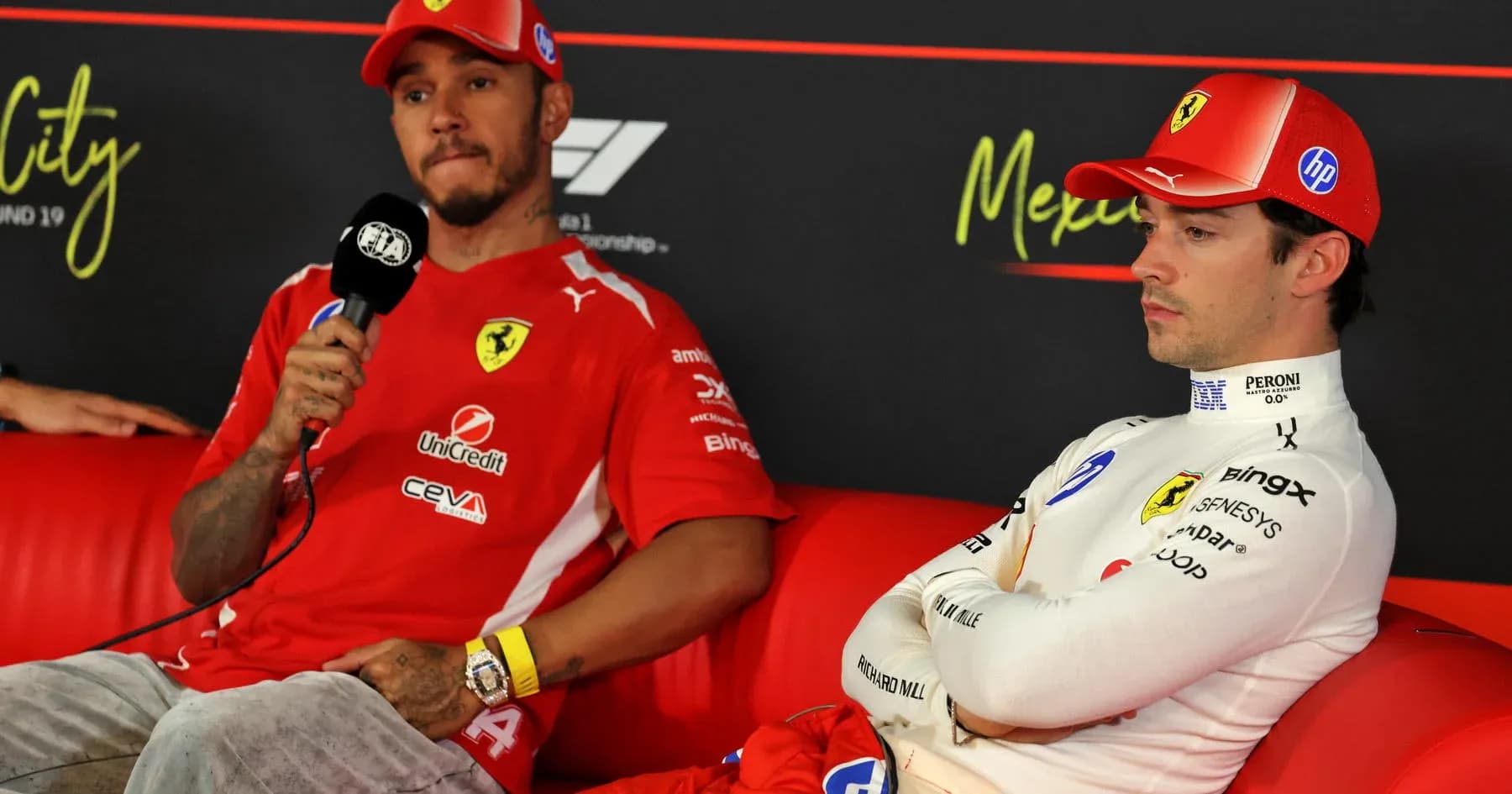
Hamilton was furious. He called for “serious talks” with his team-mate, and those conversations took place in Brazil the following weekend. Publicly, both men insisted the air had been cleared. The competitive edge, though, remains.
“Of course there is” tension
Leclerc did not pretend otherwise when asked about the mood between the two Ferrari drivers.
“Of course there is,” he admitted. “We want to finish ahead of each other and sometimes we are not going to do things right. It's okay sometimes to disagree on the way you see things.”
That is the reality Ferrari must manage: a global superstar unwilling to yield, and a homegrown leader who has no intention of stepping aside.
Michael Schumacher once walked into Maranello and bent the place to his will, his speed so overwhelming that any debate about status felt pointless. Hamilton, for now, walks into a fight he has not yet settled.
The question is no longer whether Ferrari should treat him like Michael.
It’s whether he can drive like Michael often enough, against this team-mate, to leave them any choice.