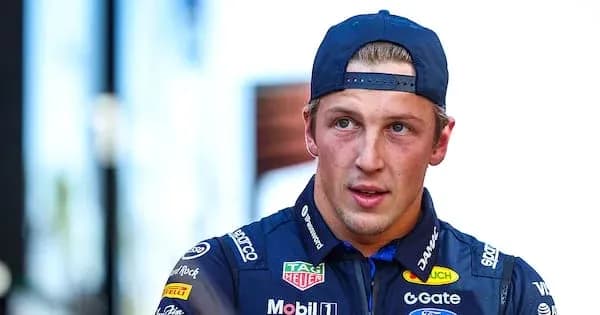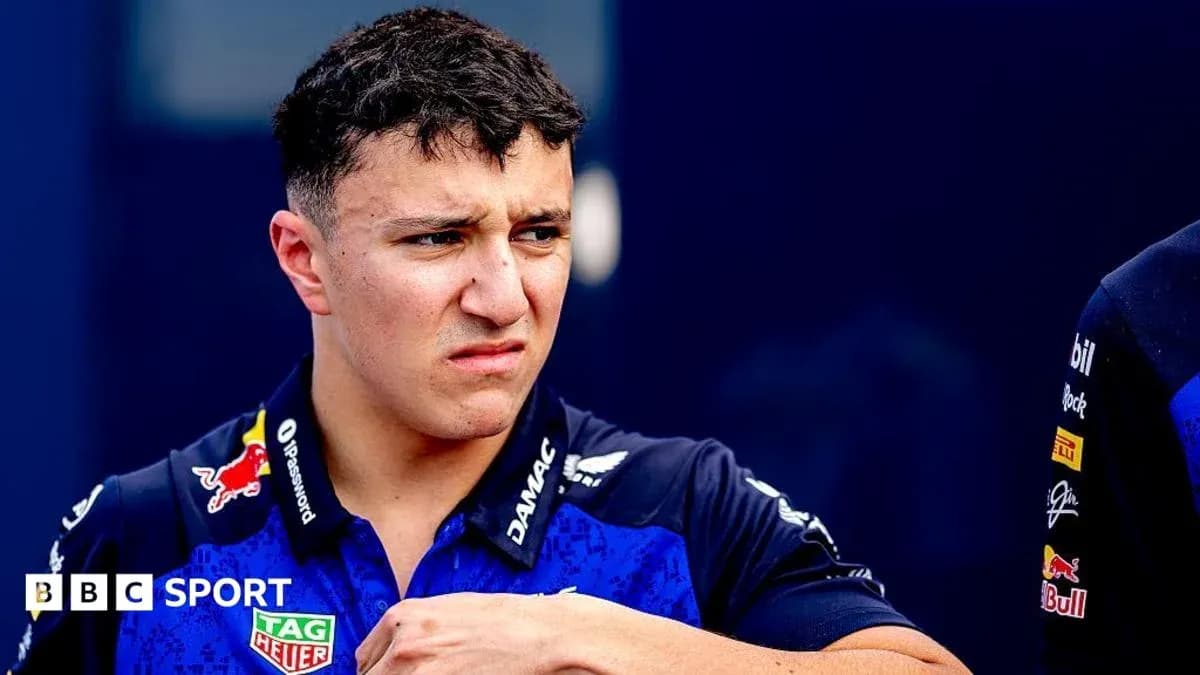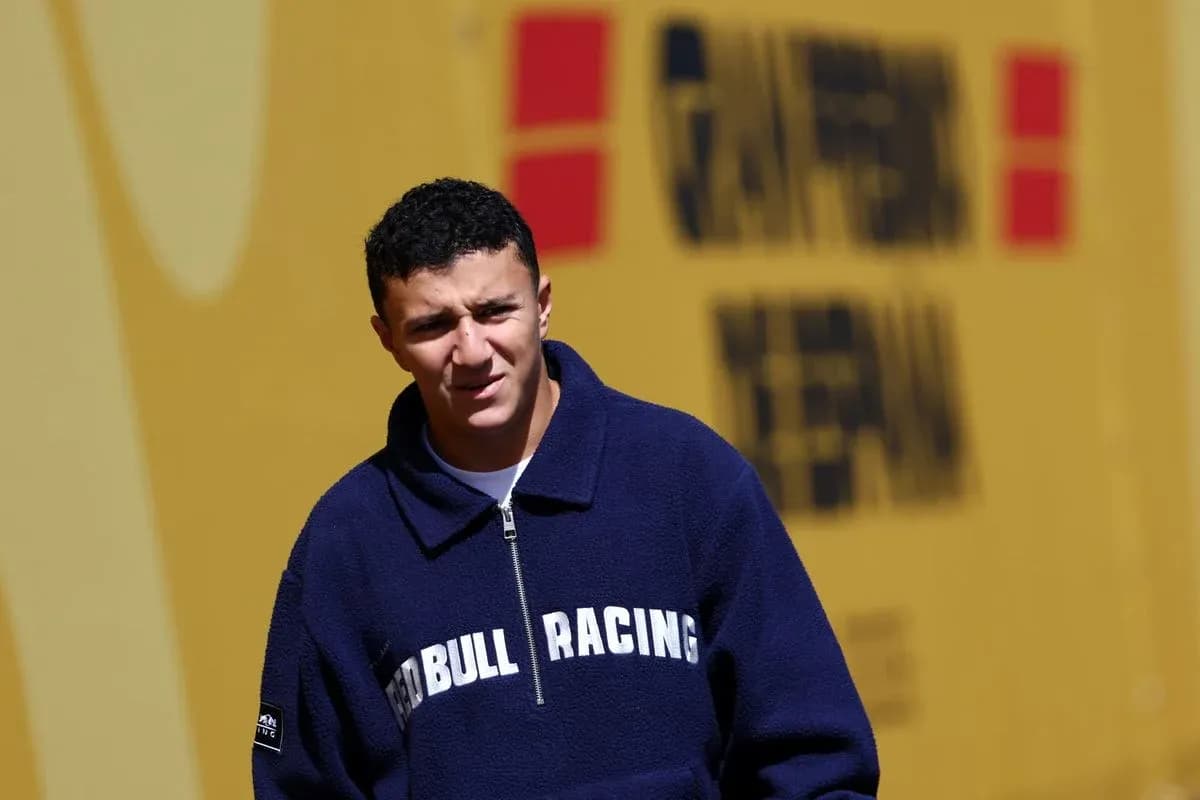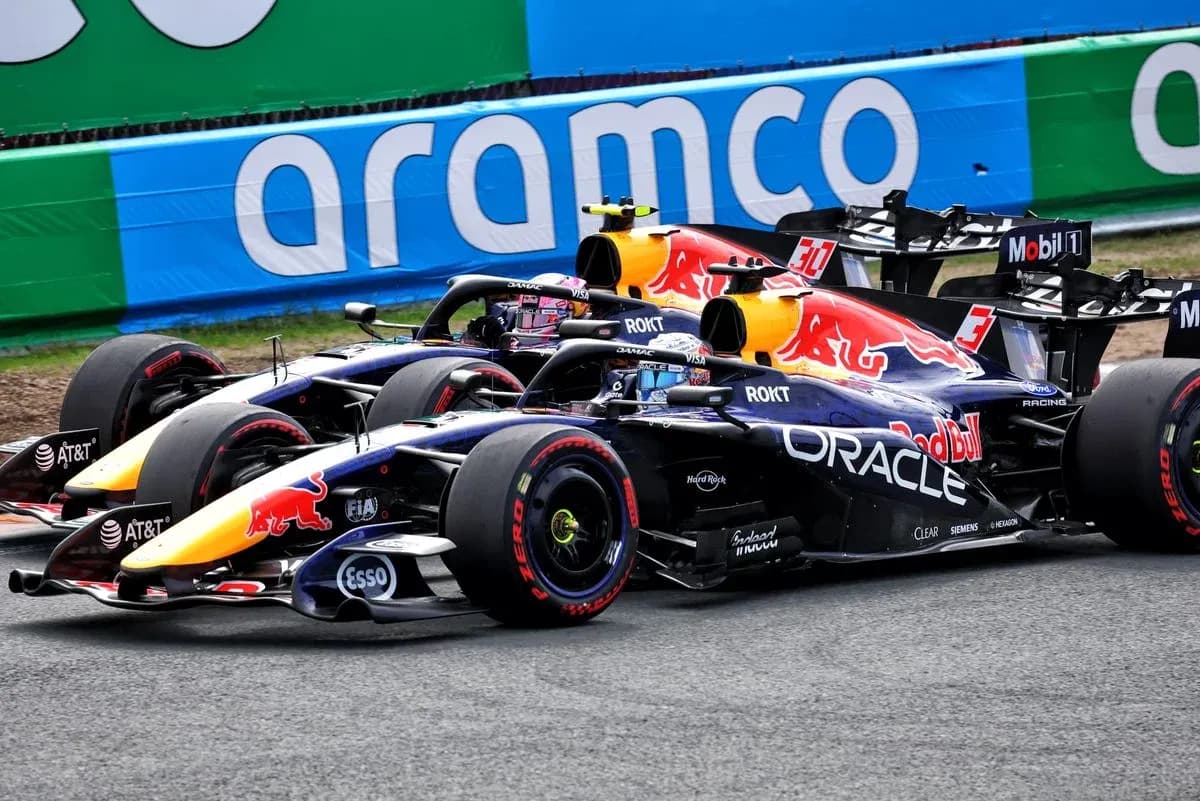
Red Bull’s driver carousel finally slows in Baku. Isack Hadjar is back in the senior car, Liam Lawson returns to Racing Bulls, and Yuki Tsunoda steps aside again. Three races, five drivers, one unmistakable conclusion: the bar inside the Red Bull camp just went up.
Hadjar steps back into a faster team – with no hiding place
Hadjar doesn’t just get his seat back for Azerbaijan. He walks into a team on the rise, with Max Verstappen having dragged Red Bull closer to the sharp end while he was recovering.
Before the summer break, Hadjar had done enough to look like the real deal. Across the first 11 races he averaged 6.5 points per grand prix to Verstappen’s 9.9. Translate that: when Verstappen was typically around fifth, Hadjar was usually only a place or two behind. That’s the kind of proximity Red Bull can work with.
Then he got injured. And in his absence, the ceiling moved.
Verstappen’s average jumped to 12 points per race over the three events Hadjar missed, podiums at Monza and the Madring lifting Red Bull’s expectations. Even with a crash at Zandvoort, Verstappen showed the car – and the team – had found more.
Lawson, dropped into that environment with no prior mileage in the car and shuffled between teams again, did a respectable job. He kept the scoreboard ticking with 4.7 points per race. Solid, professional, nothing disastrous.
But that’s the problem for Hadjar now. “Solid” won’t cut it.
Red Bull isn’t bringing him back to match Lawson’s level. It’s bringing him back with the clear expectation he runs much closer to Verstappen’s new standard, not the old one. And he has to do it straight away, over a physically punishing triple-header that will stress his rehab, his concentration and his ability to snap instantly back into rhythm.
Hadjar impressed in phase one of his rookie campaign. Phase two is harsher: keep up with a team leader who’s raised the game, or risk being the one who looks out of step in a rapidly improving car.
Lawson shows he belongs – just not in Verstappen’s car
Lawson’s second stint at Red Bull was never really about stealing Hadjar’s seat. It was about erasing the ghosts of that bruising 2025 introduction and proving that his strong first half of 2026 with Racing Bulls wasn’t a mirage.
He did that.
He arrived at Red Bull off the back of a quietly excellent season in the midfield, leading the points outside the top four teams and earning real trust inside Racing Bulls. His engineers liked the way he’d swallowed his misgivings about the 2026 regulations and gone to work anyway, finding gains in energy management that nudged the team forward.
Those efforts had already put him in line to stay alongside Arvid Lindblad for another year. The Red Bull call-up simply gave him a bigger stage.
Thrown into a tricky car, Lawson settled quickly. Twice in the points from three starts, he delivered exactly what you’d want from a mid-season stand-in. Monza was always going to be a slog thanks to an engine penalty that left him starting from the back, yet he still kept his head and his pace.
Did he do enough to force a late rethink and convince Red Bull he should be Verstappen’s long-term team-mate? No. The gap to the front remained too large, and he never landed the kind of standout result that would have made the decision politically impossible to ignore.
But he absolutely underlined his value to Racing Bulls. For a team intent on topping the midfield, Lawson looks like the right kind of driver: quick, reliable, technically engaged, and now battle-hardened by a second crack at the big seat. He returns to Faenza not as the guy who once fluffed his big chance, but as the one who proved he can handle it.
Tsunoda reminds everyone what he is – and what he isn’t
Yuki Tsunoda’s brief comeback in a 2026 car didn’t rewrite his story. It confirmed it.
Give him a decent package and he will score you points.
Dropped into the Racing Bulls at Zandvoort, he was on it straight away, qualifying just a tenth off Lindblad despite having to adjust to a new generation of machinery. That’s not a driver who’s lost his edge.
At Monza he turned a scrappy Saturday – Q1 exit, poor grid positioning that’s now under Audi’s microscope – into a point on Sunday. It wasn’t spectacular, but it was efficient, opportunistic, exactly what a team wants from a plug-in replacement.
Madrid never really got going for him after damage compromised his race, but the pattern over the three weekends was clear: Tsunoda is quick to adapt, can live at a respectable pace, and will usually drag something out of a car if it’s capable of it.
What he didn’t do was produce a performance so electrifying that Red Bull had to tear up its plans and put him back in a full-time seat. He was good. He wasn’t transformative.
His own verdict summed it up: “I gave it my all and there’s nothing to regret.” If this is the end of his 114-race F1 career, it’s a far more dignified final act than being pummelled week after week alongside Verstappen in equal machinery.
Lindblad quietly tilts the balance at Racing Bulls
Arvid Lindblad entered this season as the only rookie on the grid. He’s no longer being treated like one.
Across the year he’d already looked composed and quick, but this three-race stretch with Lawson and then Tsunoda alongside him ticked off another box: leadership.
Racing Bulls needed someone to anchor the team while the driver merry-go-round spun. Lindblad did exactly that.
At Monza, he had no business beating an Alpine on pure performance, yet he did, helped by Franco Colapinto’s self-inflicted drama but powered by his own pace. At the Madring, the weekend was messy in places, yet he still salvaged two points – the kind of damage limitation that matters in a tight midfield fight.
Zandvoort was more complicated. A harsh in-race penalty dropped him out of contention, but his presence in the pack still mattered. He disrupted Pierre Gasly’s progress and helped limit Alpine’s haul, giving Tsunoda the best possible shot at finally scoring.
Behind those snapshots sits a bigger trend: seven consecutive Q3 appearances. That kind of qualifying consistency is currency in the constructors’ battle, and Racing Bulls has used it to keep Alpine at arm’s length.
Lindblad is only 19. Red Bull’s hierarchy will have noticed how comfortably he’s handled this phase. The question for Racing Bulls now isn’t whether he’s ready. It’s whether the internal balance of power has already shifted in his favour.
A fit, firing Hadjar is exactly what Verstappen needs
Verstappen cares deeply about who sits in the other Red Bull. He’s seen what happens when the second car isn’t there to help him, and he’s living it again this season.
Lawson’s stint, for all its positives, underlined the problem. He never finished within a minute of the race winner in any of his Red Bull starts. There were reasons: lack of preparation, car characteristics, constant shuffling between teams. But the effect was the same. In the big fights, Verstappen and Red Bull were effectively swinging with one arm.
Now the team has momentum. Mercedes, Ferrari and McLaren can usually count on both of their drivers being in the mix. Red Bull can’t afford to keep fighting those three with a lone frontrunner.
That’s where Hadjar comes in.
If he can immediately operate at or near his pre-injury level – and then stretch beyond it to match the new Verstappen baseline – he becomes a genuine factor in race outcomes again. He becomes the car that blocks strategy options, takes points off rivals, and helps Red Bull claw back more than just pride from a season that has them only fourth in the constructors’ standings.
There’s another wrinkle. Hadjar has missed three races and spent two months on the sidelines. If he jumps back in and looks razor-sharp straight away, it will feed Verstappen’s view that the 2026 era simply doesn’t punish drivers physically enough.
For Red Bull, though, the calculation is simpler. The car is better. The peak is higher. Now they find out if Hadjar can rise with it – or if this rapidly evolving driver pool is about to get even more complicated.