
Before the UEFA Nations League draw in Brussels this past February, the Football Association of Ireland (FAI) braced for a difficult scenario. The Republic of Ireland was placed in Pot 3 of League B, aware that one of the four teams from Pot 1 could bring major political and logistical challenges. That team turned out to be Israel. Group B3 consists of Ireland, Israel, Austria, and Kosovo.
Almost immediately after the draw, the FAI announced they would complete both home and away matches against Israel, but neither fixture would be held in Ireland or Israel. Instead, the away match will take place in Debrecen, Hungary on 27 September, and the 'home' match will be staged behind closed doors in Backa Topola, a small town in Serbia, on 4 October. Despite moving the games far from Irish soil and without fans present, controversy continues about why Ireland is playing Israel at all.
Political Pressure and Calls for Boycott
Since the draw, voices calling for a boycott of these fixtures have grown louder. The United Nations' independent commission has accused Israel of committing genocide in Gaza, fueling protests and intense debate. These two matches might become some of the most talked-about involving the Republic of Ireland in recent years.
Tensions escalated following remarks by Heimir Hallgrimsson, Ireland's head coach. He said, “We're not playing with genocide, we're playing against genocide. We're playing against Israel, we're not playing with Israel.” Israel’s government denies these genocide accusations, pointing to their military response after the October 7 attacks nearly three years ago, where around 1,200 people were killed by Hamas and 250 taken hostage. Since then, over 70,000 Palestinians have died in Gaza according to UN data. In reaction, the Israel Football Association called Hallgrimsson’s comments “stupidity, ignorance and hypocrisy.”
Protests and Public Reaction in Ireland
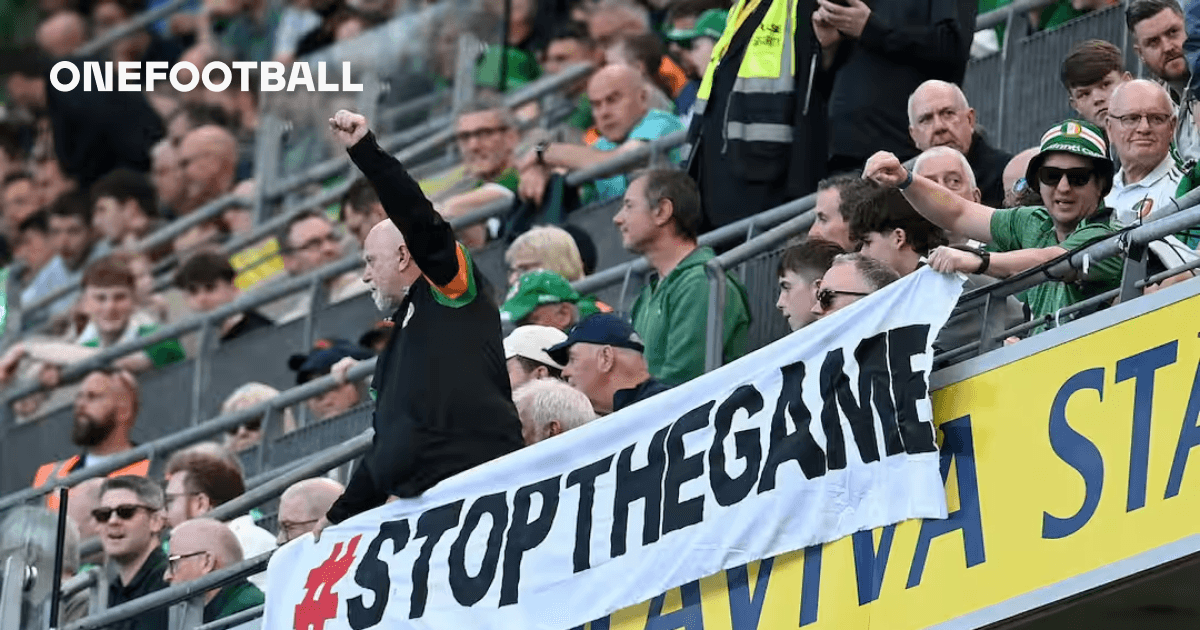
On Monday evening, protesters gathered outside the Irish team’s hotel in Dublin as part of the “Stop the Game” campaign. This comes amid a wider cultural moment, such as the fallout on Ed Sheeran’s Loop tour when rapper Macklemore was dropped for shouting “free Palestine.” Irish artists like Aaron Rowe and the folk band Beoga showed solidarity by pulling out of the tour, emphasizing that silence is a form of complicity.
Former Republic player Kevin Kilbane, who earned 110 caps, wrote in the Irish Times that fulfilling these fixtures will leave a “stain” on the FAI. He said, “Ireland should not be playing Israel. Not in Dublin, not in Hungary, and definitely not a ‘home’ match in Serbia.”
FAI’s Position and UEFA’s Response
In November, the FAI asked UEFA’s Executive Committee to suspend the Israel Football Association immediately. Still, the FAI argued that refusing to play Israel could damage all of Irish football by forfeiting Nations League points, potentially hurting chances of qualifying for Euro 2028 (which Ireland will co-host) and future World Cups.
Unlike UEFA and FIFA's quick suspension of Russia from international competitions following the 2022 invasion of Ukraine, Israel remains active in UEFA and FIFA tournaments despite the ongoing conflict since October 7. UEFA delayed a planned vote last year on suspending Israel after reports of a ceasefire between Israel and Hamas, but more than 1,300 Palestinians have died since, with both sides accusing each other of violations.
Boycotts and Other European Nations
No European nation has boycotted matches against Israel so far. Pro-Palestinian protests occurred ahead of Israel’s World Cup qualifiers in Norway and Italy last season, but those countries did not risk forfeiting important games. Norway’s Football Federation president Lise Klaveness said, “A boycott would only result in Israel going to the World Cup instead of us.”
The FAI CEO, David Courell, confirmed that UEFA rejected a request to separate Ireland and Israel in future draws because the two countries have “never been in direct conflict.” A UEFA spokesperson explained that decisions about avoiding certain matchups consider many factors, especially security risks, and each situation is handled carefully based on current facts.
Neutral Venues and Limited Coverage
UEFA approved the FAI’s request to move the home match from Dublin to Serbia “for reasons of safety,” and no tickets are available for Irish fans traveling to Hungary for the away game. Ireland’s public broadcaster RTÉ will offer limited coverage of the matches, with no studio shows or punditry, and commentary provided only through the international feed.
Despite empty stands and stripped-back presentation, these matches are far from unnoticed. Opposition in Ireland remains strong and vocal.
- Group B3 Teams: Republic of Ireland, Israel, Austria, Kosovo
- Away Match Venue: Debrecen, Hungary – 27 September
- Home Match Venue: Backa Topola, Serbia (behind closed doors) – 4 October
- UN Report: Israel accused of genocide in Gaza by independent commission
- Protests: “Stop the Game” campaign outside Irish team hotel
- FAI Request: Suspension of Israel Football Association denied by UEFA
- Broadcast: RTÉ limited coverage without studio analysis





