
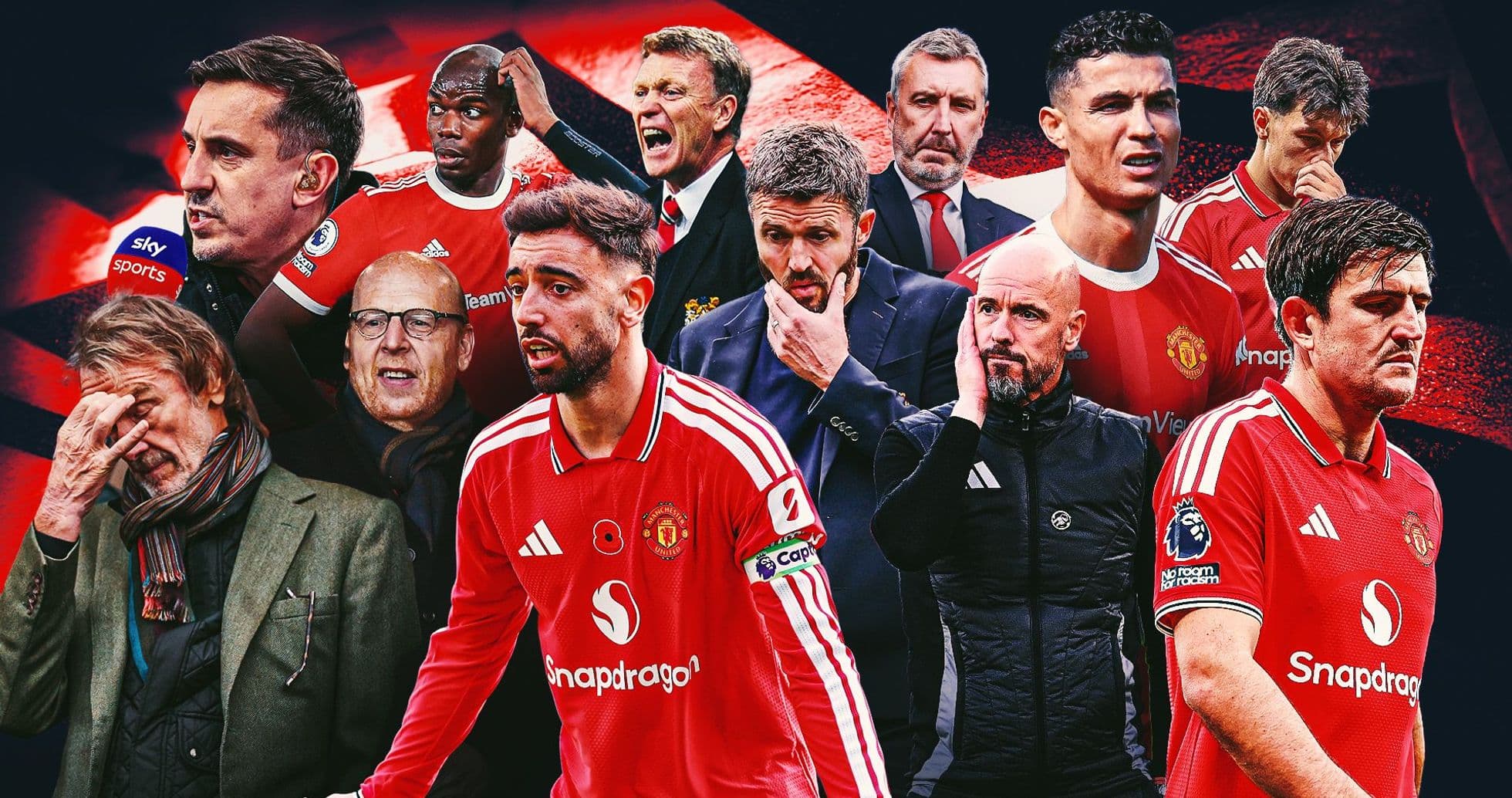
Manchester United faces a grim prospect of relegation, a scenario that seemed unthinkable just a few years ago. Currently teetering just above the drop zone due to goal difference, Michael Carrick's team has secured only one win in their first nine Premier League matches this season. Their recent form—six losses and three draws across competitions, with just six goals scored against 18 conceded—paints a bleak picture that might extend through the holiday period.
A managerial change appears imminent, yet the deep-rooted issues at the club suggest no quick revival is on the horizon. The ambition once proclaimed by the owners to reclaim Premier League glory by 2028 now seems distant as the club struggles to maintain its elite status despite vast financial resources.
How Did It Come to This? The Glazers' Takeover and Its Fallout
The decline arguably began in 2003 when Malcolm Glazer quietly acquired shares in the club during a dispute involving Sir Alex Ferguson and majority shareholders John Magnier and J.P. McManus. By 2005, the Glazers had taken control of nearly the entire club via a leveraged buyout, saddling Manchester United with significant debt for the first time in decades.
This takeover sparked fan protests and even led to the creation of a breakaway club, FC United of Manchester. Despite winning several trophies in the following years, the club's increasing debt and dwindling transfer power marked an era of instability masked only by Ferguson’s continued success.
The Departure of Key Leaders and the Unraveling of Stability
Ferguson and CEO David Gill’s simultaneous exits in 2013 ended an era of steady leadership. Ferguson’s final season culminated in a 13th Premier League title, but his departure exposed the club’s fragile foundations. The Glazers shifted power toward executive vice-chairman Ed Woodward, who prioritized commercial interests over football operations, straining relationships and decision-making within the club.
The Managerial Carousel and Lost Identity
Since Ferguson’s retirement, United has seen eight permanent managers, with none able to halt the club’s slide. David Moyes, lacking experience at such a level, struggled immediately, clearing out trusted staff and failing to attract top talent. His successors, including Louis van Gaal, Jose Mourinho, Ole Gunnar Solskjaer, Ralf Rangnick, Erik ten Hag, Ruben Amorim, and now Carrick, have all faced challenges that have compounded the club’s problems.
Mourinho achieved some silverware but ultimately fell out with players, while Solskjaer briefly revived spirits without delivering trophies. Ten Hag received a massive transfer budget but failed to build a cohesive squad, signing numerous players who did not fit the club’s needs. Amorim was given too little time and autonomy to reverse the trend, and Carrick currently grapples with a deeply troubled team.
Failed Recruitment and Financial Waste
Manchester United has spent over £2 billion on transfers since Ferguson’s era, plus nearly £100 million on managerial compensation. Yet, recruitment has been poor, with few signings becoming clear successes aside from Bruno Fernandes and Zlatan Ibrahimovic.
- Van Gaal’s signings: Angel Di Maria, Memphis Depay, Morgan Schneiderlin (£110m total)
- Mourinho’s signings: Paul Pogba (£89m), Romelu Lukaku, Henrikh Mkhitaryan, Alexis Sanchez (swap deal)
- Solskjaer’s signings: Jadon Sancho, Donny van de Beek, Aaron Wan-Bissaka (£150m total)
- Ten Hag’s signings: Antony, Lisandro Martinez, Andre Onana, Mason Mount, Rasmus Hojlund, Manuel Ugarte, Joshua Zirkzee (many deemed misfits)
The transfer strategy suffered from too many conflicting voices, unlike during Ferguson’s reign when he had full control over player decisions. This lack of clarity has contributed heavily to the club’s current woes.
Boardroom Mismanagement and Commercial Overreach
Ed Woodward, instrumental in the Glazers’ takeover, became a controversial figure due to prioritizing marketability over football logic. He handed lucrative contracts to underperformers and participated in the ill-fated European Super League plan in 2021, leading to his resignation amid fan fury.
His successors, including John Murtough and Richard Arnold, struggled with similar issues. Murtough’s panic buying and mishandling of sensitive situations like the Mason Greenwood case worsened internal discord. Arnold’s passivity during Cristiano Ronaldo’s turbulent second spell further highlighted leadership failings. The trio’s commercial-first mentality often clashed with football realities, alienating supporters.
INEOS Takeover and Recent Turmoil
In 2023, INEOS, led by Sir Jim Ratcliffe, purchased a minority stake and took operational control, promising to overhaul recruitment and restore the club’s stature. They appointed experienced figures like Sir Dave Brailsford and Jean-Claude Blanc, but turmoil continued.
Ten Hag’s dismissal cost £10 million, and Amorim’s short tenure ended after less than six months due to squad incompatibility and limited authority. Carrick’s permanent appointment was seen as a stopgap measure amid ongoing chaos.
INEOS’s focus on restructuring included cutting costs with staff layoffs, reducing amenities, and raising ticket prices, moves that drew widespread fan criticism. Plans for a £2 billion stadium project also alarm supporters due to unclear funding and timing.
Fans and Legends Demand Change
Protests against the ownership have become frequent, reflecting deep dissatisfaction. Former captain Gary Neville voiced strong condemnation of the Glazers, calling for an immediate sale of the club. He highlighted the £1.2 billion debt, poor spending, and disconnect between owners and fans, emphasizing the need for new leadership to end the prolonged failure.
"They have to sell now, enough is enough," Neville stated. "The club is in debt, you’ve not spent a penny on the current stadium, you’re now trying to borrow £2bn for a stadium you don’t know how you’re going to borrow. You’ve got a failure of 13, 14 years on the football side, you’ve subbed it out to somebody else, which is ridiculous, and not took responsibility."
INEOS may increase their stake or fully acquire the club by 2029, but that timeline feels too distant for a fanbase desperate for swift change. The Glazers hold majority power and could force a sale if a suitable offer emerges, a scenario many hope will bring an end to the club's decline.
Manchester United’s Future Hangs in the Balance
The club stands at a crossroads, its identity and future endangered by absentee ownership and a fractured hierarchy. Without decisive action from those in charge, Manchester United risks falling further from grace. The call from supporters and club legends is clear: the current regime must give way to new leadership capable of restoring the pride and success the Red Devils once commanded.





