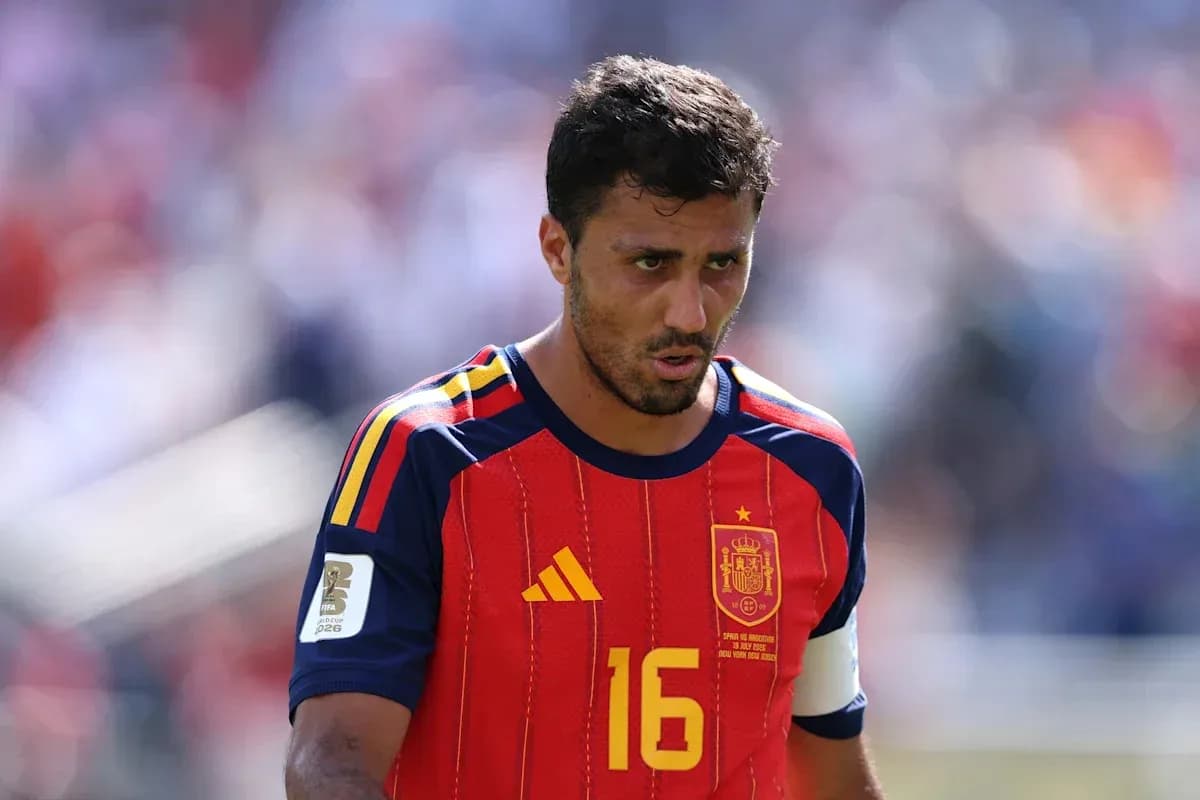
Real Madrid thought they had him. Barcelona ended up parading him.
Rodri’s summer became the defining transfer tug-of-war in Spain, a battle that Madrid led for long stretches before watching their preferred target walk into the Camp Nou instead. Now, speaking to MD, the midfielder has explained why he turned down the Bernabeu – and why the decision, as he stresses, was rooted in football, not politics.
A holiday that never was
“The first thing I have to say is that I would have liked it to have been two or three weeks of quiet vacation and they were not at all,” Rodri admitted. There was no switch-off, no beach escape. Just calls, meetings, and a choice between two superclubs who rarely lose when they truly want a player.
“Many things had to be analysed, and such an important decision had to be made with two of the best clubs in the world,” he said. Every word underlines how tight the race really was. Real Madrid pushed hard, confident for much of the window that their project, their history, and their financial muscle would be enough.
It was not.
“In the end I made a decision on the sporting level, so it gave me a little more desire and to understand where I could win and grow more as a player,” Rodri explained. That line cuts straight to the heart of it: minutes, role, development, the feeling of being central rather than complementary.
“It was not an easy decision at all, saying no to Madrid is not easy, and above all that, they behaved exemplarily with me. In the end, Deco and Hansi convinced me.”
Those last words will sting in the Spanish capital. Deco and Hansi Flick didn’t just win a transfer; they won a head-to-head against a club that rarely accepts defeat in this arena. Their pitch – a clear sporting plan, a defined role, a path to grow – tipped the scales.
Mourinho’s call and a classy refusal
On the other side of the story stands Jose Mourinho. Real Madrid’s head coach personally joined the push, speaking directly with Rodri both before and after the decision.
“I don't think it's his thing to reveal a private conversation, but he obviously expressed his desire for me to join, and he told me what I could bring to the team,” Rodri revealed. The approach was direct, respectful, and unmistakably Mourinho.
“The treatment was very good. When I made the decision, I also called him to thank him for his interest and treatment.” No burned bridges, no public drama. Just an elite coach losing out on a player he clearly valued.
Rodri’s respect for Mourinho is obvious. “I think he's a great coach, he's already shown it wherever he's gone in his great stages and Real Madrid are going to be a tough opponent for this league.” That last line feels like a warning as much as a compliment. He knows exactly what he has turned down, and exactly what he will face.
Ballon d’Or boycott “played no part”
One potential flashpoint was quickly defused. Real Madrid’s decision to boycott Rodri’s 2024 Ballon d'Or victory inevitably floated around the narrative, but the player was emphatic: it had no influence on his choice.
He insists this was not about pride, not about snubs or gestures in a theatre in Paris. It was about football. About where he believes he can “win and grow more as a player.”
In the end, Barcelona offered that vision more convincingly. Real Madrid offered tradition, power, and Mourinho. Deco and Hansi Flick offered a project he could not walk away from.
Now the question shifts from why he chose to how much that choice will reshape a title race in which he has ensured Real Madrid “are going to be a tough opponent” – but only as rivals.