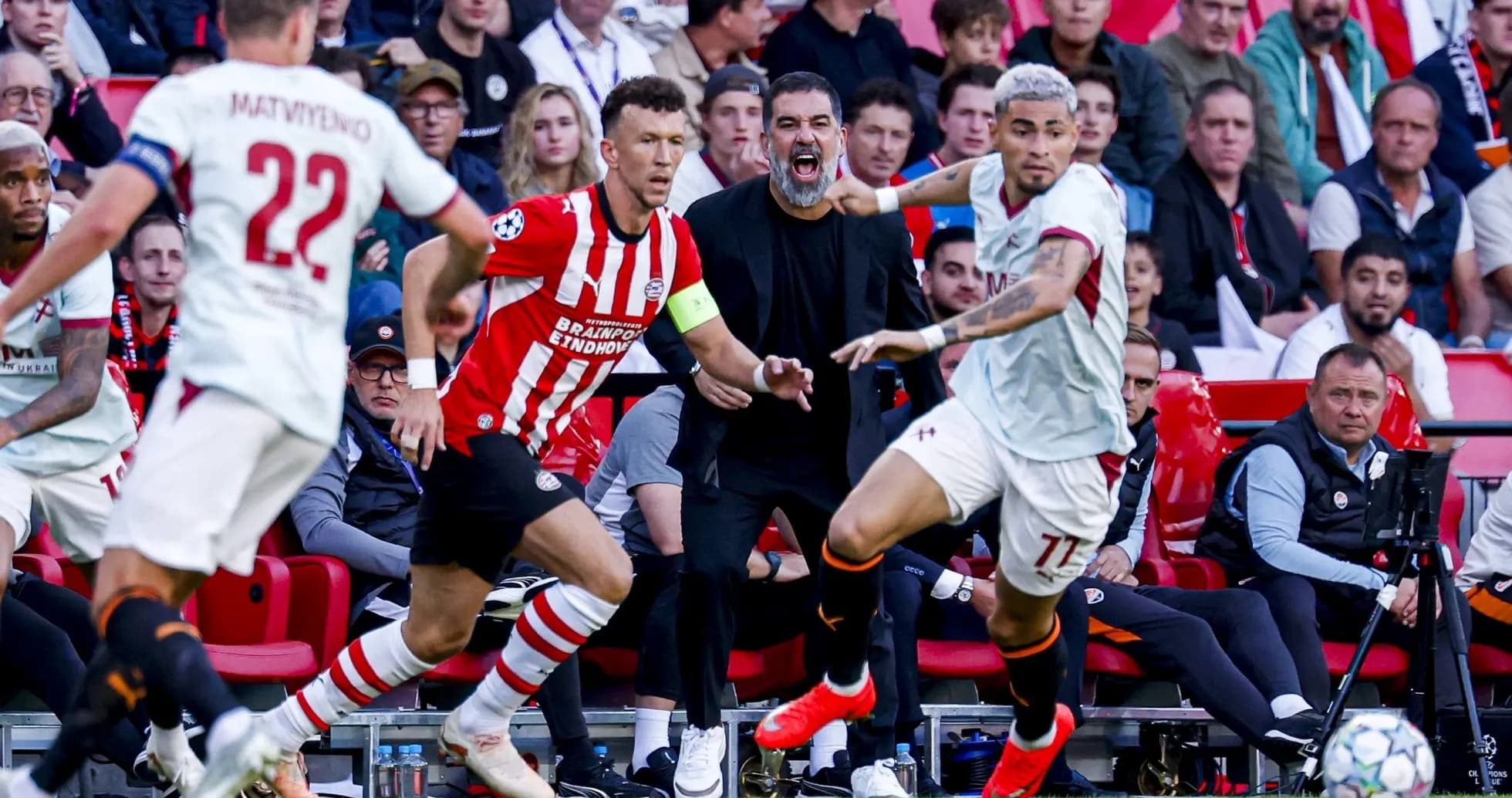
Shakhtar Donetsk walked into the Philips Stadion braced for a storm and walked out with something far more valuable than a point. They left with proof that they can think, suffer and survive at this level.
A 1-1 draw against PSV Eindhoven will read modestly on paper. It did not feel modest. Not for a club still living with the realities of war, and not on a night when their young side had to stare down one of Europe’s most ferocious pressing machines.
Mendoza’s moment on debut
The first half belonged to PSV in territory and tempo, but not on the scoreboard. The Dutch champions hunted in packs, squeezing Shakhtar high, forcing hurried passes and nervy clearances. The pattern looked familiar: home side circling, visitors waiting to crack.
Arda Turan had other ideas.
The Shakhtar head coach, still very much the former Barcelona midfielder in his intensity, had spent the build-up drilling one key message into his players: do not try to be PSV. Outrun, outpress, outfight? No. Outthink.
“I told them: if we play like PSV, we will not win,” he said afterwards. That line defined the night.
Instead of mirroring the hosts’ one-on-one pressing, Shakhtar looked for angles. Diagonal movement, clever body positioning, small details that turn a press into an opportunity. They tried to slip into the half-spaces rather than fight in straight lines.
Just when PSV seemed ready to cash in on their dominance, the plan paid off.
Deep into first-half stoppage time, Venezuelan midfielder Gleiker Mendoza found exactly the pocket Turan had spoken about. Drifting into the gap between PSV’s defensive lines, he received the ball, opened his body and bent a superb curling finish beyond the reach of the home goalkeeper. Champions League debut. First big chance. Ruthlessly taken.
“I can’t put my emotions into words,” Mendoza admitted later, crediting his coach’s insistence on attacking those half-spaces. On a night of tactical chess, his strike felt like a bold move across the board.
Dest hits back as PSV turn the screw
The lead did not survive long after the interval. PSV, stung and energised, came out with even more aggression. The pressure that Shakhtar had dodged and danced around in the first half now came with added edge.
It told early in the second period. Sergino Dest stepped up for the hosts, finding the equaliser that had been looming over the game from the moment Mendoza scored. The goal reset the contest and unleashed a wave of red-and-white attacks.
From there, Shakhtar’s evening became an examination in resilience.
The Dutch champions pushed their full-backs high, flooded the box, and forced the Ukrainians deeper and deeper. Clearances grew more desperate, legs heavier, decisions tighter. Yet the visitors held their line, clung to their structure and refused to fold.
This was where Turan’s words about bravery and discipline stopped sounding like clichés and started looking like a game plan.
Turan, Isaque and the weight of real-life battles
Post-match, Turan did not just talk about tactics. He talked about survival.
He picked out 19-year-old midfielder Isaque, who made his Champions League debut in Eindhoven, and tied the teenager’s performance to a far darker night in their shared past.
“When I think about Isaque, I remember a photograph on my phone,” Turan said. “It was taken on the night when we were being bombed and I covered him with a blanket in the hotel lobby. I told him he has to be ready for the fight.”
That image – a coach shielding a teenager in a hotel lobby under bombardment – hung over everything. It explained the steel in this Shakhtar side, the composure under late pressure, the refusal to panic when PSV swarmed for a winner.
For Turan, those experiences are not a backdrop. They are part of the team’s identity. He stressed that living through such moments has forged the resilience required for nights like this, where every mistake can be punished and every duel matters.
A point, and a statement
By the final whistle, PSV had thrown their weight at Shakhtar’s back line. Cross after cross, wave after wave. The Ukrainian side bent but never quite broke, closing out a point that may prove precious in a tight group.
Shakhtar did not dominate the ball. They did not dictate territory. They did something subtler and just as important at this level: they imposed their idea.
They refused to be dragged into a pressing war they could not win. They trusted the details Turan had hammered home – the angles, the body shapes, the half-spaces. Mendoza’s goal came from that belief. The collective resistance in the closing stages came from something deeper.
“The most important thing is that we continue at this pace and keep picking up points,” Mendoza said, already looking ahead.
If Shakhtar can marry this tactical clarity with the kind of emotional hardness forged far away from the Philips Stadion, this draw in Eindhoven may not be remembered as a one-off escape. It may be the night their Champions League campaign truly announced itself.