On a night when PSV Eindhoven expected to flex their muscles, Shakhtar Donetsk walked out of the Philips Stadion with something far more valuable than a point. They left with proof that they can think, suffer and survive at this level.
A 1-1 draw to open their UEFA Champions League campaign sounds routine. It was anything but.
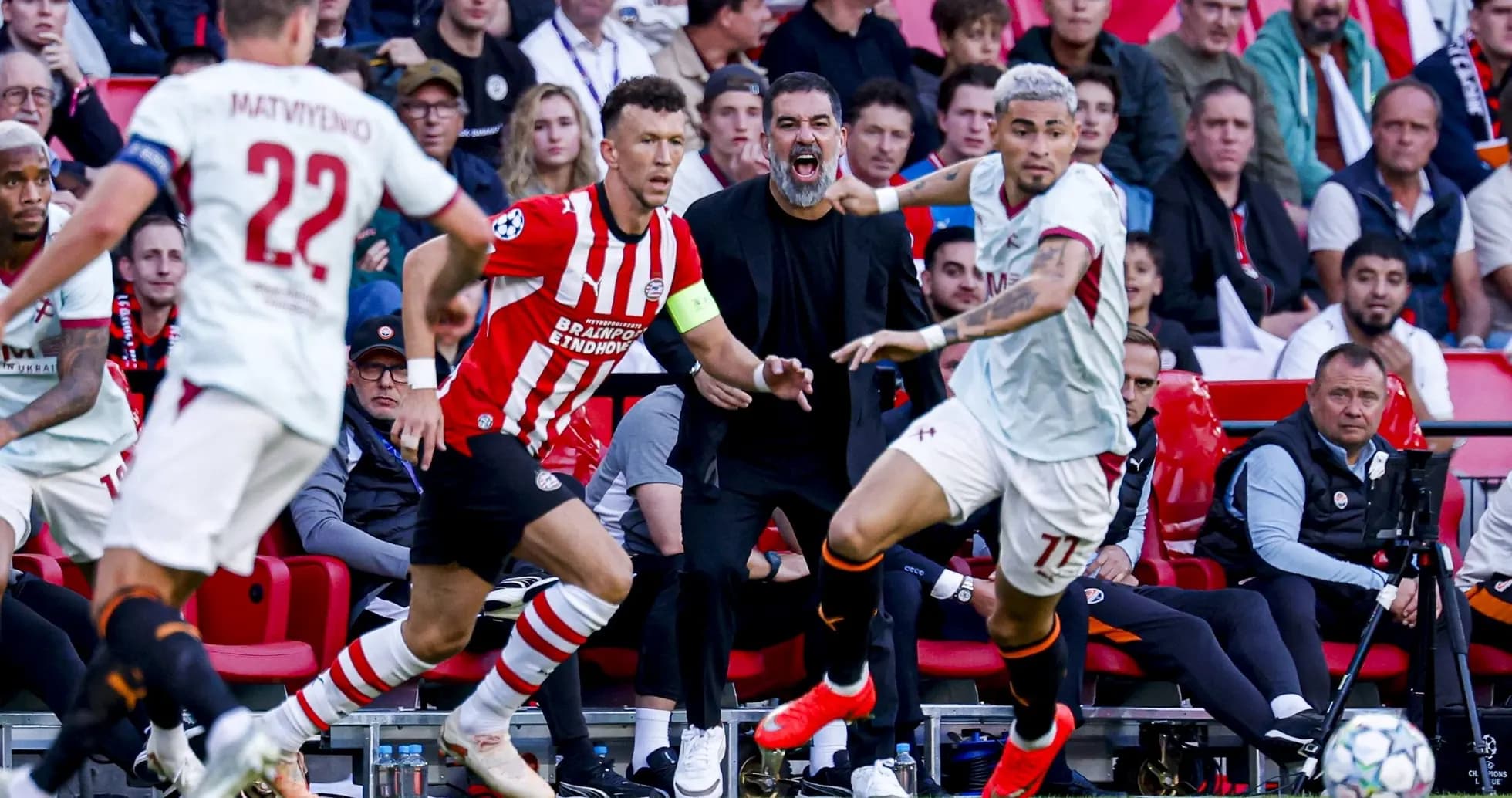
Venezuelan midfielder Gleiker Mendoza, on his debut in the competition, bent in a gorgeous curling strike in first-half stoppage time to stun the Dutch champions. Sergiño Dest dragged PSV back into it shortly after the interval, and from there the match became an exercise in resistance. Wave after wave of red-and-white pressure. One mistake away from defeat. Shakhtar refused to crack.
Arda Turan’s fingerprints were all over it.
Turan’s plan, not PSV’s
The Shakhtar head coach knew exactly what he was walking into: one of Europe’s most aggressive pressing machines, in their own stadium, smelling blood. His message to his players cut through the noise.
“I told them: if we play like PSV, we will not win,” he said afterwards. It was more than a tactical note; it was a manifesto. Shakhtar would not try to mimic PSV’s intensity. They would impose their own.
Turan drilled his side on how to escape that suffocating one-on-one press. He focused on details that never make a highlights reel: the angle of a run, the tilt of a shoulder, the timing of a diagonal movement to pull a marker just half a step out of position.
“The opponents used one-on-one pressing, so I warned my players that they needed to position their bodies correctly,” he explained. Those tweaks allowed Shakhtar to bypass PSV’s first line just often enough to breathe, to reset, to counter.
The opening goal came from exactly that idea. Mendoza drifted into the half-space between PSV’s defensive lines, the pocket Turan had circled all week. One touch to set himself, one swing of the right boot, and the ball arced beyond the keeper in stoppage time. A debut, a first Champions League goal, and a moment that silenced the stadium.
“I can’t put my emotions into words,” Mendoza admitted later. He didn’t need to. The finish said enough.
Mendoza’s moment in the half-spaces
For Turan, the half-spaces were the key to everything. For Mendoza, they became a stage.
“Mister always emphasises that we should attack the half-spaces between the lines,” the midfielder said. That instruction turned into the game’s most clinical action. While PSV’s defenders locked onto their men, Mendoza slipped into the blind spot, where no one quite knew whose responsibility he was. By the time they reacted, the ball was already spinning towards the far corner.
The strike was a flash of quality in a match defined by grind. PSV, stung by the goal on the cusp of the break, came out after half-time with fury. Dest’s equaliser arrived quickly, restoring a sense of inevitability around the Philips Stadion.
That should have been the cue for Shakhtar to fold. Instead, it became the start of their most defiant spell.
Under fire, but unbroken
From the moment Dest levelled, the pattern was clear. PSV pushed higher, pressed harder, pinned Shakhtar back. The Ukrainian side dropped deeper, lines compressed, every clearance cheered from the away bench like a goal.
Shakhtar had to survive not just the physical intensity, but the mental storm of a team and crowd sensing a late winner. They held firm. Blocks, tackles, interceptions, small tactical fouls in clever areas – the dark arts wrapped around a very clear defensive structure.
When the final whistle went, it felt less like a draw and more like a statement: Shakhtar can live in this company, even when the game turns hostile.
Turan praised his squad’s tactical discipline and bravery, and it was no empty compliment. This was a side that followed a demanding plan under extreme pressure and still found the nerve to play when they could.
Isaque, a blanket, and the reality behind the badge
The story of the night did not end with the scoreboard. It rarely does with Shakhtar these days.
Turan took a moment to single out 19-year-old midfielder Isaque, who made his Champions League debut. The coach did not just talk about his passing or his positioning. He talked about a photograph on his phone.
It shows a hotel lobby, a bombing raid, and a teenager covered with a blanket.
“When I think about Isaque, I remember a photograph on my phone,” Turan said. “It was taken on the night when we were being bombed and I covered him with a blanket in the hotel lobby. I told him he has to be ready for the fight.”
That image sits behind every tackle, every sprint, every instruction shouted from the touchline. For Shakhtar, resilience is not a buzzword. It is lived experience.
Turan made it clear that enduring those nights of fear and uncertainty has forged something inside this group, something that can withstand the stress of a Champions League away game against the Dutch champions. The courage on the pitch in Eindhoven is rooted in far harsher realities off it.
A point, and a platform
Mendoza, still processing his dream debut, spoke of the “incredible intensity” of the competition and the need to “continue at this pace and keep picking up points.” That is the challenge now.
Shakhtar have announced themselves in this group not as plucky passengers, but as a side with a clear idea and the nerve to execute it. They took a lead in Eindhoven, absorbed a backlash and walked away with a result that could shape their campaign.
The tactical plan worked. The mentality held. The scars, old and new, hardened them rather than broke them.
If this is how Shakhtar begin their Champions League journey, how far can Turan’s team push the limits of what this season can become?