
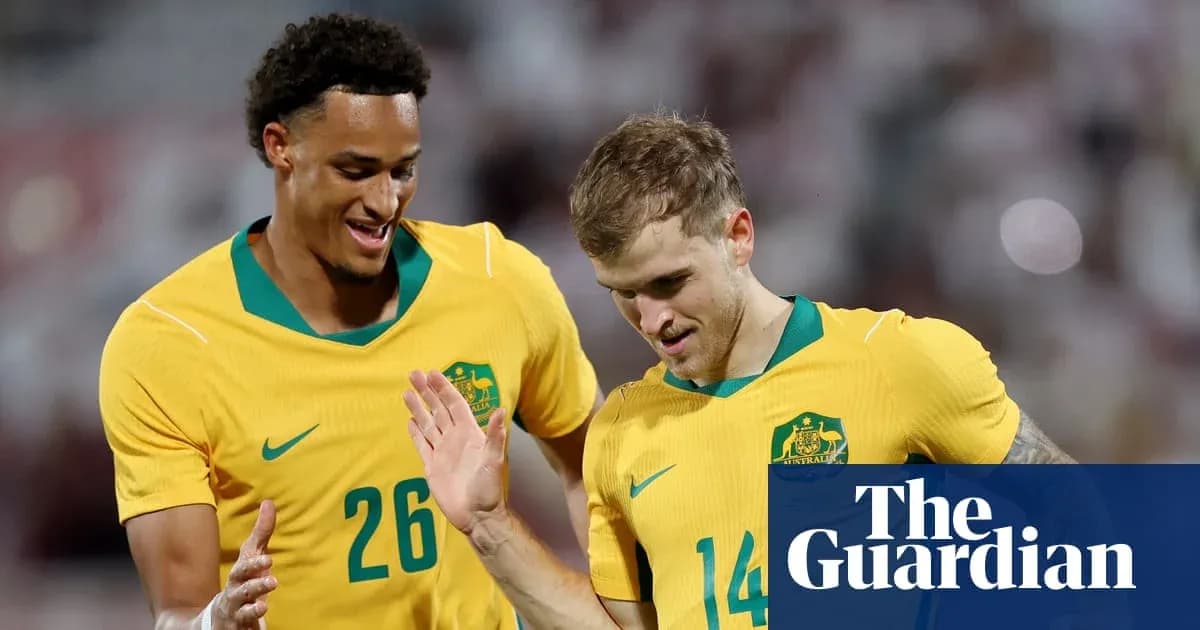
The week belonged to the noise. The night belonged to the football.
After days dominated by venue wrangling, politics and everything but the game itself, the Socceroos walked into Doha and brushed Qatar aside 3-0 with a performance that was as clear as the build-up had been messy. High press, sharp edge, no mercy. By half-time, it was over.
Qatar, the reigning Asian champions, barely laid a glove. They didn’t touch the ball inside Australia’s penalty area until the 38th minute. By then they were two down, reeling, and about to concede a third. Their first shot on target didn’t arrive until the 72nd, by which time Tony Popovic had emptied his bench and debutant Sam Klein had already flung himself in front of Almoez Ali’s effort before goalkeeper Patrick Beach even had to think about a save.
A statement in five minutes
All week, the talk had been about Tuesday’s clash with Jordan and the late decision to move it to Doha. On Friday, the Socceroos answered in the bluntest way possible: with a goal inside five minutes.
Riley McGree, back starting for his country for the first time in a long while, pounced. The description that fits is simple: predator. As Qatar keeper Mahmud Abunada, harried by Tete Yengi, tried to pass out to Assim Madibo, McGree read him cold. He stepped in, took the gift, and rolled the ball into the net. No fuss, no flourish. Just punishment.
The tone was set. Australia hunted in packs, pressing high and refusing to let Qatar breathe. Every back-pass felt like a trap being sprung.
The pressure told again on 32 minutes. This time Abunada miscued a clearance horribly, slicing it straight into trouble. Connor Metcalfe seized on it, head up, and slid a perfectly weighted pass through for Yengi. One touch to steady, one to guide it into the bottom corner. 2-0, and Qatar looked spooked every time the ball came near their own box.
Irankunda’s hammer blow
If the first two goals were warnings about playing out under this kind of heat, the third was a full-blown indictment.
Five minutes before the break, Ahmed Fathy’s bounced pass towards Almoez Ali skipped away from the striker. Metcalfe was on it in a heartbeat, snapping into the loose ball and turning defence into attack once more. This time the move found Nestory Irankunda, the star attraction in green and gold, who did exactly what was expected of him: he lashed his finish beyond Abunada.
Three goals, all born from the press. Three reminders of what Popovic has been demanding from this group as it grows up: ruthlessness.
On Qatari television, the inquest had already started before the players even reached the tunnel. Local pundits questioned why Julen Lopetegui’s side kept insisting on playing out from the back under such intense pressure, asking – with some justification – how a team that once sat atop Asia could look this fragile at home.
Popovic’s plan takes shape
Popovic, under his own cloud of speculation after the postponement of the Asian Cup, had not treated this like a friendly. He sent out something very close to a full-strength XI and got exactly the response he needed in that first half: aggression, control, and a clear identity with the ball and without it.
“It was good to see the players who scored,” he said afterwards. “To see Riley back starting a game for Australia, which hasn’t happened in a while. Alessandro Circati could have scored as a centre-back. Young Paul Okon Jr went through as a No 6. So, we’re getting the players in the right areas. Still a lot of work to do for us, but that was pleasing.”
The two September games against Brazil had hinted at a shift – Australia no longer just digging in and surviving against top sides, but trying to impose themselves. This was the next step: a match where the onus was on them to dictate, to chase the game on their own terms. They did it with conviction.
All three goals came directly from their pressure. This is what Popovic wants this team to become: not simply promising, but feared in Asia.
Qatar drift, Australia blood youth
Qatar helped them, no question. The Maroons were poor. Even with four Australian debutants on the pitch by the end, Beach did not have a serious save to make. Ali’s 88th-minute finish, ruled out for a comfortable offside, summed up their night: too little, too late, and not even legal.
For Lopetegui, the stakes are rising. A disappointing Arab Cup, a flat World Cup, now a tame home defeat that leaves them staring at a potentially brutal test against South Korea on Tuesday. Another meek loss, another home setback, and the two-time defending champions of Asia would look a long way from the continent’s elite. His job may hinge on it.
Popovic’s situation is different, but the questions around his future have been no less persistent. Here, though, he found encouragement not only in the scoreboard but in the depth behind it.
The second half never hit the same heights, yet it delivered something else: opportunity. Klein, Eli Adams, Kasey Bos and Diesel Herrington all came on for their first caps, each tasting international football in a contest already won but still being played at a decent tempo.
“As a coach, I’m always proud to lead these boys,” Popovic said. “I know how special that is for them and their families, and I’m sure they’ll remember this day for a very long time. I don’t think I’ll ever forget it. It might be a long night for them; I don’t think they’ll sleep too much.”
On a night that began under a cloud of off-field distraction, Australia walked away with clarity: a 3-0 win, a pressing blueprint that hurt a continental champion, and a group of youngsters who now know what this stage feels like.
Next up is Jordan in this same city. If the Socceroos bring this same edge, the conversation around them may soon shift from logistics and politics to a far more compelling topic: just how far this team can go.





