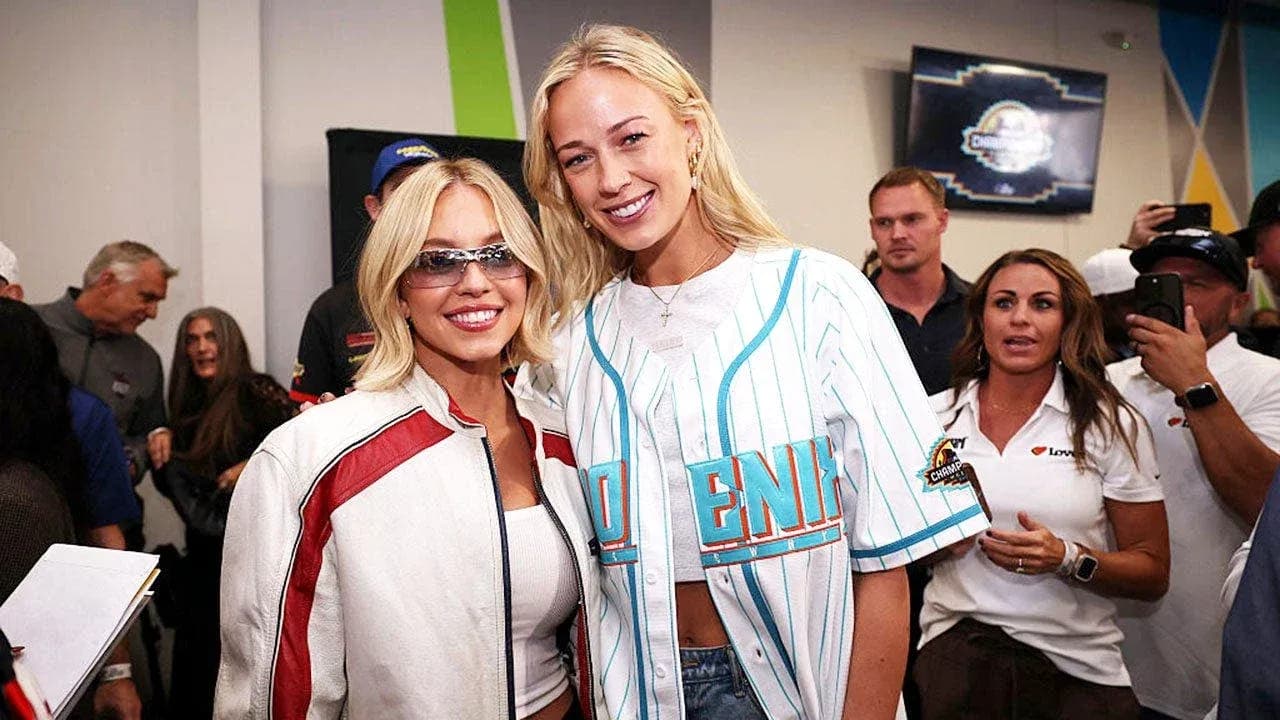
Sophie Cunningham Addresses Controversy Over Sydney Sweeney's Ad
Sophie Cunningham didn’t tiptoe into the debate. She walked straight through it.
After a week of online outrage aimed at Sydney Sweeney for appearing naked in a gambling commercial that many critics claimed dragged women’s sports back decades, the Phoenix Mercury guard used her newly revamped podcast, “No Hesitation,” to do exactly that — offer none.
“Why are girls mad?” Cunningham asked. “That is literally what she does. Why is anyone mad? It is a gambling ad: men, sports, naked women. Of course, that’s going to draw attention.”
No moral grandstanding. No think-piece monologue. Just a blunt assessment of an ad that has dominated the intersection of sports, entertainment and gender discourse.
Cunningham didn’t pretend to love it. She acknowledged the discomfort.
“Do I agree with it? Morally, I think it’s kind of weird, but each to their own. Go do your thing, sis.”
That line captured her stance: personal unease, zero appetite for policing someone else’s career choices.
‘This has nothing to do with us’
Sweeney’s ad — created with betting company Novig — sparked fury not only because of its nudity, but because many felt it undercut years of work by women fighting for respect in sports. The irony, as Cunningham and Novig CEO Jacob Fortinsky both underlined, is that the spot wasn’t about women’s sports at all.
“It really was Sydney who was driving a lot of the visuals and the messaging,” Fortinsky said during a panel earlier in the week. He stressed that the company is “hugely supportive of women’s sports” and insisted, “We never intended to portray female sports.”
The campaign, he explained, lived squarely in the gambling lane. Sweeney, who has built much of her public persona around provocative roles and imagery, leaned into exactly that. According to Fortinsky, the entire creative direction was essentially her concept.
In other words: this was Sweeney doing what Sweeney does.
Cunningham understood the initial sting for some women watching.
“I can understand when you first see that ad that like it could kind of deflate women, because it’s like we’ve worked so hard to get a little bit of respect around here,” she said.
The pressure women’s athletes feel is real. Every depiction of a woman in or around sports is often treated as a referendum on the entire movement. One ad, one outfit, one pose, and suddenly it’s about “the message” and “the cause.”
Cunningham’s answer? Refuse to carry that burden for someone else’s brand.
“But when you really think about it, it’s like, screw it, let that girl do her thing. This has nothing to do with us.”
Knowing the audience
On the podcast, Cunningham and her new co-host, skills coach Drew Hanlen, drilled into the obvious: the target market. Hanlen suggested roughly 75% of sports bettors are men. The article’s author pushed that estimate even higher, closer to 90–95%.
Whatever the exact number, everyone on the show agreed on the core point — the ad was built for a very specific, overwhelmingly male demographic. Sex sells. In sports betting, it has for a long time.
And by that crude but clear metric, the campaign worked.
Cunningham didn’t pretend the ad was some covert commentary on the WNBA, the NWSL, or any other women’s league. It wasn’t. It was a commercial designed to grab male attention in an already saturated gambling market.
The mistake, in her view, is dragging women’s sports into a fight that was never about them.
Owning the image of the female athlete
Cunningham occupies a complicated space in the WNBA. She’s been labeled a “sex symbol” in the league, a tag she’s addressed before. That experience gives weight to her perspective: she knows what it means when image, body and performance collide in the public eye.
“At the end of the day, I’m really loving seeing all these girls who are powerful, strong, showing young girls what it looks like to be an athlete,” she said. “I don’t think the ad was coming for women in sports.”
That’s the crux of her argument. Let Sweeney be Sweeney. Let athletes be athletes. Stop insisting that every woman in or near the sports world carry the same banner, in the same way, at all times.
For Cunningham, the real progress shows up on the court, on screens, and in sold-out arenas — in the visibility of women who dominate their sport and define themselves on their own terms.
The Sweeney ad will fade, replaced by the next campaign chasing the same audience. The question that lingers is sharper: will the conversation around women in sports ever allow for that same kind of individuality without turning every choice into a culture war?