
The weekend starts with a hangover.
Not from the Carabao Cup itself, but from everything that has spilled out around it – resignations in Seoul, raids on federation offices, dropped stars, and managers clinging to their jobs by their fingernails.
South Korea’s autumn of unrest
From the Premier League to South Korea, it has been an autumn of discontent after the national team’s poor World Cup showing. The fallout has been brutal. Coach Hong Myung-bo is gone. So is KFA president Chung Mong-gyu. Both men have faced questioning from parliamentarians, and police have even raided the KFA offices.
No one feels entirely safe in that climate, not even Son Heung-min. The captain, the face of the team, the player whose status once felt untouchable, suddenly finds his place under scrutiny. The debate around the former Spurs forward has shifted from how to build around him to whether he should start at all. A once-unthinkable question now sits at the heart of a divided squad.
Pressure points in the Premier League
Back in England, the tension takes a different form. At Old Trafford, Michael Carrick delivered a six-minute monologue last Friday, a lengthy defence and explanation of where his Manchester United side stand. The response from his players? Collapse. United crumbled at home to Bournemouth, the performance as worrying as the result.
Remarkably, Carrick remains in charge. This weekend brings a trip to Chelsea, a fixture that once defined the top-four race. It still matters, but the edge has dulled. Two giants, both bruised, now meet with less glamour and more grim reality attached.
At Everton, the drama is more immediate. The club moved into the Carabao Cup quarter-finals with a win over a poor Newcastle side, but the headline came from the teamsheet. Jack Grealish was missing, dropped for what the club called a “breach of club discipline”. David Moyes backed the decision and offered nothing more. The intrigue writes itself.
Everton now head to Newcastle for Monday night football. Whether Grealish travels, whether he plays, will be one of the weekend’s most-watched subplots.
City’s frustration in Europe
On the women’s side, Manchester City’s grip on their Women’s Champions League campaign has slipped. A late strike from Tara Elimbi Gilbert condemned them to a third straight draw in the league phase. The English champions now likely need to win all three of their remaining group games to avoid the so-called “punishment round” – the knockout play-offs in February.
Manager Andrée Jeglertz did not hide his irritation. “Annoying is not the right word but it’s a little bit a feeling of ‘argh’,” he said afterwards. City dominated, failed to score, and paid the price. It is a familiar European story: control without cutting edge, punished in an instant.
Selection puzzles on the south coast
In the Premier League, team news is already shaping the weekend narrative.
At Bournemouth, highly rated forward Junior Kroupi is back on the pitch but not yet back at full tilt. A foot injury wiped out his first three months of the season. He returned in the 3-0 win over Manchester United and got more minutes in the Carabao Cup victory over Aston Villa, coming on in the 80th minute.
Head coach Marco Rose wants no shortcuts.
“We still need to build up his game time,” he said before Saturday’s visit of Leeds. He is delighted to have Kroupi’s quality back in the squad but insists the player must stay patient to avoid another setback. Bournemouth remain without Alex Scott, though there is hope he could return from a thigh injury next week.
Along the coast at Brighton, there is a different kind of calculation. Fabian Hurzeler’s side were knocked out of the Carabao Cup on penalties by Manchester City at the Etihad in midweek. Now they go back there in the league, looking for revenge.
This time, Hurzeler expects to have key figures available. Chema Andres and Ferdi Kadioglu, both sidelined with hip injuries at Liverpool last weekend and absent for the cup tie, are tipped to return. Charalampos Kostoulas, rested in midweek, is also set to be an option.
A couple of steps forward, one back. Summer signing Pascal Struijk is out with an undisclosed knock and will not feature, though Hurzeler is confident he will be back after the weekend. There was at least the boost of comebacks for Yankuba Minteh and Mats Wieffer in the cup defeat, a reminder that Brighton’s depth might yet carry them through a demanding stretch.
Afcon’s decisive U-turn
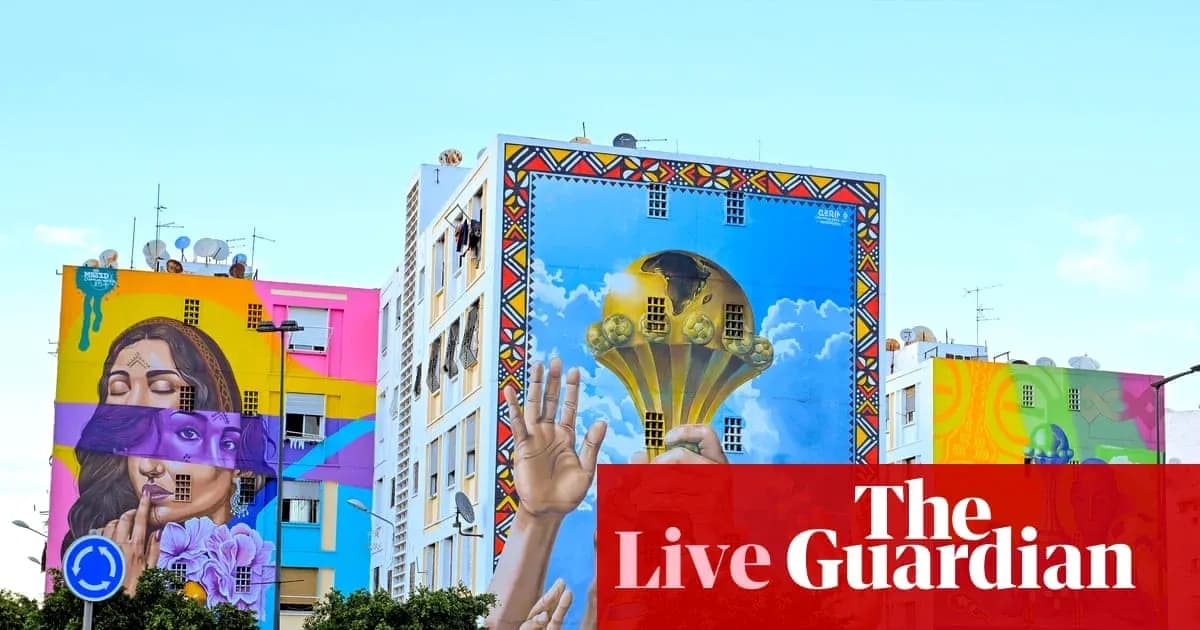
Far from the day-to-day noise of club football, the African game has taken a major strategic turn. The Africa Cup of Nations is going back to what it knows: a tournament every two years.
Caf’s executive committee has unanimously reversed last year’s decision to move Afcon to a four-year cycle. The grand plan had been to replace it with the Africa Nations League Pan-African Competition, a tournament intended to mirror Afcon and run every two years. The reality, Caf admits, is that such a competition would take years to become financially viable.
Caf president Patrice Motsepe made the reasoning clear. The confederation cannot wait several cycles for a new event to deliver the “substantial financial and football development contributions” required for African football to be globally competitive and self-supporting. Afcon, for all its scheduling headaches, still pays the bills and drives the game.
Motsepe also framed the decision as one taken in the interests of African players employed by clubs outside the continent. That line will raise eyebrows in Europe, where clubs already resent losing key players mid-season. Now they face that prospect every two years instead of four.
The calendar is set. Next year’s Afcon will be co-hosted by Kenya, Tanzania and Uganda. The next three editions will follow in 2028, 2031 and 2033. The three-year gap between 2028 and 2031 comes down to the 2030 Fifa World Cup. By tradition, continental showpieces do not clash with World Cup years, so Afcon steps aside.
The weekend ahead
All of this forms the backdrop to a familiar ritual. A fresh round of Premier League press conferences will drip-feed storylines across the day: managers defending, deflecting, hinting at returns or laying down public markers for underperforming stars.
From Son’s uncertain standing in a fractured South Korea setup to Grealish’s disciplinary exile, from City’s European frustration to Caf’s calendar gamble, the game feels restless on every front.
The Carabao Cup has cleared the stage. Now the league steps back into the spotlight. The only question is who can turn all this noise into momentum when the whistle blows.





